Summary

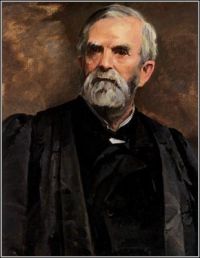
Portrait of William Burnham Woods William Burnham Woods Teal v. Walker — Opinion of the Court

Chancellor KENT states the modern doctrine in the following language: 'The mortgagor has a right to lease, sell, and in every respect to deal with the mortgaged premises as owner so long as he is permitted to remain in possession, and so long as it is understood and held that every person taking under him takes subject to all the rights of the mortgagee, unimpaired and unaffected. Nor is he liable for rents; and the mortgagee must recover the possession by regular entry by suit before he can treat the mortgagor, or the person holding under him, as a trespasser.' 4 Kent, Comm.
Source: Wikisource

Portrait of William Burnham Woods William Burnham Woods Teal v. Walker — Opinion of the Court

Gallimore, ubi supra, and gives effect to the view of the American courts of equity that a mortgage is a mere security for a debt, and establishes absolutely the rule that the mortgagee is not entitled to the rents and profits until he gets possession under a decree of foreclosure. For if a mortgage is not a conveyance, and the mortgagee is not entitled to possession, his claim to the rents is without support.
Source: Wikisource

Portrait of William Burnham Woods William Burnham Woods Teal v. Walker — Opinion of the Court

The same remarks apply to the second set of deeds executed by Goldsmith and Goldsmith and Teal, on October 18, 1876, and the defeasance executed by Hewett and Walker on the same day. In fact, all the deeds and the two defeasances might, without violence, be regarded in equity as two mortgages executed at different times, with one and the same defeasance; for the defeasance last executed provides that it shall not have the effect to annul, vacate, or set aside the first, except in so far as the two conflict
Source: Wikisource

Get perspective with Kwize: daily news enlightened by great literature