Summary

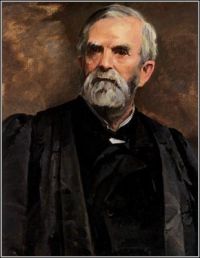
Portrait of William Burnham Woods William Burnham Woods Tilley v. County of Cook — Opinion of the Court

The inference from these principles is inevitable, that, unless some contract is shown, evidence of usage or custom is immaterial.
The plaintiff says he was ready to prove a custom of architects, that when prizes were offered for plans of a building, the successful competitor remained the owner of his own designs, and if they were adopted he was entitled to compensation therefor in addition to the prize, and that, by the same custom, the adoption of his plans entitled him to superintend the erection of the building, and to the usual remuneration therefor.
Source: Wikisource

Portrait of William Burnham Woods William Burnham Woods Tilley v. County of Cook — Opinion of the Court

Suppose a private person should announce his purpose to build a house after a design which he had seen in an architect's office, but before he begins the execution of his purpose changes his mind, never calls for or uses the plans, or even builds the house, is he liable to the architect for the value of the plans and for superintendence?
Source: Wikisource

Portrait of William Burnham Woods William Burnham Woods Tilley v. County of Cook — Opinion of the Court

It declares that it was for the public convenience that the courts and the offices of the city 'should be located at some one convenient point and readily accessible to each other,' and provides for the erection, by the city and county, of a public building on the court-house square, for the use of the county and city governments respectively, and the courts of record; that the general exterior design of the building shall be of such uniform character and appearance as may be agreed upon by the board of county commissioners and the common council of the city.
Source: Wikisource

Get perspective with Kwize: daily news enlightened by great literature