Summary

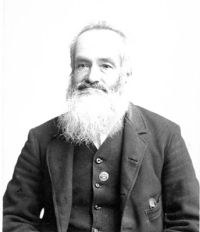
Portrait of William Muir William Muir,  The Caliphate: Its Rise, Decline and Fall…

“ In his last illness he kept showing the scars which covered his body, marks of bravery and unflinching prowess. "And now," he said, "I die even as a coward dieth, or as the camel breatheth its last breath." His end illustrates forcibly the instability of this world's fame. The hero who had borne Islam aloft to the crest of victory and glory, ended his days in penury and neglect. His tomb was visited by the traveller Ibn Jubeir in 1185, and is mentioned by Yakut (1225) , as also his house. According to another account, however, Khalid died, not at Hims, but at Medina. ”
Source: Wikisource

Portrait of William Muir William Muir,  The Caliphate: Its Rise, Decline and Fall…

“ Abu 'Obeida himself embarrassed, a painful pause ensued. At last Bilal, privileged as the Muezzin of the Prophet, stepped forth, and with stentorian voice cried, Thus and thus hath the Commander of the Faithful said, and it is incumbent on us to obey; so saying, he unwound the kerchief from the head of Khalid, bound his hands therewith, and took his helmet off. The great warrior, to whom Islam so greatly owed its conquests, stood as a felon before the congregation. Bilal repeated the question, and Khalid at length replied, "The money was my own." ”
Source: Wikisource

Portrait of William Muir William Muir,  The Caliphate: Its Rise, Decline and Fall…

“ Most of the Bedawi tribes in Mesopotamia embraced Islam. There were exceptions, and the story of Beni Iyad is singular. They migrated to the north, and found an asylum in Byzantine territory. But 'Omar, nettled at their disappearance, and fearing lest they should remain a thorn in his side, demanded their extradition, on pain of expelling all Christian tribes living under his protection. ”
Source: Wikisource

Get perspective with Kwize: daily news enlightened by great literature