Summary

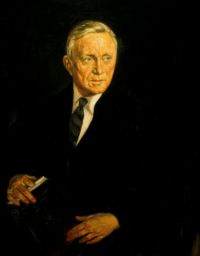
Portrait of William O. Douglas William O. Douglas Barsky v. Board of Regents of University of the State of New York…

By that reasoning a man has no constitutional right to work.
The right to work, I had assumed, was the most precious liberty that man possesses. Man has indeed as much right to work as he has to live, to be free, to own property. The American ideal was stated by Emerson in his essay on Politics, 'A man has a right to be employed, to be trusted, to be loved, to be reversed.' It does many men little good to stay alive and free and propertied, if they cannot work. To work means to eat.
Source: Wikisource

Portrait of William O. Douglas William O. Douglas Barsky v. Board of Regents of University of the State of New York…

It also means to live. For many it would be better to work in jail, than to sit idle on the curb. The great values of freedom are in the opportunities afforded man to press to new horizons, to pit his strength against the forces of nature, to match skills with his fellow man.
The dictum of Holmes gives a distortion to the Bill of Rights. It is not an instrument of dispensation but one of deterrents. Certainly a man has no affirmative right to any particular job or skill or occupation. The Bill of Rights does not say who shall be doctors or lawyers or policemen.
Source: Wikisource

Portrait of William O. Douglas William O. Douglas Barsky v. Board of Regents of University of the State of New York…

The Bill of Rights prevents a person from being denied employment as a teacher who though a member of a 'subversive' organization is wholly innocent of any unlawful purpose or activity. Wieman v. Updegraff, 344 U.S. 183, 73 S.Ct. 215, 97 L.Ed. 216. It prevents a teacher from being put in a lower salary scale than white teachers solely because he is a Negro.
Source: Wikisource

Get perspective with Kwize: daily news enlightened by great literature