Summary

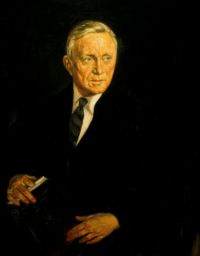
Portrait of William O. Douglas William O. Douglas Beilan v. Board of Public Education…

Governmentrightly can concern itself with the actions of people. But it's time we called a halt to government penalizing people for their beliefs. To repeat, individuals and private groups can make any judgments they want. But the realm of belief-as opposed to action-is one which the First Amendment places beyond the long arm of government.
A teacher who is organizing a Communist cell in a schoolhouse or a subway conductor who is preparing the transportation system for sabotage would plainly be unfit for his job.
Source: Wikisource

Portrait of William O. Douglas William O. Douglas Beilan v. Board of Public Education…

Our legal system is premised on the theory that every person is innocent until he is proved guilty. In this country we have, however, been moving away from that concept. We have been generating the belief that anyone who remains silent when interrogated about his unpopular beliefs or affiliations is guilty. I would allow no inference of wrongdoing to flow from the invocation of any constitutional right. I would not let that principle bow to popular passions. For all we know we are dealing here with citizens who are wholly innocent of any wrongful action.
Source: Wikisource

Portrait of William O. Douglas William O. Douglas Beilan v. Board of Public Education…

There are areas where government may not probe. Private citizens, private clubs, private groups may make such deductions and reach such conclusions as they choose from the failure of a citizen to disclose his beliefs, his philosophy, his associates. But government has no business penalizing a citizen merely for his beliefs or associations. It is government action that we have here. It is government action that the Fourteenth and First Amendments protect against.
Source: Wikisource

Get perspective with Kwize: daily news enlightened by great literature