Summary

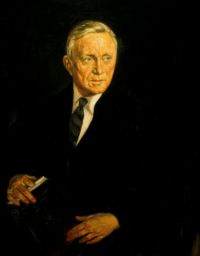
Portrait of William O. Douglas William O. Douglas Carnley v. Cochran — Concurrence

Intricate procedural rules are not restricted to criminal trials in Florida. Similar rules, equally as complex and confusing to the layman, may be found in the criminal statutes of the other States. I assume that they might not be applied with the same vigor against a layman defending himself, as they would against one represented by a lawyer. Yet even so, the rule of Betts v. Brady projected in a jury trial faces a layman with a labyrinth he can never understand nor negotiate.
Source: Wikisource

Portrait of William O. Douglas William O. Douglas Carnley v. Cochran — Concurrence

The sophisticated nature of the arguments necessary to attack a law as 'special' would almost always be beyond the comprehension of one unlearned in the law.
In Florida, a plea of abatement is the usual manner of testing the legality of a jury list. In some cases, a proceeding in mandamus has been deemed a proper remedy, as where it is claimed that the county commissioners have erred in the manner in which they selected the panel.
Source: Wikisource

Portrait of William O. Douglas William O. Douglas Carnley v. Cochran — Concurrence

Had petitioner been able to write, and had he access to the facts, he still would not, in all probability, have been able to build a legal argument sufficient to challenge the panel. He is a man of low intelligence. Some of the grounds for challenging the panel that might have been invoked by petitioner turn on difficult questions of state law, as where it is alleged that the legislature has passed a special, or local, law providing for the summoning and impaneling of grand and petit jurors. Article III, § 20, of the Florida Constitution, F.S.A. prohibits such 'special' laws.
Source: Wikisource

Get perspective with Kwize: daily news enlightened by great literature