Summary

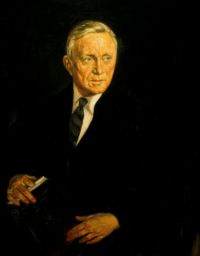
Portrait of William O. Douglas William O. Douglas Gilbert v. California (388 U.S. 263…

Prior to this case, police could enter and search a house without a warrant only incidental to a valid arrest. If this judgment stands, the police can search a house for evidence, even though the suspect is not arrested. The purpose of the search is, in the words of the California Supreme Court, 'limited to and incident to the purpose of the officers' entry'-that is, to apprehend the suspected criminal. Under that doctrine, the police are given license to search for any evidence linking the homeowner with the crime.
Source: Wikisource

Portrait of William O. Douglas William O. Douglas Gilbert v. California (388 U.S. 263…

And, the record indicates that Schlatter was not in the apartment when Townsend and the others conducted the detailed search.
The way I read the record, the photographs were discovered in the course of a general search for evidence. But even if Crowley is not believed and his testimony relating to the nature of his search is thrown out and it is simply assumed that he came upon the envelope in the course of a search for the suspect, there was no reason to pry into the envelope and seize the pictures-other than to obtain evidence. An envelope would contain neither the suspect nor the weapon.
Source: Wikisource

Get perspective with Kwize: daily news enlightened by great literature