Summary

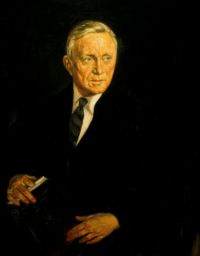
Portrait of William O. Douglas William O. Douglas Minor v. United States — Dissent

Petitioner did, of course, have the option not to sell the heroin, and in that sense his compliance with the statute was indeed quite possible. This argument, however, overlooks the fact that the statute does not simply outlaw all sales of heroin. The critical interest of the Government is necessarily in the collecting of the tax imposed by the Act, and it is the order form which provides the crucial link to this proper constitutional purpose.
Source: Wikisource

Portrait of William O. Douglas William O. Douglas Minor v. United States — Dissent

Two counts charge sales of heroin on two different dates in 1967 'not in pursuance of a written order * * * form.' He was found guilty on each count by the District Court, a trial by jury having been waived. The basis of his attack upon his conviction in this Court is that the requirement of an order form violates his privilege against self-incrimination. But that is not the end of the matter for me. Mr. Justice Holmes used to say that one dealing with the Government should turn square corners.
Source: Wikisource

Portrait of William O. Douglas William O. Douglas Minor v. United States — Dissent

It was there said that the 'order form' requirement tended 'to keep the traffic aboveboard and subject to inspection by those authorized to collect the revenue,' and also tended 'to diminish the opportunity of unauthorized persons to obtain the drugs and sell them clandestinely without paying the tax imposed by the federal law.' Id., at 94, 39 S.Ct.
Source: Wikisource

Get perspective with Kwize: daily news enlightened by great literature