Summary

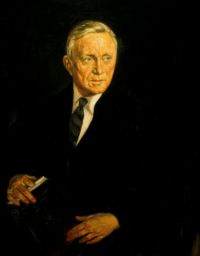
Portrait of William O. Douglas William O. Douglas On Lee v. United States — Dissent

To protect, that right, every unjustifiable intrusion by the government upon the privacy of the individual, whatever the means employed, mut be deemed a violation of the Fourth Amendment. And the use, as evidence in a criminal proceeding, of facts ascertained by such intrusion must be deemed a violation of the Fifth.
'Experience should teach us to be most on our guard to protect liberty when the government's purposes are beneficent. Men born to freedom are naturally alert to repel invasion of their liberty by evil-minded rulers.
Source: Wikisource

Portrait of William O. Douglas William O. Douglas On Lee v. United States — Dissent

Justice Brandeis in his dissent in Olmstead espoused the cause of privacy-the right to be let alone. What he wrote is an historic statement of that point of view. I cannot improve on it.
'When the Fourth and Fifth Amendments were adopted, 'the form that evil had theretofore taken' had been necessarily simple. Force and violence were then the only means known to man by which a government could directly effect self-incrimination. It could compel the individual to testify-a compulsion effected, if need be, by torture.
Source: Wikisource

Get perspective with Kwize: daily news enlightened by great literature