Summary

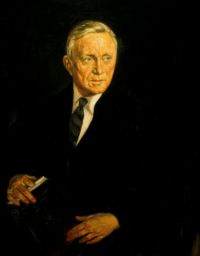
Portrait of William O. Douglas William O. Douglas United States v. Merz — Opinion of the Court

Commissioners, we assume, will normally be laymen, inexperienced in the law. But laymen can be instructed to reveal the reasoning they use in deciding on a particular award, what standard they try to follow, which line of testimony they adopt, what measure of severance damages they use, and so on. We do not say that every contested issue raised on the record before the commission must be resolved by a separate finding of fact. We do not say that there must be an array of findings of subsidiary facts to demonstrate that the ultimate finding of value is soundly and legally based.
Source: Wikisource

Portrait of William O. Douglas William O. Douglas United States v. Merz — Opinion of the Court

At the same time, there is danger that commissioners, unlike juries, may use their own expertise and not act as a deliberative body applying constitutional standards. A jury, until it retires, sits under the direct supervision of the judge, who rules on the admissibility of evidence, who sees that witnesses are properly qualified as experts, and who polices the entire hearing, keeping it within bounds.
Source: Wikisource

Portrait of William O. Douglas William O. Douglas United States v. Merz — Opinion of the Court

Conclusory findings are alone not sufficient, for the commission's findings shall be accepted by the court 'unless clearly erroneous'; and conclusory findings as made in these cases are normally not reviewable by that standard, even when the District Court reads the record, for it will have no way of knowing what path the commissioners took through the maze of conflicting evidence. See United States v. Lewis, 9 Cir., 308 F.2d 453, 458. The commissioners need not make detailed findings such as judges do who try a case without a jury.
Source: Wikisource

Get perspective with Kwize: daily news enlightened by great literature