Summary

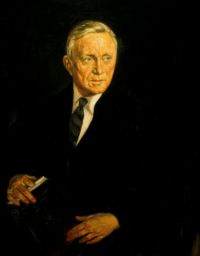
Portrait of William O. Douglas William O. Douglas Utah v. United States (403 U.S. 9…

But that again does not detract from the basic finding that the lake served as a highway and it is that feature that distinguishes between navigability and non-navigability.
There was, in addition to the boats used by ranchers, one boat used by an outsider who carried sheep to an island for the owners of the sheep. It is said that one sheep boat for hire does not make an artery for commerce; but one sheep boat for hire is in keeping with the theme of actual navigability of the waters of the lake in earlier years.
Source: Wikisource

Portrait of William O. Douglas William O. Douglas Utah v. United States (403 U.S. 9…

And they are navigable in fact when they are used, or are susceptible of being used, in their ordinary condition, as highways for commerce, over which trade and travel are or may be conducted in the customary modes of trade and travel on water. * * *' While that statement was addressed to the navigability of 'rivers' it applies to all water courses. United States v. Oregon, supra, 295 U.S. at 14, 55 S.Ct., at 615.
The United States strongly contests the finding of the Special Master that the Great Salt Lake was navigable.
Source: Wikisource

Portrait of William O. Douglas William O. Douglas Utah v. United States (403 U.S. 9…

The United States of America, its departments and agencies, are enjoined, subject to any regulations which the Congress may impose in the interest of navigation or pollution control, from asserting against the State of Utah any claim of right, title and interest:
(a) to the bed of the Great Salt Lake lying below the meander line of Great Salt Lake as duly surveyed heretofore or in accordance with Section 1 of the Act of June 3, 1966, 80 Stat.
Source: Wikisource

Get perspective with Kwize: daily news enlightened by great literature