Summary

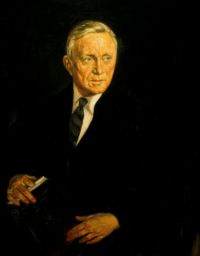
Portrait of William O. Douglas William O. Douglas Wainwright v. City of New Orleans…

The interest of society in apprehending murderers is obviously strong; yet when the manhunt is on, passions often carry the day. I fear the long and short of it is that an officer's 'seizure' of a person on the street, even though not made upon 'probable cause,' means that if the suspect resists the 'seizure,' he may then be taken to the police station for further inquisition. That is a terrifying spectacle-a person is plucked off the street and whisked to the police station for questioning and identification merely because he resembles the suspected perpetrator of a crime.
Source: Wikisource

Portrait of William O. Douglas William O. Douglas Wainwright v. City of New Orleans…

If this 'seizure' was constitutional, then the sleepless professor who walks in the night to find the relaxation for sleep is easy prey to the police, as are thousands of other innocent Americans raised in the sturdy environment where no policeman can lay a hand on the citizen without 'probable cause' that a crime has been or is about to be committed.
Source: Wikisource

Portrait of William O. Douglas William O. Douglas Wainwright v. City of New Orleans…

State of Ohio, a citizen had the right to offer some resistance to an unconstitutional 'seizure' or 'search.' Must he now stand quietly and supinely while officers 'pat him down,' whirl him around, and throw him in the wagon?
The present episode may be an insignificant one and the hurt to petitioner nominal. But the principle that a citizen can defy an unconstitutional act is deep in our system.
Source: Wikisource

Get perspective with Kwize: daily news enlightened by great literature