Summary

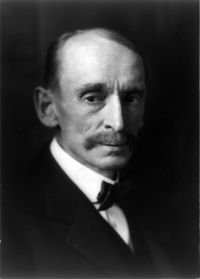
Portrait of William R. Day William R. Day United States v. Southern Pacific Company…

In the instant case we are not dealing with the principle in the abstract. The proof is ample that the policy of the Southern Pacific system has been to favor transportation on its line by securing for itself, whenever practicable, the carriage of freight which would normally move eastward or westward over the shorter line of the Central Pacific Railroad and its connections, for its own much longer and wholly owned southern route.
Source: Wikisource

Portrait of William R. Day William R. Day United States v. Southern Pacific Company…

Self-interest dictates the solicitation and procurement of freight for the longer haul by the Southern Pacific lines. While many practices, formerly in vogue, are eliminated by the legislation of Congress regulating interstate commerce, and through rates and transportation may be had under public supervision, there are elements of competition in the granting of special facilities, the prompt carrying and delivery of freight, the ready and agreeable adjustment and settlement of claims, and other elements which that legislation does not control.
Source: Wikisource

Portrait of William R. Day William R. Day United States v. Southern Pacific Company…

In 1862 and 1864 Congress by proper legislation incorporated the Union Pacific Railroad Company to build from the Missouri river westward, and authorized the Central Pacific to build eastwardly from the Pacific Coast, at or near San Francisco, to a common meeting point with the Union Pacific. These acts of Congress authorized the issue of first mortgage bonds, and also second mortgage bonds, and made a land grant of public lands for each linear mile of railroad construction.
Source: Wikisource

Get perspective with Kwize: daily news enlightened by great literature