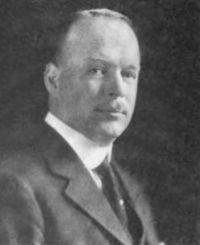
William Walker Rockwell

William Walker Rockwell

Summary

Portrait of William Walker Rockwell William Walker Rockwell 1911 Encyclopædia Britannica, Volume 28… (1911)

At St Paul's the legatine constitutions of Otto were published in a synod of 1237, those of Ottobon in 1268: these were the most important national councils held after the independence of York had been established. A synod at Lambeth in 1281 put forth canons none too welcome to Edward I.; they included a detailed scheme for the religious instruction of the faithful. During the next two centuries the councils devoted much attention to heresy: eight propositions concerning the body of Christ after his death were rejected at St Mary-le-Bow in 1286
Source: Wikisource

Portrait of William Walker Rockwell William Walker Rockwell 1911 Encyclopædia Britannica, Volume 28… (1911)

The first really notable council at St Paul's was that of 1075 under the presidency of Lanfranc; it renewed ancient regulations, forbade simony and permitted three bishops to remove from country places to Salisbury, Chichester and Chester respectively. In 1102 a national synod at Westminster under Anselm adopted canons against simony, clerical marriages and slavery. The councils of 1126, 1127 and 1138 were legatine, that of 1175 provincial
Source: Wikisource

Portrait of William Walker Rockwell William Walker Rockwell 1911 Encyclopædia Britannica, Volume 28… (1911)

St Paul's in 1396; and the doom of Sir John Oldcastle was sealed at the latter place in 1413. The 14th-century synods at St Paul's concerned themselves largely with the financial and moral status of the clergy, and made many quaint regulations regarding their dress and behaviour (1328, 1342, 1343; cf. 1463) . From the time of Edward VI. on, many of the most vital changes in ecclesiastical discipline were adopted in convocations at St Paul's and in the Abbey.
Source: Wikisource

Get perspective with Kwize: daily news enlightened by great literature