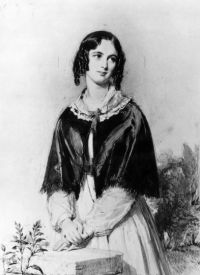
Charles of Anjou

Definition and stakes

J. N. Larned History for ready reference, Volume 1…

Charles I., the founder of the proud fortunes of this Third House, was ambitious in character, and events long favoured his ambition. Count of Provence, through the inheritance of his consort, had not long been invested with Anjou and Maine, ere he was invited to the conquest of Sicily [see ITALY (SOUTHERN) : A. D. 1250-1268] ." The Third House of Anjou ended in the person of John, who became King of France in 1350. In 1356 he invested his son Louis with Anjou and Maine, and in 1360 the latter was created the first Duke of Anjou.
Source: Gutenberg

Guillaume Félice History of the Protestants of France… (1853)

The duke of Anjou, then in his twentieth year, had been brought up, like his brother, by Gondi, who had taught him to violate faith and to feast himself with spectacles of blood. He was already given up to those unbridled debaucheries, and to those ignoble superstitions, which made him a modern Heliogabalus, and the most abject prince ever seen upon the throne of France. “As for me,” said Charles IX. to Coligny, “I am a Frenchman and king of the French; my brother, the duke of Anjou, speaks only with his head, his eyes, and his shoulders; he is an Italian.”
Source: Gutenberg

Portrait of Bayard Taylor Bayard Taylor A History of Germany from the Earliest Times to the Present Day

Charles of Anjou, after being crowned king of Naples and Sicily by the Pope, and having secured secret advantages [Pg 187] by bribery and intrigue, marched against Manfred in 1266. They met at Benevento, where, after a long and bloody battle, Manfred was slain, and the kingdom submitted to the usurper. By the Pope's order, Manfred's body was taken from the chapel where it had been buried, and thrown into a trench: his widow and children were imprisoned for life by Charles of Anjou.
Source: Gutenberg

Get perspective with Kwize: daily news enlightened by great literature