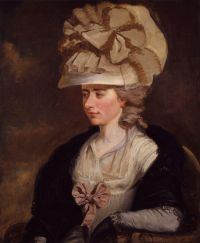
Marchioness of Brinvilliers

Definition and stakes

Albert Smith The Marchioness of Brinvilliers… (1886)

THE FLIGHT OF MARIE TO LIÉGE—PARIS—THE GIBBET OF MONTFAUCON Midnight was sounded upon the heavy bell of the Bastille by the sentinel on guard but a few minutes before the Marchioness of Brinvilliers—terrified, breathless, and, in spite of her hurry, shivering in her light dress beneath the intense cold—arrived at the Hôtel d’Aubray. There were no signs of life in that quarter of Paris, for the inhabitants had long retired to rest; a faint light, gleaming from the front windows of Marie’s residence upon the snow that covered the thoroughfare, alone served to guide her to the door.
Source: Gutenberg

Albert Smith The Marchioness of Brinvilliers… (1886)

The male occupant of the carriage burst into a loud laugh, and pulling off his mask, discovered the features of the Marquis of Brinvilliers!
‘Ventre St. Bleu, my friend! we are fated to odd rencontres,’ cried Brinvilliers. ‘You have begun the night by protecting my wife; you finish it by robbing me of a mistress.’
‘No, no!’ cried the girl, an actress at the theatre in the Rue du Temple. ‘I am no mistress of his: it is against my will that I am here: he carried me off from my mother’s. Save me, Monsieur de Sainte-Croix!’
‘Pardon, mademoiselle,’ returned Gaudin, sheathing his sword.
Source: Gutenberg

Albert Smith The Marchioness of Brinvilliers… (1886)

Whatever Gaudin’s station is, or may have been, his love raised me to his own position—one which the Marchioness of Brinvilliers did not think beneath her. I thought she would have been above so petty a cause for quarrel.’
‘And from these set speeches,’ rejoined Marie, ‘which, doubtless, have been conned over until you got them by heart, to make an effect when they might be called for, you have lowered yourself. Sainte-Croix has long since forgotten you. Have you no spirit, thus to pursue a bygone lover who has discarded you?’
‘Alas, madame!
Source: Gutenberg

Get perspective with Kwize: daily news enlightened by great literature