“ Reginald Rupert, returning his hot, insolent glare with a cold and steady stare, beheld a huge and powerful-looking man with a pale, cruel face, coarsely handsome, wherein the bold, heavily lashed black eyes were set too close together beneath their broad, black, knitted brows, and the little carefully curled black moustache, beneath the little plebeian nose, hid nothing of the over-ripe red lips of an over-small mouth. ”
Quotes about “Sir Rupert”
 Charles John Cutcliffe Wright Hyne,
Prince Rupert, the Buccaneer
“ For the moment Rupert thought the man had been mocking him; but then he saw that the gangway was narrow, that the boatswain traversed it every hour on his official watch, and that the sleeping sailor at the further side would cause him to walk near the other edge, and so within hand-grips of the slaves who wanted the keys. So the Prince sat on his bench well satisfied, and the men near him, who had heard what had been said, waited in silence to get their share of any benefits which might befall. There is no reason to ask the slaves on a galley if they will join an insurrection. ”
Charles John Cutcliffe Wright Hyne,
Prince Rupert, the Buccaneer
“ Throughout the play Prince Rupert had sat quietly at the Governor's right hand, puffing at a long pipe of tobacco, observing with his keen eyes all that happened, and answering courteously enough when spoken to. The men around him were the rudest this world contained; esteeming themselves the equals of any, and the superiors of most. But there was a natural dignity which hedged his Highness in, over which even they did not dare to trespass; and so, by way perhaps of a sly revenge, they contented themselves by gibing now and again at his easily-blushing secretary. ”
Eva Scott, Rupert, Prince Palatine
“ Rupert was not, in short, a person who could be regarded with indifference. By those with whom he came in contact he was either adored or execrated, and it is remarkable that a man who made so strong an impression upon his contemporaries should have left so slight a one upon posterity. To most people he is a name and nothing more;—a being akin to those iron men who sprang from Jason's dragon teeth, coming into life at the outbreak of the English Civil War to disappear with equal suddenness at its close. ”
 F. Anstey,
Lyre and Lancet: A Story in Scenes
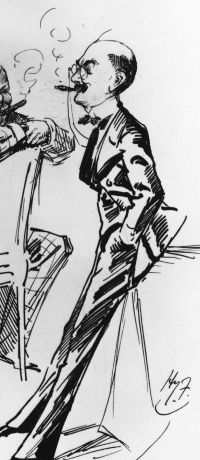
“ Oh, I'm sorry to hear that, Sir Rupert. I wish I could have got here earlier, I'm sure.Sir Rupert. Wish we'd asked you a month ago, if you're fond of shooting. Thought you might look down on sport, perhaps.Spurrell (to himself) . Sport? Why, he's talking of birds—not the horse! (Aloud.) Me, Sir Rupert? Not much! I'm as keen on a day's gunning as any man, though I don't often get the chance now.Sir Rupert (to himself, pleased) . Come, he don't seem strong against the Game Laws! ”
“ I knew they came to help me, and I grew tired of pageantry." He smiled at his own gravity, and reached out for his Crusader's sword. "Come," he broke off, "Coeur de Lion should be punctual to the tryst."They came into the High Street, the three of them; and Rupert checked his horse with a thrill of wonderment. Not until now had he guessed what the strain of these last idle days had been. He saw the gallant sea ride into Oxford, as in his dream—saw it ride down to meet him, creamed with white horses moving at the trot. He was a free man again. ”
 Anthony Hope,
The Prisoner of Zenda
(1921)
“ How would he open the door for me? For I feared that Rupert had slain him. "Help!" cried the duke's voice, faint and husky. I heard a stir on the stairs above me; and I heard a stir down to my right, in the direction of the king's cell. But before anything happened on my side of the moat I saw five or six men round young Rupert in the embrasure of madame's window. Three or four times he lunged with incomparable dash and dexterity. For an instant they fell back, leaving a ring round him. He leaped on the parapet of the window, laughing as he leaped, and waving his sword in his hand. ”
Charles John Cutcliffe Wright Hyne,
Prince Rupert, the Buccaneer
“ No class of men could be in company with Prince Rupert for long without gaining a high respect for his genius.—"My lord quartermaster," said Wick, "you're talking a bit too fine for these common fellows." "Well," said Rupert, "it's a hard thing to do, gentlemen, but I must avow myself to you as a coward. Transit of goods in these seas seems so perilous and so expensive that really I have been frightened out of risking it. There's some small fortune which it may come to your memory I earned a few days back—and for half of which I am responsible to Master Simpson, my matelot in Hispaniola. ”
Eva Scott, Rupert, Prince Palatine
“ Lastly, we have the Rupert of the Restoration; no longer sick at heart and desperately sad, but a Rupert who has out-lived hope and joy, disappointment and sorrow; a handsome man, with a keen intellectual face, but old before his time, and made hard and cold and contemptuous by suffering and loneliness. {3} The first few months of Rupert's existence were the most prosperous of his life, but he was not a year old before his troubles began. His father, Frederick V, Elector Palatine of the Rhine, had been married at sixteen to the famous Elizabeth Stuart, daughter of James I of England ”
 Leslie Stephen,
Dictionary of National Biography…
(1897)
“ At the beginning of the war, however, Rupert's energy and activity were of the greatest value to the king's cause. His example inspired his followers: ‘he put that spirit into the king's army that all men seemed resolved’ (Memoirs of Sir Philip Warwick, p. 227) . With a small body of cavalry, which numbered at first only eight hundred horse, he traversed the midland counties, raising men and money for Charles. ‘Prince Rupert,’ writes a parliamentary historian, ‘like a perpetual motion, was in a short time heard of at many places at a great distance’ (May, Long Parliament, ed. 1854, p. 249) . ”
 Leopold von Ranke,
A history of England principally in the seventeenth century…
(1875)
“ Prince Rupert in particular thought that nothing had been done so long as the enemy stood before him unconquered. He held that the King’s letter not only empowered, but instructed him to fight: in conjunction with the troops that were in York he thought himself strong enough to win a victory. The Marquis of Newcastle combated the proposal, but Rupert persisted: the Marquis would not, though he disliked it, appear to be overruled; he said that he had no other ambition than to be a loyal subject, and joined the Prince with his brave white-coats, and every man that could be spared from York. ”
Charles John Cutcliffe Wright Hyne,
Prince Rupert, the Buccaneer
“ Than bailing water out of a leaky vessel's bilges there is no labour more detestably menial; but a Prince of birth can be drowned by a ship swamping beneath him as glibly as a common sailor-man; and so as the remaining blacks showed clear signs of exhaustion, Rupert and his humble secretary had to take their turn at this occupation, and ply their utensils too with lusty vigour. It was extraordinary how fluent were the leaks. "They say that witches do sea-travelling in baskets," said Prince Rupert once. ”
Various, The Atlantic Monthly, Volume 03…
“ Horse and foot, carbines and petronels, swords and pole-axes, are mingled in one struggling mass. Rupert and his men seem refreshed, not exhausted, by the weary night,—they seem incapable of fatigue; they spike the guns as they cut down the gunners, and, if any escape, it is because many in both armies wear the same red scarfs. One Puritan, surrounded by the enemy, shows such desperate daring that Rupert bids release him at last, and sends afterwards to Essex to ask his name. ”
Charles John Cutcliffe Wright Hyne,
Prince Rupert, the Buccaneer
“ But Rupert's courage was in no way dulled; indeed matters that would have daunted all other men (let alone maids) always heartened that great soldier; and, besides, with his infinite strategy he saw here ahead of him an opportunity for earning monies for his master the King at the Hague, whom he was so diligently endeavouring to serve. From the moment of making sure that the glow came from a burning ship, he was all of a fidget to make the brigantine move faster ”
Eva Scott, Rupert, Prince Palatine
“ Rupert's greatness had been, in truth, thrust upon him, but having accepted it, he resolved to use it {238} for avenging his uncle to the uttermost. "Prince Rupert," declared a sailor of the Parliament, who had been his prisoner, "is not ashamed openly to profess that, provided he may ruin and destroy the English interest, especially the estates of the merchants and mariners of London, he cares not whether he gets a farthing more while he lives than what will maintain himself, his confederates, and his fleet." ”
Charles John Cutcliffe Wright Hyne,
Prince Rupert, the Buccaneer
“ But Prince Rupert listened with appetite. He smiled pleasantly when he heard of the richness of the pearls in store, and his eye kindled as the Spaniard described with how great accuracy they were guarded; and when at the end of his narration the Spaniard said he hoped he had shown how impossible it was for even the bravest of men to overcome the defenders and ravish the store, the Prince laughed merrily, and said he had done just the reverse. "I am a man," quoth he, "that likes a kernel all the better, and hammers for it all the cleverer, when the nut is hard a-cracking." ”
“ In Oxford there is the great heart beating. Gain or loss, it does not matter here."When the Crusading scene was ended, and while some affair of royalty granting a Charter to dull-witted burgesses was in the playing, Rupert came to the King's side. "There's a modern episode to follow, sir, if you are pleased to watch it.""Ah, no!" pleaded the Queen, with her pretty blandishment. "It would be a pity, Rupert, to be less than Coeur de Lion. The armour fits you like a glove.""I think you lived once in those days, Rupert of the fiery heart," laughed the King; "but no man thrives on looking back. ”
Leslie Stephen,
Dictionary of National Biography…
(1897)
“ On 11 July Rupert met the queen at Stratford-on-Avon, and escorted her to Oxford (Warburton, ii. 224) . The addition of her little army to the royal forces, and the victories of the Cornish army under Hopton, enabled the king to take the offensive. On 18 July Rupert left Oxford; on the 23rd he appeared before Bristol and joined the Cornish forces, and on the 26th he assaulted the city and forced Fiennes to capitulate (ib. ii. 236–64; Seyer, Memoirs of Bristol, ii. 402) . A fortnight later Rupert and the king laid siege to Gloucester (10 Aug.) ”
Eva Scott, Rupert, Prince Palatine
“ The King's triumph was short-lived. The citizens and the Parliamentary troops rallied to the defence of the capital. An army, twice as large as that of Charles, barred his way on Turnham Green. Essex advancing on Brentford, forced Rupert to retire. This he did in excellent order, entrusting the conduct of the retreat to Sir Jacob Astley. The Prince himself stood his horse in the river beside the bridge that he might watch his men pass over. ”
Eva Scott, Rupert, Prince Palatine
“ Prince Rupert was somewhat affrighted, by reason of the bribes, but there is given him by the Queen, Cardinal, and Council such assurances as his mind is at rest. I protest they laugh at you, and think your demands so insolent as nothing more." [19] In fact, while the English merchants lavished money, and Cromwell protests, Rupert was quietly selling the disputed goods at Nantes, and also the "Swallow" and her guns. He had no sooner accomplished this than he hastened back to Paris, in obedience to an urgent letter received from Charles. ”
Eva Scott, Rupert, Prince Palatine
“ He was still strong enough to fight, and, as his provisions were running short, his only hope lay in immediate victory. This Rupert knew, and for once in his life he preferred discretion to valour, and counselled passive resistance. If the King would be content to hold the roads between Essex and London, hunger and mutiny would speedily ruin the army of the Parliament. On September 20th, a part of the royal army occupied the road through the Kennet valley; Rupert with most of the cavalry held the road over Newbury Wash. ”
 Ellen Anderson Gholson Glasgow,
The Battle Ground
“ Prince Rupert and I will pass the lines together. Do you know that I have Prince Rupert, Dan?” “Keep him, dear, don't let him get into the army.” “He lives in the woods night and day, and when he comes to pasture I go after him while Uncle Shadrach watches the turnpike. When the soldiers come by, blue or gray, we hide him behind the willows in the brook. They may take the chickens—and they do—but I should kill the man who touched Prince Rupert's bridle.” “You should have been a soldier, Betty.” ”
Anthony Hope,
The Prisoner of Zenda
(1921)
“ Rupert turned his back to the window, bowed low, and said in his loud, merry tones: "Apologizing for your absence, sir. Could I leave the lady alone?" The newcomer must be Black Michael. I saw him directly, as he advanced toward the window. He caught young Rupert by the arm. "The moat would hold more than the king!" said he, with a significant gesture. "Does your Highness threaten me?" asked Rupert. "A threat is more warning than most men get from me." "Yet," observed Rupert, "Rudolf Rassendyll has been much threatened, and yet lives." ”
Eva Scott, Rupert, Prince Palatine
“ The last sentence alludes to an engagement entered into by Rupert to raise men for the Duke of Modena. In May 1655 he was busy with his levies, and he had offered commands in his force to Craven, Gerard, and the once Puritan Massey. [47] The French Court patronised the Duke of Modena, and Mazarin promised Rupert the command of 2,000 men chosen from the best troops of France, 1,000 Swiss, and three other regiments. The arrears of pay due to the Prince for his services to France in 1648, were less readily conceded. ”
Leslie Stephen,
Dictionary of National Biography…
(1897)
“ A letter from his father to the queen of Bohemia mentions with satisfaction the boy's gift for languages. In 1633 Rupert and his brother were permitted to accompany the prince of Orange during his campaign, and were present at the siege of Rhynberg. But Rupert's military training really began in 1635, when he served as a volunteer in the lifeguards of the prince of Orange during the invasion of Brabant. In 1636 Rupert followed the prince elector to England, and was received with great favour by his uncle. With the king he was entertained by Laud at Oxford, and on 30 Aug. ”
“ Indeed, I may say, he is his father, for he, being without question dead, Rupert is king. Alardo. Dead without question! You are positive. How, if I say I know he is alive? Think you to gain a sire the prince would choose To lose so mighty and august a throne? Ivy. Treasonless man! would you dethrone the prince? Ho! lechery and faith! guard our good prince! His life's in danger. Rupert. What cry is this? Ivy. Great prince, it might have been a crying matter; but I, thank the gods, have been man enough to stifle it. Rupert. So you have turned approver: renegades I never trust ”
Beckles Willson, The Great Company
“ It was a maxim of his that the arts of patience, of strategy, and parleying with the enemy should be left to statesmen and caitiffs; and it can be said with truth of Rupert that no one could possibly have acted more completely in accordance with his rule than himself. "Than Prince Rupert," wrote a chronicler at his death, "no man was more courageous or intrepid. ”
Eva Scott, Rupert, Prince Palatine
“ But in the list of Rupert's friends, there is one more who must not be forgotten: one who was his inseparable companion for nearly six years, who shared his captivity in Austria, followed him to England, ate with him, slept with him, accompanied him to Council and to Church, shared all his dangers and hardships, and never left his side, till he fell, with many gallant Cavaliers, on the field of Marston Moor;—this was the Prince's white dog, Boye. ”
Eva Scott, Rupert, Prince Palatine
“ The Puritan army was encamped on Dunsmore Heath, and Rupert, riding as near to it as he dared, overtook a man driving a horse which was laden with apples. The man, on being interrogated, informed the Prince that he was going to sell the apples to the soldiers of the Parliament. "Why dost thou not go to the King's army?" ”
