AI-generated from sources
The Caribbean as a strategic theater: Sea power, the Panama Canal, and the legacy of American supremacy
In Brief
- The construction of the Panama Canal was primarily a military-political endeavor that defined the Caribbean as the essential 'larger Panama Canal Zone' for U.S. security.
- Alfred Thayer Mahan's sea power doctrine provided the intellectual rationale for U.S. naval supremacy, necessitating the exclusion of rival powers and the acquisition of strategic bases.
- American policy established a precedent of intervention, acquiring naval stations, and applying financial and political supervision to secure its maritime frontiers.
- Modern geopolitical contests in the Caribbean are structural continuations of this enduring historical logic of hegemonic control and the need for 'negative defense' against potential adversaries.
Main authors
The Caribbean Sea has long been more than a mere geographical space; it has functioned for centuries as a strategic theater, an inland sea where the fortunes of great powers have ebbed and flowed [1, 2]. Its archipelagos and coastlines form a complex chessboard for naval power, with control over its passages being fundamental to wider commercial and military ambitions [3]. The historical importance of the region is inextricably linked to the principles of sea power, which are themselves founded upon the control of maritime commerce [4]. European powers, engaged in conflicts that spanned the globe, historically treated the Caribbean as a critical zone of confrontation, setting a precedent for its enduring strategic significance .
The turn of the 20th century marked a pivotal shift in this dynamic with the United States' decision to construct an isthmian canal. This monumental undertaking did not simply create a new waterway; it redefined the entire region as what has been termed the "larger Panama Canal Zone" [5]. This concept extended far beyond the immediate territory of the canal, encompassing the West Indies, Mexico, Central America, and the northern coast of South America . The canal's purpose was understood from the beginning to be primarily military-political, rather than purely commercial, heralding a new era in the international life of the United States and cementing the Caribbean's role as a stage for global power projection [6, 7].
The Doctrine of Sea Power and the American Awakening
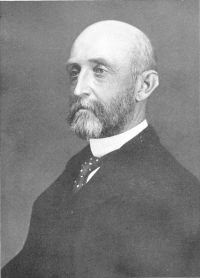
The intellectual framework for America's strategic reorientation toward the Caribbean was largely provided by theorists of sea power, most notably Alfred Thayer Mahan. In this view, the Caribbean is a preeminent domain of naval force, a crucial nexus where the trade routes connecting the Atlantic and Pacific would inevitably meet [8]. For a nation with coastlines on three major seaboards, controlling this central basin was not a matter of choice but of strategic necessity [9]. The United States, by virtue of its geography, was positioned to be a frontier from which the sea power of the civilized world could operate, accepting a responsibility to maintain order in this hemisphere where it sought to exclude the influence of others [10].
Despite this geographical advantage, the United States was, for a long time, alarmingly unprepared to enforce its interests in the region [11]. Mahan and others lamented that the nation was unwilling to build a navy or fortify its sea frontiers to a degree that would command respect in international disputes [12]. This stood in stark contrast to established European powers, particularly Great Britain, which already possessed a chain of strategically located and well-defended naval bases throughout the Caribbean [13, 14]. This asymmetry in military readiness was identified as a source of deep national concern, creating a powerful argument for a significant naval buildup .
The catalyst for turning this strategic anxiety into concrete policy often came from regional instability. The protracted insurrection in Cuba against Spanish rule, for example, was used to justify the need for a powerful American navy capable of intervening in the Caribbean [15]. Such a force was deemed essential not only for humanitarian reasons but to ensure that the United States could decisively influence the outcome of any conflict or dispute that might arise in this vital area, particularly with the prospect of an isthmian canal on the horizon .
The Panama Canal: A Military-Political Enterprise
The determination to build a canal transformed abstract strategic doctrines into a concrete and aggressive foreign policy . The undertaking was widely seen as an investment whose primary returns would be in the military and political fields, with any commercial profitability being a secondary concern . For the United States, the military and trade advantages were considered clear profit on the investment [16]. The canal was envisioned as a project that would knit together the nation's disparate maritime frontiers and advance the reach of American civilization by thousands of miles [17].
The path to constructing the canal was paved with diplomatic complications and direct intervention that reshaped the political map of the Americas [18, 19]. The US-backed separation of Panama from Colombia was a source of deep and lasting controversy, creating a negative impression of American intentions throughout Latin America and fueling suspicions that persisted for decades [20, 21]. This action, more than any other, cemented the regional perception of a looming "Yankee peril" that could be even more threatening than intervention from European powers [22].
Within the newly established Canal Zone, the United States exercised authority tantamount to sovereignty, including the right to maintain order and sanitation in the Panamanian cities of Panama and Colon [23]. This control was also economic; treaty provisions gave the U.S. what amounted to a monopoly on supplying the canal and the ships passing through it, a condition Panamanians viewed as a hard bargain [24]. These policies of supervision, financial control, and policing of disorderly countries became hallmarks of the new American posture in the wider Caribbean basin .
The Contest for Regional Supremacy
America's rise to dominance in the Caribbean was not into a vacuum but represented a direct challenge to Great Britain, the region's long-standing naval power [25]. The British Empire maintained a formidable strategic presence through a network of naval stations including Halifax, Bermuda, Jamaica, and Santa Lucia, which effectively screened the Atlantic approaches to Central America [26]. This established British power, with its natural advantages and fortified positions, created a serious point of contention with the United States over the control of a future canal and the balance of power in the hemisphere [27].
The rivalry played out across a strategic map where the relative value of key islands was intensely debated. While Great Britain's position in Jamaica was strong, American strategists considered Cuba to be the preponderant position in the Caribbean due to its size, resources, and command of vital sea lanes like the Windward Passage [28]. Diplomatic friction was also common, exemplified by disputes over whether British treaty rights guaranteed equal treatment on canal tolls, a challenge to the perceived American right to favor its own shipping [29].
Beyond the direct rivalry with Britain, U.S. policy was increasingly driven by a desire to pre-empt the influence of other potential adversaries, particularly Germany [30]. The American pursuit of the Danish West Indies was motivated not by their intrinsic commercial value but by the strategic imperative of preventing them from falling into German hands and being used as a naval base to threaten the Panama Canal . This highlights a key tenet of American policy: the acquisition of territory for the purpose of 'negative control,' denying strategic assets to any potential enemy and thereby securing the approaches to its vital interests [31].
The construction of the Panama Canal was the culmination of a process that irrevocably established the United States as the hegemonic power in the Caribbean. This new era in American international life was built on a foundation of sea power doctrine, which provided the rationale for a policy of naval supremacy and active intervention throughout the "larger Panama Canal Zone" . The defense of this waterway became the justification for establishing protectorates, supervising finances, and acquiring naval stations, policies that fundamentally reshaped the political landscape of the hemisphere and created a complex legacy of power and suspicion [32].
While the specific dynamics of great power competition have evolved, the underlying geopolitical logic that defined the Caribbean as a strategic theater remains relevant. The canal continues to redraw the commercial map of the world, and the region's nations find their economic futures tied to its currents [33, 34]. The area remains a nexus of global interests, where the United States continues to promote its vision of partnership while confronting regimes it deems hostile [35, 36]. The enduring lesson from this history is that the Caribbean, due to its critical geographic position, remains a stage where the strategic imperatives of global powers continue to be played out .