AI-generated from sources
The golden eagle's return: A test of England's soul and sovereignty
In Brief
- The golden eagle symbolizes untamed, natural sovereignty, contrasting sharply with the ordered, human-controlled British state.
- The eagle's historical extinction reflects a national 'civilizing impulse' and a prioritization of commercial utility over natural majesty.
- The reintroduction effort can be interpreted as an act of national repentance, seeking ecological absolution for past destruction.
- The success of the return depends not just on habitat suitability but on a fundamental shift away from a purely utilitarian worldview toward reverence for the wild.
Main authors


The golden eagle, Aquila chrysaetus, once graced the skies of England, nesting in the high, remote places of Derbyshire's Peak District and the Snowdon range [1, 2]. Its historical presence, documented as far back as the 17th century, establishes it not as an alien species but as a native sovereign, long exiled from its own domain . This powerful bird of prey, which largely disdains human proximity and thrives in landscapes untamed by settlement, has been functionally absent from England for centuries, a casualty of a nation's expansion and changing landscape . The prospect of its reintroduction, therefore, is not merely a matter of ecological restoration but a profound cultural and philosophical question.
The eagle serves as a potent and enduring symbol, embodying a form of untamed majesty that resonates through literature and history [3, 4, 5]. It is an allegory for a wild, natural sovereignty, a freedom that exists beyond the compacts and controls of human governance [6]. Its historical association with imperial might and plumed warriors speaks to a power that is both glorious and fierce, a standard for armies and a metaphor for unconquerable spirit [7]. Human nature may be finer than scenery, but the eagle’s nest represents a pinnacle of wildness that humanity can only observe, not truly inhabit or command [8].
This raises a central tension: can a modern state, whose history is intertwined with the subjugation of both internal and external landscapes, genuinely reconcile with a symbol of the very wildness it has extinguished? The debate over the eagle's return forces a confrontation between England's conservationist ambitions and its historical identity. It questions whether a nation that has, by some accounts, forfeited its "ancient English dower of inward happiness" and embraced a commercial spirit often at odds with the natural world, is worthy or capable of welcoming back such a potent emblem of untamed natural power [9, 10]. The issue becomes a test of national repentance and the authenticity of its desire for ecological and perhaps spiritual renewal [11, 12].
An Emblem of Power and Wildness
The symbolism of the eagle is deeply entwined with concepts of martial power and sovereign authority. Its image has been used to represent the zenith of human ambition, from the glittering, golden-coated soldiers described by Shakespeare as being as full of spirit as eagles , to the imperial standards carried by Napoleon's armies across Europe . This association reflects the eagle's natural attributes: its strength, its commanding presence, and its ability to dominate its environment [13]. In this context, the eagle is not just a bird but an aspirational figure, a 'minatory eagle-glance' that represents a form of superiority ordained not by social structure but by inherent, natural prowess .
However, this symbolic co-option by human empires stands in stark contrast to the eagle's essential nature, which is defined by its remoteness from and indifference to human civilization . The eagle represents a form of majesty that is vast and elemental, a power that does not lose its splendor by serving a purpose, much as the aurora is no less magnificent for creating the dewdrop . It is a creature of high rocks and inaccessible clefts, a guardian of its young against a perilous world, suggesting a form of sovereignty that is primal and self-contained [14, 15]. This wildness is its core identity, a quality that makes it an uneasy fit within a landscape thoroughly managed and ordered by human hands.
The attempt to capture this wild spirit in human terms often reveals a fundamental misunderstanding. While monarchs may be seen as instruments of God's will on Earth, defending a kingdom from peril and oppression [16], the eagle embodies a more direct and untempered connection to a natural or divine order [17]. Its power is not derived from a 'well-compacted structure of church and state' but from its very being [18]. The human desire to see and interpret this power—to make the eagle's nest 'finer' for having been looked into by a mountaineer—highlights a persistent impulse to frame nature in relation to human experience, even when its essence is its separateness .
The Sovereign State and the Taming of the Land
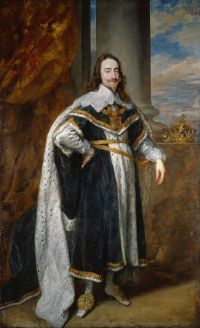
The English state, particularly its monarchy, has historically projected an image of meticulously ordered and divinely sanctioned power. This is a sovereignty bound by law and reverence, a 'fortress at once and a temple' designed to guard a subjected land . Monarchs like Elizabeth I and Charles I saw their authority as an instrument of God, a responsibility to maintain truth, glory, and public peace, even while acknowledging the heavy burden of the crown [19]. This vision of governance is inherently one of control and structure, where the king's scepter and God's sovereignty are carefully delineated to manage the consciences and actions of the populace .
This drive for order inevitably places the state in opposition to the untamed. The eagle's extirpation from England is a direct, if unintended, consequence of this civilizing impulse, which prioritizes a landscape managed for human needs over one that accommodates wild predators . The development of the nation, the spread of its people, and the cultivation of its land created an environment inhospitable to a creature that embodies the opposite of subjugation. The very qualities that made the eagle a potent symbol of power—its wildness and freedom—were the ones that made its physical presence incompatible with the nation's trajectory.
This historical taming of the land is mirrored by a perceived internal decay, a loss of national vitality and virtue. England has been depicted as a 'fen of stagnant waters', a nation of 'selfish men' who have lost their way . This critique suggests a society that has exchanged authentic, 'inward happiness' for a more superficial existence. This spiritual malaise can be linked to a modern commercial spirit that sees value only in financial return, questioning the use of any endeavor, like pure science, that does not yield immediate profit . It also echoes a past where economic exploitation, such as starving the Irish 'hen' to get its 'golden eggs', was a feature of its imperial relationships [20]. This pragmatic, often cynical, worldview is fundamentally at odds with the reverence required to appreciate nature for its own sake [21].
A Nation's Reckoning: The Ambiguity of Return
The proposed reintroduction of the golden eagle can be framed as an act of national repentance. Christian theology provides a powerful metaphor for this process, asserting that falling into sin does not preclude the possibility of redemption . The grant of repentance is not to be denied, and through grace, one may 'arise again, and amend our lives' . By this logic, England's historical sin against its natural heritage is not unpardonable. The desire to bring back the eagle could be interpreted as a sincere effort to 'turn from wickedness, and live', a collective act of seeking ecological absolution for past destruction .
However, the nature of any 'return' is fraught with complexity and doubt. A return is not a simple restoration of a past state; it is haunted by the memory of what was lost and the actions that caused the loss [22]. The passage of years brings mistrust and suspicion, making it difficult to have faith in the reconstituted relationship . Some might even view such a grand gesture of restoration, a 'Great Return', as a form of collective madness, a sentimental delusion disconnected from present reality [23]. Man's underlying nature remains, with civilization often being but a thin veneer over a 'dominant beast' that is ever ready to awake [24]. This raises the question of whether the underlying conditions and attitudes that led to the eagle's disappearance have truly changed.
Ultimately, the project confronts a modern England grappling with its identity. The nation's history is one where the 'golden age' is a contested idea, perhaps located in a past that was far harsher than nostalgic memory admits [25]. The contemporary focus is often on practical matters like monetary reform and managing economic realities, which seem distant from the profound symbolism of the eagle [26]. To welcome back a creature that represents untamed freedom and sovereignty into a nation defined by its 'well-compacted' structures and pragmatic, often commercial, instincts is a profound paradox. The return of the golden eagle would be a test of whether England can move beyond a superficial gesture and cultivate the reverence for the wild that it long ago abandoned.
The golden eagle, as a symbol, carries the weight of a dual legacy: it is both an emblem of imperial power co-opted by humanity and a totem of a wild, natural sovereignty that defies human control . Its historical extermination from the English landscape was a direct result of a civilizing process that prioritized order, expansion, and control over the preservation of untamed nature . The state's structured authority, designed to manage land and people, left no room for a creature whose very essence is freedom from such constraints.
Therefore, the debate over reintroducing the golden eagle is more than an ecological initiative; it is a referendum on the character of modern England. It poses the question of whether a nation, arguably diminished in its spiritual and natural vitality , can authentically embrace a symbol of the very wilderness it once conquered. A successful return would require more than just a suitable habitat; it would demand a form of national repentance and a fundamental shift away from a purely utilitarian worldview toward one that can once again value majesty for its own sake . Without such a change, the return of this fettered king of the skies risks being an empty spectacle, a nostalgic echo in a land that may no longer be worthy of its presence.