AI-generated from sources
The paradox of emancipation: Citizenship, loyalty, and betrayal in the Franco-Jewish experience
In Brief
- French Jewish emancipation, while pioneering, created a persistent paradox where legal equality frequently clashed with the reality of societal persecution and state failure.
- Jewish communities historically embraced civic loyalty and sacrifice as a sacred duty, even when the state proved incapable or unwilling to protect them.
- Thinkers observed that the project of assimilation, central to universalist emancipation, often resulted in complex negotiations of identity and a weakening of communal ties.
- The ongoing struggle over security and external threats frequently reactivates historical patterns of scapegoating, placing the loyalty of minority citizens under renewed suspicion.
Main authors

France's emergence as a modern republic was heralded by new theories of liberty and equality, creating a political landscape where democratic ideals were ascendant [1]. Central to this transformation was the emancipation of its Jewish population, a landmark act that positioned France as the pioneer of Jewish civil rights and a beacon of universalism. This event promised to dissolve ancient prejudices and integrate the Jew as a citizen, equal before the law. The foundational belief was that nations which permit their diverse populations to develop freely become stronger, making the Jews a valuable asset to the state that accepts them as an integral part of its body politic [2].
However, this foundational promise has been perpetually tested. The history of the Jewish citizen in France is not a simple story of linear progress but a tragic paradox, marked by recurrent periods of state failure and societal violence. The legal status of full citizenship has often been contradicted by the lived reality of persecution, requiring a continuous struggle to uphold the principle of equality [3]. In response to this precarious position, Jewish communities consistently demonstrated an unwavering commitment to fulfilling their civic duties, viewing loyalty and sacrifice for the fatherland as a sacred obligation, even when that same fatherland failed to protect them [4, 5].
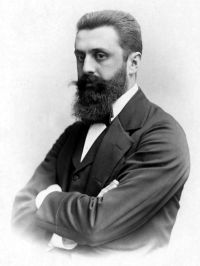
This enduring tension between the republican ideal and its inconsistent application forms the central tragedy of the Franco-Jewish experience. The emancipation, intended to solve the 'Jewish Question,' instead created a new set of challenges, as observed by thinkers like Theodor Herzl, who noted that civic integration could lead to a weakening of communal ties among the assimilated . The story of the Jewish citizen is therefore an exploration of the fragility of rights, the nature of loyalty in the face of betrayal, and the constant, painful effort to compel the state to live up to its own highest ideals [6].
The Universalist Promise and the 'Jewish Question'
The intellectual ferment of the nascent French Republic championed a universalist vision, aiming to create a new political subject: the citizen, whose rights and duties were defined by their relationship to the state, not by their religious or ethnic origin . The emancipation of the Jews was the ultimate test of this principle. From the perspective of the state, this was not merely an act of tolerance but a project of national integration. The expectation was that by granting Jews political rights, their distinct communal identity would gradually be subsumed into the secular, national fabric.
This transformative ambition is critically illuminated in Karl Marx's analysis, which framed the issue not in terms of religion but of economics [7]. For Marx, the 'self-emancipation' of the age required an abolition of the societal conditions that produced what he termed 'practical, real Judaism' . While a radical critique, this perspective captures a common undercurrent of the emancipatory project: the belief that the 'Jewish Question' would be resolved when the Jew ceased to be distinct and fully assimilated into the secular order. Emancipation was thus conditional, an invitation to join the nation by shedding particularity.
From within the Jewish community, the response to this new status was one of earnest and profound commitment. The duties of citizenship were embraced not as a burden, but as an opportunity to demonstrate loyalty and contribute to the national good . This sense of obligation was seen as absolute, with a view that treachery to the fatherland was a profound betrayal of religious and civic conscience [8]. However, as Herzl noted, this very process had complex consequences. Those who achieved social and economic success in the wake of emancipation often experienced a diminished sense of communal feeling, illustrating the deep personal and collective negotiations required by this new form of identity .
The State: Guarantor and Betrayer
In the framework of the modern nation-state, the government is posited as the ultimate guarantor of rights and security. The prosperity and power of a country are seen as inseparable from the well-being and liberty of all the nationalities that constitute it [9]. For Jewish citizens, the state was the entity to which they were bound by unbreakable ties and to which they owed their allegiance [10]. The social contract implied that in return for this loyalty, the state would protect them, ensuring their right to exist as equals among their fellow citizens .
Yet, history provides stark evidence of the state's capacity to betray this contract, transforming from protector to persecutor. While not a French example, the experience of Jews in the Russian Empire offers a chilling case study of state-sponsored oppression. The creation of the Pale of Settlement was effectively a vast penal colony where millions were confined by law, subject to severe economic and property restrictions, and left vulnerable to the whims of a corrupt administration [11, 12]. This policy of systemic discrimination was condemned by liberal elements within Russia, but the government remained unmoved, demonstrating how a state can willfully turn on a segment of its own population [13].
France, despite its republican ideals, has not been immune to such failures of statecraft. Periods of profound crisis have revealed a political system that is 'corrupt to the heart's core,' lacking true statesmen and governed by favoritism rather than public spirit [14]. During such times, the state's failure to protect its Jewish citizens becomes acute. Anti-Semitic tropes, such as linking Jews to conspiracies and national ruin, have proven to be a persistent poison in the political culture, capable of being deployed even in official or military contexts [15]. The granting of partial rights without a genuine commitment to full equality creates a 'cold disappointment,' leaving the fundamental injustice unresolved and emphasizing the distinction between Jew and other citizens .
Citizenship on Trial: Loyalty in the Crucible of Crisis
National crises, particularly war, serve as the ultimate crucible for the concept of citizenship, testing the bonds between the state and its people. In these moments of extreme trial, Jewish communities have historically demonstrated an extraordinary patriotism [16]. They organized relief efforts for all soldiers without distinction of creed, viewing them as 'brothers, sons in common of our great Fatherland,' and assumed responsibility for the families of those serving at the front [17]. Hundreds of thousands of Jewish soldiers fought and died for their countries, often returning from abroad to voluntarily join the military, even when they knew opportunities for advancement were denied to them [18].
This profound loyalty was frequently met not with gratitude but with suspicion, institutional betrayal, and collective punishment. The state, under the guise of military precaution, often targeted its Jewish population with discriminatory measures based on imaginary crimes [19]. The policy of holding an entire people collectively responsible for the alleged actions of a few individuals represents a monstrous survival of a primitive sense of justice [20]. This created appalling situations where the families of decorated Jewish soldiers were denied refuge and exposed to persecution, even as their sons and husbands shed their blood for the country [21].
This betrayal did not extinguish the Jewish spirit but forged a tragic resilience. The refusal to submit to conditions that insulted their self-respect as both citizens and Jews became a point of honor, even at the cost of starvation and homelessness . In times of persecution, every religious and civic act becomes a test of faithfulness, strengthening the spirit of resistance and transforming duty into a heroic sacrifice [22]. This dynamic reveals a people who refuse to be defined by their persecutors, clinging to their dignity and their right to citizenship even when the state itself denies it.
Modernity and the Unresolved Paradox
In the contemporary era, the foundational principles of the French Republic continue to be debated and defended. The Franco-American alliance, for example, is often framed through a shared history rooted in the fight for liberty and independence, a bond celebrated as a tribute to freedom [23, 24]. This history serves as a powerful reminder of the universalist ideals upon which the nation was built. Today, France and its allies confront 'new threats' from rogue regimes and terrorist organizations that wage war on their civilizations, demanding a renewed commitment to collective security [25, 26].
However, this modern security landscape can also reactivate old prejudices. The assertion that France is 'infected by terrorism' because it 'let people enter their territory' demonstrates how easily fears of external threats can be mapped onto internal minority populations, echoing historical patterns of scapegoating [27]. The security of the state becomes a pretext for questioning the loyalty and belonging of certain groups of citizens, placing them under a cloud of suspicion and challenging the very notion of a united, indivisible republic.
Navigating this complex terrain requires a careful and principled statecraft. Modern French foreign policy, for instance in Syria, reflects this challenge, seeking pragmatic ways to eradicate terrorism while simultaneously working toward an 'inclusive and sustainable political solution' [28]. This approach acknowledges that lasting peace cannot be built on exclusion. It is a tacit recognition that the health and security of the nation depend on its ability to uphold its own democratic and inclusive ideals, both at home and abroad. The emancipatory paradox thus remains a central, unresolved tension in France's ongoing political project.
The trajectory of the Jewish citizen in France illustrates a profound and persistent paradox. The nation that first enshrined Jewish rights in law has repeatedly been the site of their violation, creating a history defined by the struggle between a universalist promise and a particularist reality . The Jewish experience has served as a barometer for the health of the republic, revealing the inherent fragility of legal equality when it is not reinforced by the unwavering will of the state and the broad acceptance of society . This history demonstrates that rights, once granted, are not permanently secured but must be perpetually defended.
Ultimately, the story is one of tragic resilience and an enduring faith in the republican ideal. The unwavering loyalty and immense sacrifices made by Jewish citizens, often in the face of profound betrayal, underscore a deep attachment to the principles of liberty and equality, even when the nation failed to embody them . This continuous struggle is a testament to the fact that the promise of emancipation is not a single historical event, but an ongoing project. It serves as a crucial lesson: the ultimate strength and prosperity of a nation are inseparable from its commitment to ensuring justice and freedom for all its people .
