AI-generated from sources
The paradox of the natural man: Simplicity, culture, and the critique of the literary self
In Brief
- Literary representation is challenged by defining human nature, oscillating between 'beautiful simplicity' (direct emotional clarity) and the complexity of the cosmopolitan, cultured individual.
- The ideal of simplicity is often a carefully curated aesthetic, while the cultured scholar risks being viewed as an inauthentic, uprooted 'abortion' lacking local vitality.
- A radical critique, asserting that the 'self' is a myth perpetuated by destructive thought, suggests that all literature is inherently an artifice that cannot capture true, pre-cognitive existence.
- The quest for a natural literature is paradoxical because its primary tools—language, knowledge, and narrative—are identified as the very agents that corrupt the 'natural state' they seek to represent.
Main authors
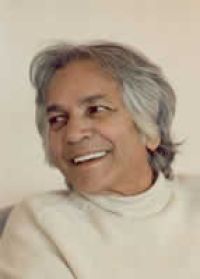
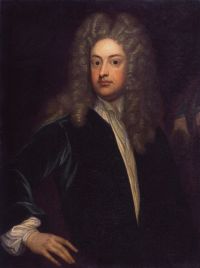
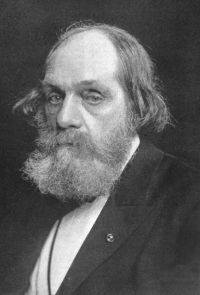
The fundamental challenge of literary representation lies in capturing a subject's genuine nature, a task complicated by profound disagreements over what constitutes the 'natural' state of a human being. On one hand, literature has long cherished a 'beautiful simplicity,' an ideal where genius is measured by its ability to let a thought shine in its own unadorned beauty [1]. This approach favors direct, powerful portrayals of human emotion and character. On the other hand, a cosmopolitan perspective values the complex individual shaped by history, learning, and culture, a figure who transcends local conditions to grasp universal truths [2]. This cultured ideal, however, stands accused of being an unnatural and weakened state, a 'puny abortion' detached from authentic roots [3].
This tension between the simple and the complex is radically disrupted by a third perspective that identifies culture itself as the primary corrupting force. From this viewpoint, thought is a destructive weapon and the self is a myth perpetuated by society to ensure its own continuity [4, 5]. This critique suggests that any literary representation, whether simple or complex, is merely a depiction of a culturally imposed illusion, failing to touch the authentic, pre-cognitive state of being [6, 7]. The quest for a natural literature thus becomes a paradoxical endeavor: an attempt to use the artificial tools of language and narrative—products of the very culture being questioned—to represent a reality that may exist only in their absence [8, 9].
Exploring this conflict reveals a deep philosophical chasm. Is the 'natural man' found in heroic action and straightforward feeling, in the intellectual refinement of the scholar, or in a state of being that has shed the 'dead refuse of the past' [10]? By examining portrayals of simple virtue, the cosmopolitan intellectual, and the radical critique of consciousness, we can trace the contours of this debate and question whether literature can ever escape the tyranny of its own forms to represent a truly natural existence.
The Allure and Artifice of 'Beautiful Simplicity'
The ideal of a 'natural' style in writing has historically been associated with a majestic simplicity, a quality admired in ancient compositions where ideas are presented without excessive or 'foreign' ornamentation . This aesthetic principle suggests that the most profound truths are best conveyed directly, a concept that finds its parallel in literary characters defined by clear and potent moral or emotional states. Such figures are often depicted with an unambiguous charm that captivates and enslaves the hearts of others, their appeal rooted in a perceived purity of character and purpose [11, 12]. Their inner lives seem transparent, their goodness shining like 'a bit of God's sunshine' [13], or their loyalties and animosities expressed with an uncluttered, admirable passion [14].
This mode of representation draws its power from clarity, focusing on external conflicts such as political rebellions, the injustices of rulers, and the perils of captivity [15, 16]. The characters' motivations, whether driven by pragmatic self-preservation or fervent allegiance to a cause, are presented as straightforward responses to their circumstances [17, 18]. While this creates compelling narrative momentum, it risks portraying human nature as less complex than it is. The focus remains on action and reaction, sidestepping the internal ambiguities and contradictions that define a more cosmopolitan understanding of the individual.
Furthermore, the very notion of a 'natural' state accessible through simplicity is itself a contentious proposition. What appears instinctive or inherent may in fact be a highly refined social construct. The sense of justice, for instance, has been argued to arise not from nature, but artificially from education and human conventions [19]. Even virtues like cleanliness or truthfulness are described as triumphs over instinct, not expressions of it [20]. This suggests that the 'simplicity' admired in literature is not a raw reflection of nature, but a carefully curated aesthetic. Indeed, the appreciation of the natural world itself is often mediated through literature, becoming an acquired taste rather than an original instinct [21]. The simple character, therefore, may be as much an artifice as the most complex one, a product of convention masquerading as nature.
The Cultured Individual: Cosmopolitan Ideal or Unnatural Abortion?
In stark contrast to the ideal of simplicity stands the figure of the cultured man, whose identity is forged not by instinct but by deep engagement with a specific intellectual and social milieu [22]. This individual, exemplified by literary figures like James Russell Lowell, is the product of fortunate conditions: a scholarly environment, a reverence for classical learning, and a community of letters where literature, not politics or science, was the dominant fashion [23, 24]. In this context, a person's character is measured by their intellectual rigor, their enduring friendships, and their capacity to subordinate personal interest for a greater cause [25]. Learning is seen not as a disguise for imperfections but as a tool to ennoble and improve one's natural faculties [26].
This framework gives rise to the cosmopolitan scholar, a figure who leverages philosophic learning and poetic sympathy to transcend temporal and local conditions . By understanding the historical and cultural forces that shape national beliefs, this individual achieves a victory of mind over matter, accessing a more universal perspective . Such a character is defined by a consciousness that belongs to the universe, recognizing that concepts like honor and truth are not provincialisms but are fundamental to existence [27]. This represents a sophisticated and complex literary subject, one whose depth comes from their embeddedness in, and critical distance from, the currents of human thought.
However, this cosmopolitan ideal is met with fierce resistance. From a nationalist or traditionalist viewpoint, the cosmopolite is an unnatural creation, a premature birth that lacks the strength derived from a singular, local identity . This critique implies that true vitality comes from being rooted in a specific culture, language, and history, and that the attempt to rise above these particulars results in a weakened, inauthentic existence . This creates a central paradox for literary representation: is the most fully realized human subject the one who is most purely a product of their specific culture, or the one who manages to escape it? The conflict between these two views highlights the difficulty in defining a universally 'natural' or ideal state of being, leaving the literary portrayal of character caught between the particular and the universal.
The Natural State and the Abolition of the Self
A more radical critique dismantles the very foundations upon which both the 'simple' and 'cultured' literary subjects are built. This perspective, articulated forcefully by U. G. Krishnamurti, posits that thought itself is a destructive, self-protective mechanism and the primary enemy of a natural existence [28]. Culture is seen as a self-perpetuating system that molds beings for the sole purpose of maintaining its own continuity, thereby denying the possibility of true individuality or free will [29]. All societal values, spiritual aspirations, and notions of the self are inventions of the mind, a 'cultural garbage sack' that chokes the individual .
From this standpoint, the entire literary and psychological project of 'self-knowledge' is a grand delusion [30]. The self is not a core identity to be explored or represented, but a myth created by the artificial continuity of thought [31]. The shocking discovery is that there is, in fact, no self to discover . Consequently, the quests that animate so much of literature—the search for permanent happiness, meaning, or truth—are dismissed as futile and damaging pursuits based on false premises [32, 33]. These goals are cultural inputs that consume vital energy and distract from the simple, non-interpretive functioning of the physical organism [34, 35].
What, then, is the 'natural state'? It is described as the body's functioning free from the interference of thought . In this state, consciousness is like a mirror, reflecting the world without an interpreter or a sense of separation [36]. There is no narrative, only a disconnected sequence of moments, like frames in a film [37]. Any experience is filtered through the framework of the known, which prevents one from seeing things as they truly are . This philosophy presents an insurmountable challenge to literature, which is fundamentally an art of the known, using thought, language, and narrative to create meaning. A 'natural literature' based on these principles would have to abandon character, plot, and theme, dissolving into a form that mirrors a state beyond human comprehension.
The effort to portray a 'natural' or 'cosmopolitan' human being in literature ultimately exposes a fundamental schism in the understanding of human existence. The ideal of 'beautiful simplicity' offers powerful, direct characterizations but risks reducing complexity to an artifice that merely mimics nature . In contrast, the sophisticated, cultured individual provides a richer, more complex subject, yet faces the charge of being an inauthentic, uprooted 'abortion' detached from the vital source of a native tradition . These opposing views on character are both rendered moot by the radical assertion that the self, the very object of literary representation, is a fiction created by the destructive mechanism of thought .
This leaves literature in a profound bind. Its primary tools—language, knowledge, and narrative—are identified as the very agents that corrupt the 'natural state' . The act of writing becomes a perpetuation of the illusion, not a revelation of reality. Whether portraying the simple hero, the complex scholar, or the spiritual seeker, the author is trafficking in cultural constructs [38]. The quest for a natural literature may therefore be an impossible one, an attempt to use a distorting lens to capture an unfiltered truth. The 'natural man' remains an elusive phantom, forever receding from the grasp of a medium that, by its very nature, is a product of the artifice it seeks to overcome.


