AI-generated from sources
The parasitic nature of Russian absolutism: bureaucracy, control, and the national mind
In Brief
- Russian absolutism operates primarily as a centralized bureaucracy and oligarchy of self-interested officials, standing independent of and often in opposition to the society it governs.
- The bureaucratic engine is fundamentally hostile to external reform, prioritizing its own preservation and acting as a parasite that strangles national progress and vitality.
- State control extends to intellectual life through policies of obscurantism and censorship, justified by the supposed necessity of maintaining order and preventing dangerous ideas.
- The regime co-opts moral language to enforce intolerance and demands that individuals sacrifice their inner conscience for the survival of the non-human institutional purpose, making radical change seem inevitable.
Main authors


Russian absolutism is not merely a form of government but a pervasive mechanism for control, where power is exercised not by a single individual's will but through a vast oligarchy or bureaucracy [1]. This structure becomes an autocratic organization standing above society, increasingly centralized and independent from the people it governs [2]. The state's power is maintained through this administrative and military apparatus, which can exist in spite of social development [3]. This system has historically been described not as a government of the people, but as a self-interested caste of officials [4].
The primary function of this apparatus is suppressive, putting up mechanical barriers against the creative forces of the masses [5]. This creates a deep and widening abyss between the state and the nation, making radical change seem like the only possible escape . The state's actions are often framed as a necessity for maintaining order, a justification for governing in opposition to the national feeling by exploiting the sub-logical nature of the populace [6]. This analysis will explore the dual pillars of this system: the impersonal weight of its bureaucratic machinery and its strategic use of moral language to enforce conformity and silence dissent.
The Bureaucratic Engine of Autocracy
The Russian bureaucracy is far more than an administrative tool; it is the core of state power, an oligarchy of officials that can subvert the intentions of even a well-meaning autocrat [7, 8]. The Czar may be the theoretical center of power, but in practice, the state is often an oligarchy of officials, with the monarch doing little more than selecting their chiefs [9]. This system is not, as sometimes assumed, a product of immemorial tradition, but a more modern historical development that has proven remarkably resilient [10]. The head of state can change, from an iron dictator to a progressive liberal, but the bureaucratic tendencies often modify their influence [11].
The bureaucracy’s fundamental motivation is its own preservation, a goal inextricably tied to the maintenance of unlimited autocracy . This alignment of interests fosters a permanent and organized hostility to any form of improvement or reform originating from outside the system . Change is perceived as a direct threat to the careers and class interests of the officials who populate the state apparatus . Consequently, the bureaucracy, which appears to protect the state, functions more like a parasite that strangles the national tree it grows on [12].
The power of this bureaucratic state is defined by its remoteness from the people and the arbitrary nature of its exercise [13]. The governance of a vast and diverse nation is reduced to the work of a multitude of clerks, a system that becomes unmanageable and unresponsive to the real needs of the populace [14, 15]. This machinery systematically deprives citizens of fundamental human rights, including the freedom to speak, think, assemble, or advocate for their own interests [16]. As petitioners to the Tsar lamented, the people were effectively enslaved under the protection of the very officials meant to serve them .
The Management of the National Mind
A primary objective of this bureaucratic absolutism is the management and control of the nation's intellectual life [17]. This impulse has deep historical roots; even the introduction of the printing press in the sixteenth century was jealously guarded, establishing a long-standing precedent for state control over the means of communication [18]. This control is often justified as a necessary defense against dangerous foreign ideas or as a prerequisite for maintaining social stability, especially when governing against the grain of popular sentiment . The state dedicates significant resources to propagating its own self-reinforcing narratives to counter any uncontrolled intellectual currents [19].
This control often manifests as a deliberate policy of obscurantism, aimed at keeping the population in ignorance to preserve the existing power structure [20]. The state actively restricts access to education, sometimes using the insulting pretext that it is protecting the intellectually "inferior" Russian populace from being outcompeted by minority groups, a justification that simultaneously denigrates the nation’s potential and institutionalizes discrimination [21]. This creates an intellectual vacuum that stifles the natural development of what some thinkers, like Ruskin, called "human worth" [22].
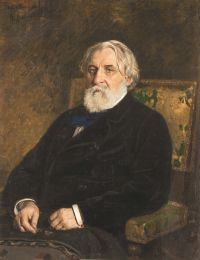
Despite this pervasive repression, new ideas have consistently penetrated Russian society [23]. The intellectual ferment of nineteenth-century Europe, with its embrace of positivism, evolution, and social reform, found fertile ground among the Russian youth and intelligentsia, challenging traditional modes of thought [24]. Literature became a crucial arena for this contest of ideas. Authors like Ivan Turgenev, through their melancholy portrayals of social ills such as serfdom, held up a mirror to the nation, forcing a public reckoning that even the procrastinating state censorship could not entirely ignore .
Morality as an Instrument of State Power
The machinery of Russian absolutism extends its reach beyond bureaucratic and police powers into the domain of morality. The state co-opts moral language not to cultivate a virtuous citizenry but to justify its own intolerance and suppress dissent [25]. This institutionalized "morality" demands that those within the system adopt an attitude of opposition to everything great and good, a daily practice that leads to a profound degradation of character [26].
Such a system is predicated on the idea that the institution must survive at all costs, even at the expense of the individual [27]. An absolutist order, as Walter Lippmann observed, is best served when its people piously accept ideas as authoritative and sacrifice their own humanity to a non-human purpose [28]. This stands in stark contrast to conceptions of morality as a form of inner conscience, as articulated by thinkers like John Stuart Mill, where obligation is rooted in an internal feeling rather than an external authority [29]. The state's version of morality seeks to extinguish this inner compass and replace it with unwavering obedience.
Some Russian thinkers, notably Leo Tolstoy, argued that this constant state of public strife—between an oppressive government and its revolutionary opponents—is itself morally corrosive. This external conflict diverts people's attention away from the inner life, which is the true source of moral improvement, and thereby inevitably lowers the general morality of society [30]. The state and the revolutionaries become two parasites on the body of the nation, both equally harmful to the people they claim to serve or liberate [31]. The result is a society where public discourse is poisoned and genuine moral development is hindered.
The history of Russian governance reveals a persistent intertwining of absolutism and bureaucracy, where the state functions less as a representative body and more as an autocratic organization standing above and apart from society . This machinery of silencing is powered by a parasitic bureaucracy that, in the name of self-preservation and order, strangles progress, stifles free expression, and actively cultivates ignorance . The government is founded not on the consent of the governed but on the manipulation of opinion and the exploitation of the people's sub-logical nature .
By creating an unbridgeable chasm between itself and the nation, this system of total control makes radical upheaval almost inevitable . The denial of basic human rights and the unbearable conditions imposed by the bureaucratic state leave revolution as the only perceived path forward . The enduring legacy of this system is a state apparatus locked in a perpetual struggle to contain the intellectual and moral vitality of its own people. This foundational conflict, between a deeply entrenched absolutism and the irrepressible forces of the national mind, continues to shape Russia's political character .