AI-generated from sources
The republic's dynamic inheritance: Lincoln, Roosevelt, and the price of perpetual liberty
In Brief
- The American Republic is a 'dynamic inheritance,' demanding continuous, conscious effort from its citizenry to uphold the ideals of the Declaration of Independence.
- Abraham Lincoln's preservation of the Union was an act of fulfilling the Declaration's promise, establishing a precedent that the American creed must be perpetually redeemed.
- Theodore Roosevelt defined national success as resting entirely on the quality of the 'strenuous citizen,' demanding efficiency, moral rectitude, and active participation over passive complacency.
- Civic duty requires confronting modern ills, particularly political corruption and unchecked wealth, ensuring a 'square deal' for all by judging individuals on character rather than class.
Main authors

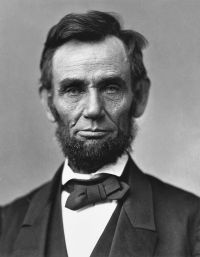
The American Republic is conceived not as a static achievement but as a dynamic inheritance, a legacy passed down from the founding generation of Washington to the generation that preserved it under Abraham Lincoln [1, 2, 3]. This inheritance is rooted in the nation's foundational documents and ideals, particularly the promise of liberty articulated in the Declaration of Independence [4, 5]. Yet, this legacy is not self-perpetuating. Its endurance is conditional, demanding from each subsequent generation a conscious and strenuous effort to uphold the principles upon which it was built [6, 7]. The nation’s continued greatness is therefore contingent on the character and actions of its contemporary citizenry, who must actively confront the challenges of their own time [8].
Theodore Roosevelt, in particular, framed this responsibility as a matter of profound civic duty. For him, revering the past was insufficient; it was the active homage of deeds, not words, that truly honored the sacrifices of previous generations . He argued that the freedoms and prosperity enjoyed by Americans were not guaranteed entitlements but the result of past struggles, and could be easily lost through complacency or moral decay [9]. The central challenge, as he perceived it, was to cultivate a citizenry possessing the moral rectitude and practical virtues necessary to manage a complex, modern industrial nation while remaining true to its founding ideals [10, 11]. This required a clear understanding of what constitutes a 'good citizen'—an individual capable of balancing self-reliance with a deep commitment to the collective good [12, 13].
Lincoln, Liberty, and the Unfinished Promise
The figure of Abraham Lincoln serves as a crucial bridge between the nation's founding and its ongoing project of self-realization [14]. Lincoln is consistently portrayed as the statesman who clarified and acted upon the deepest meaning of the American experiment [15]. His leadership during the Civil War was not merely about preserving the Union as a geographical or political entity, but about saving it to fulfill the promise of the Declaration of Independence [16, 17, 18]. He believed that the core principle holding the nation together was the sentiment of liberty for all, a hope not just for America but for the entire world . His entire political philosophy, he claimed, stemmed from the ideals embodied in that document .
The conflict over slavery exposed the fundamental contradiction within the nation's heart: the coexistence of republican freedom with human bondage [19, 20]. Lincoln’s struggle was to align the nation's practices with its professed creed, arguing that a country could not endure while denying freedom to others [21]. The Emancipation Proclamation was thus seen as the practical demonstration of the Declaration's assertion that all men are created free, removing the 'canker-worm' of slavery that threatened the Republic's very life [22]. By confronting this crisis, Lincoln’s generation ensured that the government would remain an example of human freedom for the world, realizing for the first time the full implications of its founding principles [23].
This legacy of striving to meet the nation's promises has been invoked in subsequent struggles for civil rights, from the women's suffrage movement to the end of Jim Crow laws [24]. The Declaration is thus not a historical relic but a 'promissory note' that each generation is called upon to redeem . Lincoln’s actions established a precedent: that the nation must perpetually re-examine its own conduct and recommit to its core ideals of liberty and equality [25]. This act of preservation by Lincoln, therefore, also serves as a perpetual command to future Americans to pledge their own lives and honor to the support of the Constitution and the laws that flow from these foundational principles [26, 27].
The Rooseveltian Ideal: Character and the Strenuous Citizen
Building upon this legacy, Theodore Roosevelt articulated a demanding vision of citizenship required to prevent national decay. He posited that the success of the republic rests entirely on the quality of the average citizen [28]. This quality is not defined by passive harmlessness, but by a set of active, positive virtues [29, 30]. The 'good citizen' must be willing and able to 'pull his weight,' contributing actively to the work of his generation rather than being a mere passenger [31]. This demands a combination of efficiency and morality; one is useless without the other . A person's character, defined by moral rectitude, is the ultimate measure of a civilization's worth .
Roosevelt’s ideal citizen embraces the 'strenuous life,' a concept that champions effort, hard work, and the shouldering of burdens as the source of meaning and the price of success [32, 33, 34]. This life requires courage, resolution, and the endurance to persevere through difficulty . He explicitly rejected 'timid peace' and 'sentimentality,' arguing that they were 'broken reeds' incapable of supporting true righteousness and could cause more harm than injustice itself [35, 36]. The duty of the citizen begins with personal responsibility—to one’s own family and dependents—but it does not end there [37, 38, 39]. It extends outward to one’s neighbors and ultimately to the state, requiring active participation in the community's management [40].
This strenuous citizenship must be practiced in the 'everyday affairs of life' just as much as in moments of national crisis . National character is not forged instantaneously but is the slow accumulation of generations of individuals exercising honesty, self-restraint, and fair dealing [41]. The essential qualities are timeless: the practical intelligence and devotion to lofty ideals that characterized both the founding and preservation of the Republic must be embodied by the citizenry of the present . Ultimately, Roosevelt argued, a free state can only exist through the virtue of its people, a theory that must be lived in practice, not just accepted in the abstract [42].
Confronting Modern Ills: Wealth, Corruption, and the Common Good
Roosevelt applied his philosophy of strenuous citizenship directly to the economic and political challenges of his era, which he saw as rife with the corrupting influence of unchecked wealth and corporate power [43, 44, 45]. He believed a primary civic duty was to fight against political corruption and the vices that degrade public life [46]. A key threat to the republic, in his view, was the rise of class loyalty over national loyalty [47]. He warned that ruin was inevitable if citizens began to judge one another by their position or wealth rather than by their conduct [48]. The fundamental principle must be to treat every person on their merits, ensuring a 'square deal' for all under the equal domination of the law [49, 50].
This did not mean hostility toward wealth itself, but hostility toward the dishonest accumulation and corrupt use of wealth [51, 52]. Roosevelt argued that loyalty is owed to the Republic, not to any individual leader or special interest, and that public servants must serve the people themselves [53]. He saw a danger when financial and business interests exerted such control that the populace began to lose faith in their own government [54]. His solution was not government ownership but strong government regulation and supervision to curb the excesses of powerful corporations and ensure they served the public good . This was an effort to restore economic equality and opportunity, proving that the government belonged to the people who made it [55, 56].
Furthermore, Roosevelt contended that good citizenship was impossible for those trapped by exploitative labor conditions. A citizen needs wages sufficient for more than bare survival and working hours short enough to allow for participation in community life . The state has a responsibility to help the worthy person who stumbles, ensuring they have a chance to prove their value . This concern for social betterment was not born of sentimentality, which he distrusted, but from a practical understanding that the nation's health depended on the well-being of its individual members [57]. The ultimate goal was to ensure that material prosperity was accompanied by a 'moral lift,' without which progress only makes social problems worse .
The endurance of the American Republic, as envisioned through the lens of its historical leaders, is not a matter of destiny but of character. The principles laid down in the Declaration of Independence and defended by the sacrifices of Lincoln’s generation form a precious but fragile inheritance . Simply honoring these 'illustrious memories' is not only insufficient but can become a curse if used as an excuse for shirking the duties of the present . The recurring message is that freedom is not a gift to be passively enjoyed, but a responsibility that must be actively shouldered by every citizen in every generation .
Theodore Roosevelt’s enduring contribution was to codify this responsibility into a doctrine of strenuous, virtuous citizenship. He insisted that national greatness is fundamentally built upon the aggregate of individual character—on qualities of honesty, courage, self-reliance, and an unwavering commitment to the common good over class or personal interest . Confronting corruption, ensuring economic fairness, and balancing individual rights with collective obligations are not merely policy choices but essential acts of civic piety . Ultimately, the republic is sustained only by citizens who understand that the best prize life offers is 'the chance to work hard at work worth doing,' and that no work is more worthy than preserving the nation founded by Washington and saved by Lincoln for the generations to come [58].