AI-generated from sources
When piety becomes policy: The theological reorientation of faith from inner grace to national strategy
In Brief
- Traditional Christian faith emphasizes the internal struggle for salvation, cultivating virtues like humility and relying on divine grace rather than worldly power.
- The modern, politicized paradigm redefines faith as a public asset synonymous with national vitality, patriotism, and an 'unyielding conviction' in the nation's unique historical purpose.
- This fusion allows political leaders to assume roles traditionally reserved for religious institutions, framing statecraft and geopolitical actions as morally righteous, divinely mandated crusades.
- The entanglement of the church with state patronage risks alienating believers, causing spiritual life to wither, and subordinating universal religious claims to divisive nationalistic fanaticism.
Main authors
Christian faith has historically been understood as a deeply personal and spiritual discipline, centered on the individual's relationship with the divine. This perspective frames faith as a guiding force, a 'rudder' without which any human endeavor, no matter how mighty, is ultimately directionless and destined to fail [1]. The emphasis lies on inner virtues attained through divine grace, such as hope, charity, and a faith that relies on God's mercy rather than one's own merits [2]. In this traditional conception, the Christian life is a constant internal warfare, a struggle to maintain faith against the human propensity to rely on one's own righteousness [3]. The primary objective is the salvation of the soul and the cultivation of a moral life in service to God, not the advancement of a worldly kingdom [4, 5].
However, a contrasting paradigm has gained prominence in modern political discourse, one that redefines faith as a public and national asset. In this view, faith is not merely a private conviction but the very 'spirit' that determines a nation's strength and vitality [6]. It becomes synonymous with a collective belief in a country's values, history, and unique purpose [7]. This conceptual shift transforms faith from a theological virtue into a pillar of national identity and a strategic tool for political leadership. This evolution raises a central and critical question: what are the implications for both religious belief and civic life when personal piety is repurposed as a key component of national strategy and cultural warfare?
Redefining Faith: From Inner Grace to National Conviction
The traditional theological framework presents Christian faith as an internal state, a gift of grace that orients the individual toward God . It is a multifaceted armor for the soul, comprising hope, love, and faith itself, which protect the heart and mind from sin and error [8, 9]. This faith is not a passive belief but an active, constant effort—a 'warfare'—to live by Christ alone, resisting the urge to depend on personal works or righteousness . Its sustenance is found not in worldly power but in divine strength, which upholds the believer through periods of doubt and scruple [10]. The community of believers is meant to reinforce this individual journey, encouraging one another to cast off fear and grow in spiritual maturity through mutual support and trust in God [11, 12].
In stark contrast, the politicized conception of faith externalizes its focus, shifting the object of devotion from the divine to the nation-state. Under this paradigm, faith is measured not by spiritual contrition but by national pride and patriotism . A nation's vitality is seen as directly proportional to the 'faith that beats in the hearts of its people'—a faith directed towards its own 'values, history, and heroes' . This framework equates religious conviction with an 'unyielding and unashamed conviction in the nobility of our country and its unique purpose in history' . The markers of divine blessing are no longer spiritual fruits but material prosperity and national success, such as a rising stock market and low unemployment, which are presented as evidence of God's favor and the correctness of the national path [13].
This redefinition carries significant theological and ethical consequences. The core Christian virtues of humility and dependence on God's mercy are supplanted by a nationalistic creed centered on 'fierce independence' and the celebration of national heroes . The spiritual struggle for personal salvation is reframed as a collective, political struggle to maintain national culture and defend American values [14]. The language of faith is co-opted to describe patriotism, where love for one's country is presented as a powerful, innate feeling akin to religious devotion . This conflation effectively subordinates the universal claims of religion to the particularist demands of the nation, making civic loyalty a primary expression of faith [15, 16].
The Nation as the New Church: Statecraft and Spiritual Mandate
As faith is redefined in national terms, the state and its leaders begin to assume roles and language traditionally reserved for religious institutions. Political leadership can portray itself as acting under a divine mandate, suggesting that national endeavors lacking God's counsel are doomed . This perception provides a powerful justification for policy decisions, framing them not as mere political calculations but as part of a larger, morally righteous crusade. For instance, military action against terrorism is depicted as a fight against an 'evil ideology', with adversaries cast as 'losers' who will find no glory in this life or the next [17]. The nation, allied with its partners, assumes the role of a divine instrument, tasked with breaking the will of its enemies and stripping them of power .
This fusion of religious and national purpose extends deeply into foreign policy, where the promotion of 'religious freedom' becomes a key strategic objective [18]. The nation presents itself as a global protector of persecuted Christians, with leaders vowing to stand with them 'with our ideals and with all our might' [19, 20]. This stance serves a dual purpose: it reinforces the nation's self-image as a righteous actor on the world stage and simultaneously leverages religious solidarity to build international alliances and project influence . National security and economic interests, such as maintaining favorable oil prices through alliances, can thus operate in parallel with, and be legitimized by, a public commitment to defending faith abroad [21, 22].
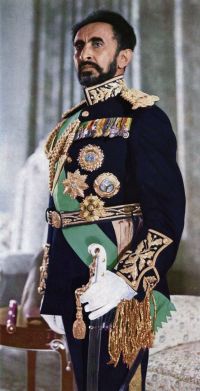
The historical precedent for such a national church model can be seen in narratives where a nation's very identity and survival are inextricably linked to its faith. For centuries, Ethiopia, for example, defined its struggle for sovereignty as a mission to preserve itself as an 'island of Christianity' against opposing powers [23]. Its monarchs were instrumental in introducing and spreading the Christian faith, making the imperial court the wellspring of the nation's religious identity [24]. This deep-rooted history, where ancestors sacrificed their lives for the faith, fostered a powerful bond between national survival and religious adherence [25]. This historical example illustrates the potent and enduring appeal of a political theology where the destiny of the nation and the destiny of the faith are seen as one and the same.
The Perils of a Politicized Faith
The instrumentalization of religion for political ends is fraught with tension and elicits significant criticism. A primary concern is that when a church becomes dependent on the 'protection and patronage of the civil government', its spiritual life inevitably withers [26]. The administration of its affairs may fall into the hands of worldly politicians who use it as a state instrument, causing the institution to lose its authentic spiritual purpose and alienating believers seeking genuine religious nourishment . This dynamic is further complicated by the fact that many churches are also 'money machines', holding property and seeking political favors such as tax exemptions, which deepens their entanglement with the state and the system of 'Mammon' [27].
A fundamental conflict arises between the universalizing spirit of a faith like Catholicism, which aims to 'smooth away all national differences, and bring the different nations into one fold', and the divisive 'fanaticism of nationality' [28]. The political use of religion often exacerbates national distinctions, sometimes leading governments to undermine one faith to promote a national system, even at the risk of fostering widespread atheism and skepticism [29]. In nations where politics are seen as 'pagan', believers can find themselves politically ineffective, unable to harmonize their religious principles with the demands of the state [30]. This forces a choice between political participation, which may require compromising one's faith, and political withdrawal, which cedes the public square to secular or opposing forces [31, 32].
This dilemma creates a precarious position for both believers and political leaders. Some thinkers argue for a clear separation, aiming to get 'theology out of politics' to avoid the conflicts that arise from religious jealousies [33]. Others insist that religious principles must be applied to all aspects of life, including politics, to ensure that a state acts with integrity and keeps 'good faith' [34, 35]. However, this ideal is often corrupted. The 'religion of politics' can become less about infusing governance with genuine faith and more about a calculated effort to appear pious while reconciling the demands of faith with the pursuit of worldly honor and power [36]. The result is often a political landscape where religious rhetoric is prevalent but divorced from substantive moral commitment, and where politicians prove their faith has nothing to do with their politics to maintain power .
The evidence drawn from a wide range of theological and political texts reveals a significant and consequential transformation of Christian faith. What was once framed primarily as a personal, internal struggle for salvation and a reliance on divine grace has been increasingly repurposed as a public utility for national assertion. In this new configuration, faith's success is measured by national prosperity, its virtues are conflated with patriotic loyalty, and its mission is aligned with the state's geopolitical interests . This is not a simple evolution but a radical reorientation of faith's ultimate purpose—from the glorification of God to the glorification of the nation.
This instrumentalization of piety for political ends poses a profound challenge to the integrity of both faith and governance. When the spiritual life of a church becomes entangled with and dependent upon state patronage, its vitality is jeopardized . Similarly, when politics adopts the language of faith without its substance, it risks fostering cynicism and delegitimizing both religious and civic institutions . The ultimate question remains whether a faith enlisted in the service of national ambition can retain its essential spiritual character, which is rooted in a universal call to a higher authority than the state [37].