AI-generated from sources
Divine Authority and Human Liberty, The Enduring Conflict
In Brief
- The inherent conflict between divine authority and individual liberty has profoundly shaped centuries of philosophical and political discourse.
- Historical religious institutions often viewed individual freedom of conscience as a path to societal decay, while proponents of liberty championed an unfettered mind.
- The debate over national morality questions whether religious principles are indispensable for societal stability or if strict separation of church and state is necessary to protect both civic and spiritual life.
- Hypocrisy within religious and political spheres can severely undermine the credibility and moral authority of both institutions, blurring the line between professed ideals and actual conduct.
Main authors



The relationship between religious faith and individual liberty has long been a defining tension in the development of modern thought. At its core lies a fundamental conflict between two powerful claims: the demand for adherence to a divinely ordained, external authority and the assertion of an internal, personal conscience as the ultimate arbiter of belief [9]. This conceptual battleground has shaped centuries of philosophical and political discourse. On one side, established religious institutions have often presented themselves as the sole guardians of truth, viewing the individual's right to dissent as a path toward moral and social decay [4]. On the other, proponents of free thought have championed an unfettered human mind, arguing that true liberty requires the freedom to be a heretic as much as the freedom to be a believer [1, 2].
This struggle is not confined to the abstract realm of theology but has profound and lasting consequences for the structure of society and the nature of governance. The debate over personal conscience invariably extends into the public square, raising critical questions about the source of national morality and the proper relationship between church and state. Whether a nation’s ethical foundation requires religious principles to survive, or whether a strict separation is necessary to protect both civic and spiritual life, remains a central point of contention [13, 20]. This ongoing negotiation seeks to reconcile the perceived need for a shared moral framework with the imperative to protect individual rights from the imposition of any single creed, a balance that continues to challenge legal systems and cultural norms alike.
The Sovereignty of Conscience versus Institutional Authority
The philosophical landscape is marked by two opposing poles: the principle of absolute authority, historically embodied by institutions like the Catholic Church, and the principle of unfettered individual freedom . From one perspective, organized religion is seen as fundamentally at odds with free thought, comparing the believer to a caged bird while the free-thinker soars like an eagle . This viewpoint questions the sincerity of any church that claims to support religious liberty while worshipping a deity who does not . In stark contrast, another interpretation of religious conscience frames it not as a license for individual will, but as a duty to uphold divine law against secular impositions, elevating the dignity of the person above public constraint [12].
Advocates for individual liberty, particularly prominent in secular and some Protestant traditions, have long asserted that freedom of conscience is an absolute and indefeasible right [3, 5]. This right is understood not merely as the freedom to choose a religion, but as a complete liberty of the mind, insulated from coercion by any human authority . It encompasses the freedom from being compelled to support any place of worship or ministry against one's will, ensuring equality by preventing one person's religious choices from infringing upon another's autonomy . The great thinkers who championed religious liberty did so by denying that any individual is accountable to others for their private beliefs .
Conversely, institutional counter-arguments have historically defined religious liberty in entirely different terms. For much of its history, the Catholic Church equated religious freedom with its own unrestrained right to teach and govern all peoples and nations, unhindered by secular powers [8]. From this standpoint, the modern notion of treating various religions as equal or allowing individuals to freely profess their beliefs through speech or the press was condemned as a grave error and a sign of societal decay [6]. The very basis of Protestantism—the assumed right of individual conscience—was characterized as the source of all evil, leading inevitably to an eclipse of faith .
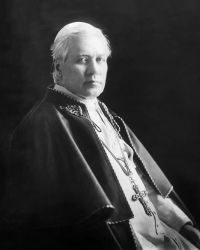
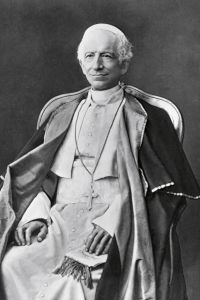
The rise of modern democratic ideals, however, forced a reconsideration of these rigid positions. Pope Pius X, writing in the early 20th century, acknowledged the immense power of the modern sentiment of liberty, warning that forcibly suppressing it would provoke a catastrophic backlash against both church and religion [10]. This created an urgent need to find a path of conciliation between the authority of the Church and the freedom of its believers . Part of this reconciliation involved a redefinition of liberty itself, with Pope Leo XIII distinguishing it from a license to operate without any laws or restraint—an excess rejected by all good people—and framing it in a way compatible with divine order [11]. Others sought to draw a sharp line between legitimate religious liberty and what they termed disorderly wickedness, arguing that behaviors like blasphemy or overt immorality must be restrained to make true freedom possible for society [7].
Religion as the Bedrock of National Morality
A persistent and influential argument posits that religion is an indispensable foundation for a stable and moral society. According to this view, key societal functions, such as the administration of justice through sworn oaths, would lose their efficacy if the sense of religious obligation were to disappear . Reason and experience are invoked to argue against the supposition that a widespread national morality can be achieved or sustained in the absence of religious principles . This perspective often presents Christianity and liberty as mutually dependent, suggesting that liberty can only be safe under the guidance of faith [15]. Without the check of Christian principles, it is feared, liberty devolves into licentiousness and chaos, ultimately necessitating the imposition of despotic power to restore order .
The corollary to this argument is a deep suspicion of secularism, which is seen as a destructive force that undermines the moral fabric of society. The separation of religion and state is depicted as a slippery slope, beginning with state neutrality and ending with state-sponsored atheism that enforces an impious agenda and persecutes believers [14]. From this perspective, the modern trend toward secularism calls into question not only moral values but also the very spiritual nature of humankind, replacing inherited faith with an aggressive and ultimately hollow worldview [17]. The liberal dream of a society balanced by reason and human nature alone is dismissed as an illusion, one that experience will inevitably shatter .
However, this binary view is challenged by those who reconceptualize the nature of religious engagement with public life. An alternative perspective argues that true religion is not a private, cloistered affair but an active, moral force that must engage with and seek to remedy all of society's ills, whether social, moral, or political [16]. This view rejects the notion that a person of faith should remain aloof from politics. Instead, it frames active participation in public life as a moral imperative, an extension of living by ethical principles like the Golden Rule . Such an approach reframes the debate from one of separation versus integration to a question of what form that integration should take—a detached institutional influence or an active, lived morality.
The Wall between Church and State
The ideal of a clear and absolute separation between religious institutions and governmental power has been a cornerstone of secular thought. Proponents like Robert Green Ingersoll have called for an
absolute divorce between church and state
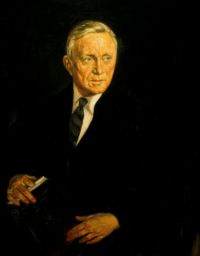
in which religion must stand on its own merits—its morality, reason, and charity—without recourse to the coercive power of the government . This principle of neutrality is echoed in American jurisprudence, where thinkers like Justice William O. Douglas have argued that the First Amendment commands the government to have no vested interest in theology or ritual [19]. The state's role is not to promote any particular faith, but to ensure an environment where all beliefs, including atheism and agnosticism, are free to flourish without state interference .
Despite the appeal of this ideal, other analyses conclude that a complete and total separation is not practically achievable. As Justice Warren E. Burger noted, some form of relationship between government and religious organizations is simply inevitable in a complex society [24]. The challenge, therefore, is not to build an impregnable wall, but to manage this inherent interaction in a way that avoids the dual dangers of subverting religious liberty and undermining the secular nature of government [22]. This tension sets the stage for what some see as the next great conflict within the nation: a battle between secularism, with its defense of liberty and republican institutions, and ecclesiasticism, which is perceived as upholding tyranny [21].
This debate is further complicated by competing claims of sovereignty. From a traditional Catholic viewpoint, the secular order is subordinate to the spiritual; to place the state above the church is viewed as a form of atheism that is dangerous to both morality and society itself [18]. In contrast, secularism presents itself as a progressive force dedicated to dispelling superstition, promoting education, and rationalizing morality for the public good [23]. In the midst of this ideological struggle, legal frameworks have evolved to protect religious autonomy. American constitutional law, for instance, has been interpreted as guaranteeing religious organizations a powerful independence from secular control, including the freedom to decide matters of internal governance and select their own clergy without state interference [25].
The Corrosive Force of Hypocrisy
Beyond the structural debates over church and state lies a more personal and deeply moral challenge: the problem of hypocrisy. Within religious discourse, hypocrisy is often depicted as a uniquely corrosive vice, one denounced with greater severity than more overt transgressions [26]. This critique is particularly aimed at individuals and nations that publicly identify as Christian while their actions—both in public policy and private affairs—systematically contradict the core teachings of their professed faith . The tension between an idealized moral code and the reality of human conduct creates a credibility gap that can undermine the very foundations of religious authority.
This phenomenon of insincerity can become so widespread that it ceases to be shocking and instead becomes an ingrained, almost invisible, feature of modern society. The writer Leo Tolstoy observed in the late 19th century that this universal hypocrisy had become so pervasive that people no longer recognized their own pretense, seriously believing themselves to be the virtuous figures they purported to be [27]. This deep-seated disconnect allows for the persistence of state systems founded on what Tolstoy called a perverted form of Christianity, which serves to obscure rather than reveal true religious principles [28].
When this hypocrisy enters the public arena, it tarnishes both civic and religious institutions. The act of joining a patriotic or benevolent organization under false pretenses—for example, to advance the interests of a specific church or political faction—is seen as a profound betrayal of trust [29]. Such actions undermine the stated goals of both the organization and the religion it claims to serve. This kind of instrumentalized faith, driven by ulterior motives, benefits only those who violate laws or manipulate political systems, while devaluing any genuine spiritual mission .
The historical and ongoing effort to reconcile divine authority with individual liberty reveals a set of fundamental and unresolved tensions. The journey from the philosophical clash between institutional dogma and personal conscience to its practical expression in debates over national morality and the separation of church and state illustrates the complexity of the issue . This is not a simple conflict between faith and secularism, but one that also plays out within religious traditions themselves, as they grapple with the powerful modern sentiment of liberty and the demand for personal autonomy . The argument over whether a society’s moral compass requires a religious true north or the guidance of secular reason remains a central, and often polarizing, feature of contemporary life .
Ultimately, the integrity of any position in this debate is threatened by the corrosive power of hypocrisy. Whether one advocates for a society grounded in faith or one governed by secular principles, a disconnect between stated ideals and actual conduct undermines the claim to moral authority . The enduring challenge is therefore not merely to legislate the perfect boundary between the sacred and the secular, but to foster an integrity—both personal and institutional—that can withstand the immense pressure between what is professed and what is practiced. The dialogue continues, perpetually testing the resilience of both individual freedom and the collective search for meaning.