Summary

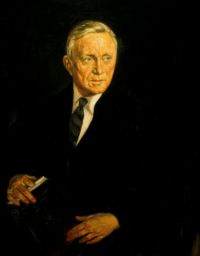
Portrait of William O. Douglas William O. Douglas McGowan v. Maryland — Dissent

Is it possible that a majority of a state legislature having those religious scruples could make it criminal for the nonbeliever to sell pork? Some have religious scruples against slaughtering cattle. Could a state legislature, dominated by that group, make it criminal to run an abattoir?
The Court balances the need of the people for rest, recreation, late sleeping, family visiting and the like against the command of the First Amendment that no one need bow to the religious beliefs of another. There is in this realm no room for balancing.
Source: Wikisource

Portrait of William O. Douglas William O. Douglas McGowan v. Maryland — Dissent

If the 'free exercise' of religion were subject to reasonable regulations, as it is under some constitutions, or if all laws 'respecting the establishment of religion' were not proscribed, I could understand how rational men, representing a predominantly Christian civilization, might think these Sunday laws did not unreasonably interfere with anyone's free exercise of religion and took no step toward a burdensome establishment of any religion.
Source: Wikisource

Portrait of William O. Douglas William O. Douglas McGowan v. Maryland — Dissent

The First Amendment commands government to have no interest in theology or ritual; it admonishes government to be interested in allowing religious freedom to flourish-whether the result is to produce Catholics, Jews, or Protestants, or to turn the people toward the path of Buddha, or to end in a predominantly Moslem nation, or to produce in the long run atheists or agnostics. On matters of this kind government must be neutral. This freedom plainly includes freedom from religion with the right to believe, speak, write, publish and advocate antireligious programs.
Source: Wikisource

Get perspective with Kwize: daily news enlightened by great literature