Summary

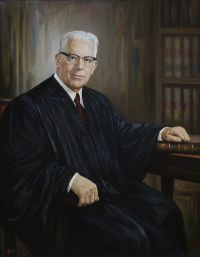
Portrait of Earl Warren Earl Warren McGowan v. Maryland — Opinion of the Court

In light of the evolution of our Sunday Closing Laws through the centuries, and of their more or less recent emphasis upon secular considerations, it is not difficult to discern that as presently written and administered, most of them, at least, are of a secular rather than of a religious character, and that presently they bear no relationship to establishment of religion as those words are used in the Constitution of the United States.
Source: Wikisource

Portrait of Earl Warren Earl Warren McGowan v. Maryland — Opinion of the Court

But it would scarcely be asked of a court in what professes to be a Christian land, to declare a law unconstitutional because it requires rest from bodily labor on Sunday, except works of necessity and charity, and thereby promotes the cause of Christianity. If the Christian religion is, incidentally or otherwise, benefited or fostered by having this day of rest, (as it undoubtedly is,) there is all the more reason for the enforcement of laws that help to preserve it.
Source: Wikisource

Portrait of Earl Warren Earl Warren McGowan v. Maryland — Opinion of the Court

However, it is equally true that the 'Establishment' Clause does not ban federal or state regulation of conduct whose reason or effect merely happens to coincide or harmonize with the tenets of some or all religions. In many instances, the Congress or state legislatures conclude that the general welfare of society, wholly apart from any religious considerations, demands such regulation. Thus, for temporal purposes, murder is illegal. And the fact that this agrees with the dictates of the Judaeo-Christian religions while it may disagree with others does not invalidate the regulation.
Source: Wikisource

Get perspective with Kwize: daily news enlightened by great literature