AI-generated from sources
The Dual Foundations of American Liberty, From Divine Gift to Natural Right
In Brief
- American liberty, as articulated in the Declaration of Independence, is rooted in a fundamental duality: both a divine endowment from a Creator and a self-evident natural right discoverable through human reason.
- This foundational ambiguity has generated continuous debates throughout U.S. history concerning the proper relationship between government and religious institutions, particularly regarding the separation of church and state.
- The concept of liberty has evolved beyond national borders, becoming a universal ideal that requires ongoing defense, reinterpretation, and legal codification to ensure its full realization for all.
- The enduring tension between theological and rationalist interpretations prevents a static definition of liberty, ensuring the principles of the Declaration remain a dynamic subject of public discourse and national identity.
Main authors


The American claim to liberty, famously articulated in its Declaration of Independence, rests upon a profound and persistent ambiguity. The assertion that all individuals are “endowed by their Creator with certain unalienable Rights” seems to ground the nation’s entire political project in a theological framework [1, 10]. This interpretation suggests that fundamental freedoms like life and liberty are not granted by any government but are divine gifts, an idea that has been consistently invoked throughout American history to argue for a divinely ordained national purpose [3, 5]. This conviction posits that the security of a nation's liberties is directly tied to the popular belief in their sacred origin, a view Thomas Jefferson himself once questioned losing [4]. From this perspective, human rights are derivatives of the rights of God, establishing a moral and spiritual bedrock for the republic .
Conversely, the same foundational documents are celebrated for their embrace of Enlightenment principles, where liberty is understood as a self-evident truth accessible through human reason and derived from natural law [8, 14]. This viewpoint emphasizes that rights are inherent to human beings by virtue of their existence, stemming from what Jefferson called the “hand of nature” [7, 15]. Thinkers in this tradition argue that freedom of conscience and thought are natural rights that attach to all people, irrespective of their religious beliefs or lack thereof [2]. The principles enshrined in the Declaration are thus seen not as a narrow theological statement but as a universal declaration of human self-government and a blueprint for any nation struggling against tyranny [6]. This inherent duality—liberty as both a divine endowment and a natural, rational right—has created a lasting dialectic that continues to shape debates over America’s identity and purpose [9].
Divine Authority and Natural Law in the American Founding
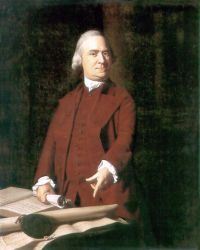
The assertion of liberty in the Declaration of Independence draws from two intertwined yet distinct philosophical currents. One powerful stream of thought explicitly links human rights to a divine source . This perspective, articulated by various interpreters from the 19th century to the modern day, views the phrase “endowed by their Creator” as the central pillar upon which all other claims rest . In this view, rights are not human inventions but gifts from God, a conviction that is seen as the only firm basis for securing a nation’s freedoms [12]. This theological grounding implies that humanity possesses certain inherent entitlements—such as the rights to life and liberty—that predate and supersede any man-made government or constitution [13]. Thinkers like Samuel Adams synthesized this by suggesting that the laws of the Creator are directly imprinted on the human heart, making them synonymous with the laws of nature .
At the same time, the founding principles are deeply rooted in the secular tradition of natural law, which posits that rights are intrinsic to human existence and discoverable through reason . This interpretation emphasizes that all individuals are born equal with the same natural rights, which in turn form the foundation for all subsequent civil rights . In this framework, the legitimacy of the American Revolution and the government it created derives not from divine revelation but from the universal right of self-government, a principle available to every person and every nation on earth . This view was not merely an abstract theory but a direct political tool, used to construct a formal indictment against monarchical oppression in a manner that mirrored earlier English political documents .
The language of the Declaration, therefore, accommodates both sacred and secular interpretations. Figures like Frederick Douglass later argued that the natural right to freedom was so self-evident that it needed no complex theological or philosophical defense before an American audience that had already declared it to be true [11]. The document's genius lies in its capacity to be read as a profound religious statement by some and as a landmark expression of democratic reason by others . This dual legacy, however, has created a fundamental and unresolved tension regarding the ultimate source and authority of American liberty, a point of contention that has been misunderstood and misrepresented throughout the nation's history . The coexistence of these two justifications—one based on God, the other on Nature—has ensured a perpetual debate over the spiritual and philosophical soul of the republic.
The State, Conscience, and the Contested Grounds of Freedom
The foundational ambiguity over the origins of liberty has led to profound disagreements about the proper role of religion in government. One school of thought contends that for the state to have any legitimate authority, it must recognize a higher divine law [24]. Proponents of this view argue that a government unmoored from the rights of God—a condition they term “political atheism”—inevitably leads to either tyranny or anarchy, as it leaves no basis for rights independent of the state's will [16]. According to this logic, when the rights of God are reduced to mere rights of man, liberty loses its sacred and inviolable character, becoming subject to the whims of popular or state power [21]. Therefore, maintaining America as a Christian nation is seen not as a violation of freedom, but as its necessary precondition .
In direct opposition stands a powerful tradition advocating for a strict separation between government and religious institutions, grounding liberty in secular principles and individual conscience [22]. This perspective asserts that freedom—particularly religious freedom—is a natural right of the human mind that the state must recognize but never control [18]. Proponents argue for a “free church in a free state,” where spiritual matters are pursued through non-coercive means and the government is barred from imposing religious tests, taxes, or penalties of any kind [19]. This position insists that government is founded upon the rights of men, not gods, and that attempts to enforce specific theological doctrines, such as amending the Constitution to include Christian tenets, would represent a grave violation of liberty of conscience for a significant portion of the population [17].
This ongoing conflict highlights the practical difficulty of reconciling these competing visions. Arguments for religious freedom often appeal to the principle of equality, stating that granting privileges to one faith while burdening another is a violation of liberty [20]. If freedom of religion is a genuine right, it must extend equally to all, regardless of whether their beliefs align with the majority . This debate is not merely about individual belief but about the very nature of civil society. Secularist philosophy, for example, proposes a social bond based on the promotion of material well-being and a morality derived from the laws of nature, rather than from divine revelation [23]. Ultimately, the clash is between a vision of liberty guaranteed by a state that acknowledges its subordination to divine authority and a vision of liberty guaranteed by a state that remains neutral in matters of faith, protecting conscience as an inviolable human right .
Liberty as a Universal and Evolving Ideal
Beyond the debate over its origins, American liberty has evolved into a principle understood to have universal application, one that must be continuously defended and reinterpreted. A core aspect of this evolution is the commitment to enshrining freedom within durable legal structures [25]. The demand for a written constitution reflects a deep-seated belief that law, not any single ruler, must be king in a free country. This framework is designed to limit the powers of government and establish a clear process for securing the rights and liberties of the people, creating a bulwark against the arbitrary exercise of power . This legal scaffolding is seen as essential for providing the “unhampered opportunity” that must accompany liberty for it to be meaningful [26].
This conception of liberty has frequently been projected beyond national borders as a global ideal. Though acknowledging that America has no right to impose its system of government on others, leaders like George W. Bush have argued that the principles of the Declaration are not culturally specific but resonate with a universal human desire for freedom [27]. This perspective holds that liberty is an essential component of justice and human rights everywhere, and that the advance of freedom worldwide aligns with both American interests and its core values [29]. The idea that the call of freedom eventually reaches every person, making permanent tyranny an impossibility, frames American ideals as a powerful force in global history .
This universalist vision, however, comes with the recognition that the full realization of liberty is an ongoing struggle. The principle that freedom is a divine gift was understood, even by some early thinkers, to carry the condition that it must be extended to all people [30]. The gap between the written ideal and the lived reality has often been a source of just reproach, requiring constant effort to amend historical failings . Ultimately, the right of self-government is presented as the foundational root from which both civil and religious liberties grow [28]. Defending this common freedom against the encroachment of an all-powerful state remains a central challenge, ensuring that the promise of liberty is not a static inheritance but a dynamic project for each new generation.
The American concept of liberty is a study in productive tension. From its inception, it has been simultaneously defined as a sacred endowment from a Creator and as a self-evident natural right discovered by reason . This duality has shaped the nation’s political and cultural landscape, fostering a continuous debate between those who see the United States as a nation with a divine mission and those who view it as a secular republic grounded in universal humanistic principles . This unresolved question of origins has fueled centuries of conflict over the proper relationship between church and state, with impassioned arguments for both a government guided by divine law and one strictly neutral in matters of faith . Over time, this foundational idea of liberty has also expanded into a global ideal, legally codified and projected as a universal aspiration for all humanity .
Rather than a flaw in the nation's design, this foundational ambiguity may be its most enduring source of vitality. The constant pull between theological and rationalist interpretations has forced successive generations to actively engage with and redefine the meaning of freedom. It prevents a static or dogmatic conception of liberty from taking permanent hold, ensuring that the principles of the Declaration remain a subject of living debate rather than a settled artifact of history. The challenge of reconciling these perspectives—of honoring both individual conscience and the moral foundations of a just society—is an inheritance that continues to propel the American experiment forward, demanding that its promise of liberty be continually re-examined and renewed.