AI-generated from sources
The Contested Meanings of Freedom From Colonialism to Nationhood
In Brief
- Colonial powers defined liberty as a conditional status granted through paternalistic tutelage, justifying economic exploitation and autocratic control over colonized peoples.
- Anti-colonial movements rejected the colonial framework, asserting freedom as an inalienable human right and self-determination, driven by tangible experiences of oppression and injustice.
- Post-independence, freedom transformed into a complex project of nation-building, aiming to achieve social justice, economic equity, and national greatness while resisting new forms of internal and external domination.
- True freedom is a continuous process that extends beyond political emancipation, requiring the ongoing construction of inclusive societies that respect and enhance the liberty of all citizens.
Main authors
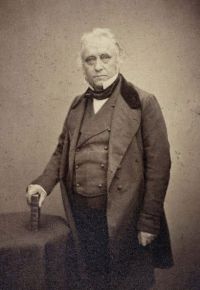
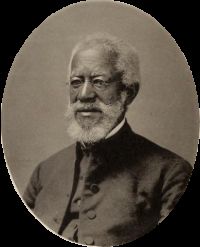

The concept of liberty, often presented as a universal ideal, has been fiercely contested throughout modern history. During the age of empire, European powers constructed a particular definition of freedom, one that was not inherent to all but was instead a conditional status to be granted or withheld. This framework positioned colonizers as enlightened guardians, tasked with a 'civilizing mission' to uplift supposedly less developed races to a higher level of humanity [1, 2]. In this view, liberty was not an immediate right but a distant reward for tutelage, a condition for which colonized peoples were often deemed unripe or even constitutionally unsuited [3, 5].
This paternalistic conception of freedom served to justify systems of profound inequality and control. Thinkers like Thomas Babington Macaulay framed the relationship between the metropole and its territories as analogous to that of a parent and child, suggesting that independence would be fatal to colonies in their infancy [4]. This rhetoric of benevolent stewardship, however, often masked a reality of economic exploitation, despotic governance, and the systematic abridgment of rights [7, 8]. The inherent contradictions were stark: a discourse of uplift ran parallel to practices of subjugation. It was this tension between the proclaimed ideals of the colonizer and the lived experience of the colonized that would eventually ignite global movements for national independence [11, 15].
The Paternalistic Promise of Colonial Liberty
Colonial powers conceptualized liberty not as an inalienable right for the peoples they governed, but as a tutelary objective. The justification for rule was often couched in humanitarian terms, presenting the colonial project as a mission to govern for the benefit of native races and protect them through tailored laws . This perspective, articulated by figures like Winston Churchill, framed the colonizer's role as one of foresight and scientific administration, shielding indigenous populations from famine and disease . This logic positioned freedom as a distant outcome of civilizing progress, rather than a present reality. The relationship was explicitly hierarchical, with the parent state exercising supreme power over colonies deemed too weak for independence .
The denial of self-governance was rationalized through assessments of the colonized peoples' supposed character and capabilities. James Anthony Froude, for instance, argued that the principle of self-government should not be hastily applied to those who might exhibit 'perversity' or who, in his view, did not truly desire liberty and thrived better under guidance . A more extreme position, advanced by William A. Smith in the context of slavery, held that political freedom was not an 'essential good' for Africans and that their condition denied them any right to it . Even when not based on racial hierarchy, the logic of empire suggested that a colony, by its nature as a distant territory, could never enjoy the same liberties as the parent state, necessitating a fundamental 'abridgment of what are called English liberties' .
Behind this paternalistic ideology lay profound contradictions. The stated aim of raising humanity to a higher level often coexisted with severe economic exploitation and autocratic rule . The wealth drawn from colonies could be taxed and spent at the caprice of the metropole, with colonial administrators wielding despotic power immune from local control . Any protest against this system risked being branded as treason or rebellion . Even as late as 1960, a figure like King Baudouin of Belgium could lecture the Congolese on earning their independence through work and order, perpetuating the idea that freedom was a reward for good behavior rather than a fundamental right [6]. The rhetoric of uplift thus consistently served to obscure the realities of resource extraction and political suppression.
Self-Determination as a Universal Aspiration
In direct opposition to the colonial framework, anti-colonial thinkers and movements asserted that the desire for freedom was a universal and indigenous human drive. Writing in the mid-19th century, Alexander Crummell argued that the aspiration for liberty was native to all soils and burned as strongly in Africans as in any other people on Earth [9]. This sentiment was fiercely echoed by activists like Lydia Maria Child, who contended that the immense sacrifices made by enslaved people—fighting, starving, and dying for their freedom—constituted a form of heroism that had been systematically obscured by the histories written by their oppressors [10].
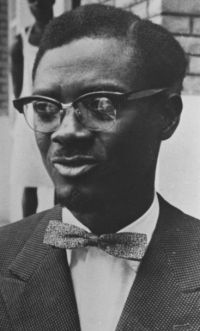
This universal demand for liberty was fueled by the tangible injustices of colonial rule. Patrice Lumumba powerfully invoked the memory of violent suppression and unjust imprisonment as central to the colonial experience, a system of 'injustice, oppression and exploitation' designed to maintain domination . The economic dimension of this oppression was equally devastating. As described by Edmund Dene Morel in 1920, the destruction of native land rights shattered the fabric of indigenous societies, transforming communities of free cultivators into a landless proletariat wholly dependent on alien commercial interests for their survival [12]. The struggle was therefore not merely for an abstract principle but for liberation from concrete harms.
The anti-colonial critique also centered on the profound hypocrisy of Western powers. Critics pointed out the double standard of nations that glorified their own revolutionary histories and declarations of independence while condemning similar resistance from those they colonized [13, 14]. This inconsistency was not lost on observers, who noted the parallels between the American fight for independence and the Filipino resistance against American sovereignty . The idea that personal freedom was inextricably linked to national and colonial freedom gained intellectual currency, articulated by thinkers like L. T. Hobhouse, who advocated for every people's right to shape their own destiny [20].
This coalescing demand for self-determination eventually gained global political force. The bloody struggles for independence across Africa and Asia in the mid-20th century demonstrated a widespread rejection of Western imperialism, even when it was presented as preferable to other forms of tyranny . The intransigence of colonial powers often meant that liberation movements had no choice but to adopt revolutionary methods [17]. The principle of self-determination was formally recognized in the United Nations' 1960 declaration, which identified foreign subjugation and exploitation as a denial of fundamental human rights [16]. For emerging nations, the fight against colonialism and imperialism became a core part of their identity, a revolutionary struggle for a free land and a free people [18], based on the conviction that national independence is an essential precondition for a dignified society [19].
The Complex Realities of Post-Independence Freedom
For the leaders of newly independent nations, political emancipation was not the final destination but the starting point of a new, more profound struggle [21, 22]. Nelson Mandela epitomized this expanded vision, pledging upon his inauguration to liberate South Africans from the 'continuing bondage of poverty, deprivation, suffering, gender and other discrimination' . Similarly, Patrice Lumumba called for a 'sublime struggle' to establish social justice and ensure that every citizen received fair remuneration for their labor . In this post-colonial context, freedom evolved into a comprehensive project of nation-building, aimed at achieving prosperity, social equity, and national greatness through collective effort in liberty .
The path toward realizing this multifaceted freedom proved to be fraught with internal dangers. Leaders like Mandela recognized that the struggle had to be intensified on all fronts even after liberation seemed imminent, warning that any relaxation of effort would be an unforgivable mistake [23]. Securing a lasting victory required disciplined mass action and the creation of an inclusive political home for all citizens, including former adversaries . A significant internal threat was the potential for new forms of tyranny to replace the old. This concern was famously articulated in Mandela's declaration that he had fought against both white domination and black domination, establishing a principle of non-racial democracy as the only path to peace [24]. This echoes an older warning, attributed to Plato, that a society saturated with an unconstrained sense of liberty can grow resentful of authority and ultimately give rise to tyranny [27].
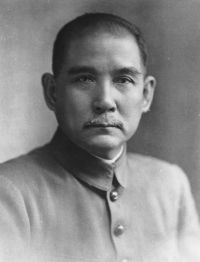
Beyond internal challenges, newly sovereign nations faced significant external pressures that constrained their self-determination. The program for national reconstruction envisioned by Sun Yat-sen included not only guiding internal groups toward self-government but also actively resisting foreign aggression and revising unequal treaties to restore the nation's independent standing [28]. The struggle against imperialism was understood as a continuous process, essential for national liberation . More recent movements, such as the Zapatistas in Mexico, have continued this fight by linking the demand for indigenous rights and democracy to the need for an economic model that serves the people rather than external interests [29]. This reflects a persistent awareness, voiced by thinkers like Scott Nearing, that as long as expansion and exploitation remain dominant global principles, genuine independence for less powerful nations will be perpetually at risk [30].
Ultimately, the post-colonial experience has revealed freedom to be a continuous process rather than a static achievement. As Barack Obama observed, the journey to democracy does not conclude with an election [25]. True freedom, in the words he borrowed from Nelson Mandela, involves not just casting off one's own chains but embracing a way of life that respects and enhances the freedom of others . This ongoing project requires building tolerant and inclusive societies, respecting differences, and pursuing peace with justice and dignity for all . The transition from colonial subject to free citizen is therefore an unending endeavor to define, defend, and deepen liberty against both new and old forms of domination [26].
The historical arc of 'freedom' reveals a concept in constant, often violent, transformation. Initially defined by colonial powers as a conditional state, a form of paternalistic guidance for peoples they deemed immature, it was radically redefined by those living under foreign rule . For anti-colonial movements, freedom was not a gift to be earned but an inalienable right to self-determination, a demand fueled by the direct experience of oppression and economic exploitation . This clash of definitions exposed the deep hypocrisy of empires that championed liberty at home while systemically denying it abroad . The achievement of political independence marked a crucial victory in this ideological and physical struggle, but it did not resolve the fundamental question of what freedom truly meant.
In the post-colonial era, the pursuit of liberty became an even more complex undertaking. The struggle expanded from achieving national sovereignty to the ambitious project of building just societies free from poverty, discrimination, and new forms of domination, whether internal or external . The immense challenges of nation-building underscored the reality that casting off chains was merely the first step; true freedom required the ongoing construction of institutions and cultures that respect and enhance the liberty of all citizens . The journey from colonial subjugation to genuine self-determination thus remains an unfinished project, a continuous struggle to realize a more comprehensive vision of human dignity against persistent economic and political pressures .