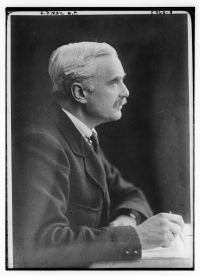
Edmund Dene Morel

Edmund Dene Morel

Summary

Portrait of Edmund Dene Morel Edmund Dene Morel The Black Man's Burden (1920)

Can they not begin in the closing century of that era, to practise what they profess—and what their missionaries of religion teach the African? Can they not cease to regard the African as a producer of dividends for a selected few among their number, and begin to regard him as a human being with human rights? Have they made such a success of their own civilisation that they can contemplate with equanimity the forcing of all its social failures upon Africa—its hideous and devastating inequalities, its pauperisms, its senseless and destructive egoisms, its vulgar and soulless materialism?
Source: Wikisource

Portrait of Edmund Dene Morel Edmund Dene Morel The Black Man's Burden (1920)

It is to make of Africans all over Africa a servile race; to exploit African labour, and through African labour, the soil of Africa for their own exclusive benefit. They are blind to the cost in human suffering. They are indifferent to the fact that in the long run their policy must defeat its own ends. They care only for the moment, and for the objects of the moment they are prepared to sacrifice the future.
Source: Wikisource

Portrait of Edmund Dene Morel Edmund Dene Morel The Black Man's Burden (1920)

When the Slave trade disappeared, the Portuguese grip upon the East Coast relaxed, and the edifice of Portuguese rule became like the pillars of a building invaded by the white ant—without substance. Thus the combined effect of centuries of Arab and Portuguese domination in the major portion of the eastern part of the African Continent, went to crush the spirit of independence and initiative in the native peoples and to make of them slaves and domestics rather than traders and producers in their own right.
Source: Wikisource

Get perspective with Kwize: daily news enlightened by great literature