AI-generated from sources
The inalienable right to defend: Ukraine's sovereignty as a historical and constitutional imperative
In Brief
- Ukrainian sovereignty is constitutionally defined by popular will, indivisible territory, and the state's primary duty to protect inalienable human rights.
- Beyond legal texts, sovereignty is maintained by a national consciousness forged through cultural struggle, demanding perpetual self-defense against subjugation.
- The current military conflict is framed as an existential test of international law and the global commitment to the principle of self-determination for all nations.
- The defense of Ukraine’s statehood involves protecting its democratic order from both external aggression and internal subversion, reinforcing the inherent mandate of the state to preserve its own existence.
Main authors
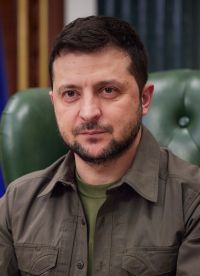


Sovereignty is more than a legal abstraction; it is the expression of a people's collective will, grounded in foundational laws and a shared identity [1]. The Ukrainian Constitution establishes this principle unequivocally, declaring the people as the sole source of power and affirming human rights and freedoms as inalienable [2]. Yet, the history of Ukraine is one of a continuous, arduous effort to realize and defend this inherent right [3]. This defense is not merely a modern necessity but is framed as a duty inherited from ancestors who secured these liberties through great sacrifice, demanding a similar commitment from the present generation [4].
The central challenge confronting Ukraine involves a dual-front struggle: one of legal and constitutional definition, and another of existential defense against external forces that actively deny its statehood [5, 6]. The nation's sovereignty is defined internally through a commitment to indivisible territory and democratic principles, but it is simultaneously contested by external aggression that rejects these claims [7]. Consequently, the defense of Ukraine is presented not only as a military necessity but as a vindication of international law and the right of all nations, large or small, to self-determination [8]. This effort involves safeguarding its constitutional order from both internal and external subversion, positioning the struggle as one for the very soul of the nation [9, 10].
The Constitutional Bedrock of a Sovereign People
The legal architecture of Ukrainian sovereignty is built upon clear constitutional pillars. The 1996 Constitution explicitly identifies the people as the 'bearers of sovereignty and the only source of power,' who exercise this authority both directly and through state bodies . This concept of popular sovereignty is complemented by the principle of a unified and indivisible state territory, which aims to consolidate the nation's geographic and political integrity . These modern tenets echo earlier aspirations, such as those in the 1918 Constitution of the Ukrainian People's Republic, which proclaimed Ukraine a sovereign, independent state, thereby demonstrating a long historical continuity in the quest for self-governance [11]. Central to this framework is the assertion that human rights are 'inalienable and inviolable,' establishing the protection of the individual as a core function of the state .
This constitutional framework is deeply resonant with broader traditions of democratic thought, which posit that civil government is instituted to support, protect, and defend essential natural rights like life, liberty, and property [12]. The Ukrainian Constitution operationalizes this philosophy by making the affirmation and insurance of human rights and freedoms the main duty of the state . Furthermore, it enshrines an 'inalienable right to life' and obligates the state to protect it, reinforcing the idea that sovereignty serves the people, not the other way around [13]. This aligns with the historical perspective that liberties are a 'fair Inheritance' that must be defended against all attacks, a sentiment articulated by Ukrainian leaders who note that freedom is not granted permanently but must be perpetually fought for [14].
Recognizing that sovereignty can be threatened from within as well as from without, Ukraine's legal system incorporates specific safeguards. The constitution explicitly prohibits political parties and associations whose actions are aimed at liquidating Ukraine's independence, changing the constitutional order by force, or violating its sovereignty and territorial integrity . This legal foresight codifies a form of national self-defense within the domestic political sphere. This internal, state-mandated protection complements the philosophical notion that sovereignty itself includes an inherent, almost primal, right of self-defense against existential threats [15]. The state is thus empowered not only to govern but to preserve the very conditions of its existence.
Forging Unity Through Culture and Conflict
Beyond legal texts, Ukrainian sovereignty is animated by a profound national consciousness shaped by centuries of cultural development and historical struggle [16]. The work of national poets like Taras Shevchenko is cited as a guiding star for the Ukrainian struggle for freedom, embodying a 'grim resolve beneath the sorrow' that characterizes the national temperament . This cultural bedrock provides a deep well of resilience and a shared identity that transcends political and regional lines, giving substance to the legal framework of the state. It suggests that the nation's spirit, as much as its laws, is a source of its sovereignty.
In moments of national crisis, Ukrainian leaders have consistently drawn upon this deep-seated sense of unity. Following the events of 2014, President Petro Poroshenko argued that the difficult challenges faced by the nation had united the 'Ukrainian family' and strengthened it as a political entity with a clear European orientation . He emphasized that patriotism was strong across all regions, from east to west, countering narratives of a fundamentally divided country . This perspective frames adversity not as a fracturing force but as a crucible that forges a stronger, more cohesive national identity, which is essential for withstanding external pressures .
A key aspect of defending sovereignty involves asserting this authentic national identity against external misrepresentations designed to delegitimize it . President Volodymyr Zelensky has directly confronted narratives portraying Ukraine as a threat or as a 'Nazi' state by invoking Ukraine's history of fighting Nazism and the multicultural reality of its society [17]. He draws a sharp distinction between 'Ukraine in your news and Ukraine in reality,' arguing that the latter is a free people building their own future, not destroying it . This rhetorical defense is crucial, as it posits Ukrainian sovereignty not just as a legal right but as a lived, empirical reality that contradicts hostile propaganda .
Sovereignty Under Siege: External Pressures and Global Alliances
The contemporary military conflict represents the most severe test of Ukraine's sovereignty, transforming abstract principles into a concrete struggle for survival [18]. This is not merely a territorial dispute but an existential challenge from an aggressor perceived as seeking to deny Ukraine's very 'existence, freedom, land, dignity and life' . In this context, Ukraine's demands for security guarantees are a direct appeal for the international community to uphold its right to exist . The conflict is framed as the ultimate defense of self-determination, an effort to protect a pre-existing democracy rather than build a new one .
In this fight, Ukraine has actively sought and received significant international support. Alliances like the G7 and partners like the United States have repeatedly affirmed their commitment to Ukraine's sovereignty and territorial integrity within its internationally recognized borders [19, 20]. This support is often cast in broader terms, as an investment in a world governed by common rules where the rights of all nations are respected . By positioning its defense as a stand for global principles, Ukraine has garnered widespread backing, with international bodies called upon to condemn the aggression and enforce international law .
However, reliance on international partnerships is not without its complexities. External support can sometimes be entangled with the strategic interests of allies, leading to political pressures. For instance, actions by the Trump administration were viewed by the U.S. Congress's Judiciary Committee as leveraging aid at the expense of Ukraine's national security [21]. This episode highlighted how the security of a strategic partner on the front lines against aggression could become intertwined with the domestic politics of an ally, demonstrating the delicate balance Ukraine must maintain in its international relations . The international community has also taken direct action, such as imposing restrictive measures on organizations deemed to be undermining Ukraine's territorial integrity through force or by training separatists [22].
Ukrainian sovereignty emerges not as a single, static concept but as a dynamic and multifaceted construct. It is firmly rooted in a constitutional framework that declares the people as its ultimate source, guaranteeing inalienable rights and the state's indivisibility . This legal foundation is animated by a powerful sense of national identity, forged in the crucible of shared history and cultural struggle, which provides the collective will to resist subjugation . This internal resolve is projected onto the world stage, where the defense of sovereignty becomes a matter of international law and a test of the global commitment to a rules-based order .
Ultimately, the ongoing struggle underscores a timeless principle articulated by Ukrainian leaders and echoed in democratic thought: freedom is not a permanent inheritance but a right that must be consistently defended . The defense of Ukrainian sovereignty is therefore portrayed as a fight for more than just territory; it is a struggle for the right to a self-determined future and for the validation of a national identity built over generations . It serves as a stark reminder that a nation's existence relies on its people's readiness to defend the liberties they have inherited, a principle with resonance far beyond Ukraine's borders .