AI-generated from sources
The constitutional dilemma: First amendment dissent versus fifth amendment silence
In Brief
- The choice between invoking the First Amendment (dissent) and the Fifth Amendment (silence) represents a core, unresolved conflict in American constitutional law when citizens face political inquiry.
- Wielding the First Amendment is an affirmative declaration of principle, carrying the risk of career ruin and contempt citations, as judicial 'balancing' can punish unpopular expression.
- Invoking the Fifth Amendment acts as a procedural shield against self-incrimination but often results in the public and legal presumption of guilt or lack of 'good moral character.'
- The strategic calculation forces individuals to weigh the idealistic imperatives of free expression against the pragmatic necessities of survival under suspicion.
Main authors

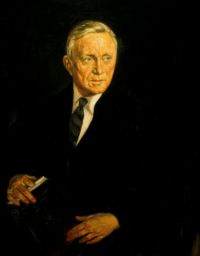
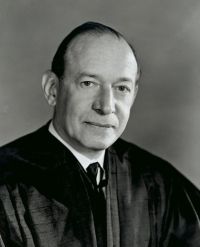
In the crucible of government-sanctioned political inquiry, individuals are often confronted with a profound strategic dilemma, forced to choose between two cornerstones of American liberty: the First Amendment's guarantee of free expression and the Fifth Amendment's privilege against self-incrimination. This choice is not merely procedural but deeply philosophical, setting the absolute principle of open dissent against the pragmatic necessity of self-preservation. One path involves wielding the First Amendment as a weapon of conscience, an affirmative declaration of belief and a challenge to authority, though it carries the risk of contempt, persecution, and personal ruin [1].
The alternative is to raise the Fifth Amendment as a shield of silence, a constitutionally guaranteed refusal to provide testimony that could be used against oneself [2]. While this offers a powerful defense against compelled speech, it comes at a significant cost. Invoking this right is frequently interpreted not as a neutral assertion of a constitutional privilege, but as a tacit admission of guilt, transforming a protective measure into a source of public stigma and adverse legal inference [3, 4]. This strategic crossroads thus forces a calculation between martyrdom for a cause and survival under a cloud of suspicion.
The tension between these two amendments reveals a fundamental and unresolved conflict within American constitutional law when personal liberty collides with state power. The choice an individual makes reflects not only their personal courage and circumstance but also the prevailing judicial and political climate, which shapes the potential consequences of both speaking out and remaining silent. Examining this dichotomy illuminates the complex interplay between individual rights and national security, the limits of free expression, and the practical meaning of due process when citizens face the investigative power of their own government.
The First Amendment as an Affirmative Weapon of Principle
At its core, the First Amendment is conceptualized by many jurists as an almost unconditional guarantee of expression, particularly concerning public affairs [5, 6]. This perspective posits that the free exchange of ideas is not merely a personal liberty but an essential mechanism for the discovery of truth and the overall vitality of society [7]. The right to think is seen as the genesis of all freedom, and speech is its necessary external manifestation, which must be protected from government attempts to control thought [8]. This principle extends far beyond popular or uncontroversial ideas, guarding both great secular causes and smaller personal interests, and applying equally to political, religious, and even economic activity [9].
The true measure of a society's commitment to this principle lies in its willingness to protect speech that is unpopular, offensive, or even perceived as dangerous [10]. The First Amendment's protections must allow for protests against the prevailing moral code of the community [11] and, in modern interpretations, can even extend to what is broadly defined as hate speech [12]. This robust defense of expression is considered most critical precisely when individuals feel compelled to speak out against what they view as a grievous moral wrong, as the urgency of persuasion in such moments is paramount [13]. The philosophy underpinning this expansive view is a deep-seated confidence in the public's common sense and maturity of judgment, suggesting that the societal interest in open expression outweighs the potential harm that might arise from any specific content, such as obscene material [14, 15].
However, wielding free speech as a weapon of principle is not without significant peril, a reality that complicates its absolutist interpretations. Some legal opinions argue that the right to speak is not absolute and must be balanced against the potential for abuse and the need for a civilized society to forbid certain expressions [16, 17]. This view suggests that the exercise of free speech carries a responsibility to act with reasonable care . The most profound risk arises when an individual's principled stand, rooted in foundational American beliefs like the right of revolution, is met with state-sanctioned punishment. As Justice Hugo Black warned, a balancing approach can result in the state penalizing individuals for their beliefs, forcing them to sacrifice their careers and livelihoods in defense of First Amendment freedoms . This highlights the immense personal cost that can be attached to choosing the path of dissent over silence.
The Fifth Amendment as a Pragmatic Shield of Silence
In stark contrast to the affirmative act of speaking, the Fifth Amendment offers a strategy of refusal. The privilege against self-incrimination functions as a crucial procedural shield, ensuring that an individual cannot be compelled by the government to be a witness against themselves . Its application is not contingent on any specific
The Fifth Amendment as a Pragmatic Shield of Silence
In stark contrast to the affirmative act of speaking, the Fifth Amendment offers a strategy of refusal. The privilege against self-incrimination functions as a crucial procedural shield, ensuring that an individual cannot be compelled by the government to be a witness against themselves . Its application is not contingent on any specific "ritualistic formula"; a witness need only make their intention to invoke the privilege sufficiently clear to the inquiring body [18]. This right, like many in the Bill of Rights, has been extended to apply not just to federal proceedings but also to state actions through the Fourteenth Amendment, making it a universally available safeguard [19].
Despite its constitutional sanctity, the practical application of this shield is fraught with negative consequences. The most significant of these is the pervasive assumption that silence implies guilt. Both in the courtroom and in the court of public opinion, the refusal to testify is often interpreted as an attempt to conceal wrongdoing. This is not merely a social stigma; it has become a functional reality in legal proceedings, where courts may draw adverse inferences against a witness who invokes the Fifth Amendment .
This inference can have devastating real-world impacts, extending beyond the immediate inquiry. For example, the act of invoking the privilege has been used as de facto evidence that an individual lacks the "good moral character" required for certain legal statuses, such as immigration eligibility, even when no other negative evidence exists in their record . Thus, the shield of silence becomes a double-edged sword. While it protects the individual from providing incriminating testimony, the act of using it can itself become the basis for punitive action, effectively punishing the assertion of the right itself. This transforms a tool designed for protection into a brand of suspicion, forcing a difficult calculation between immediate legal jeopardy and long-term reputational or professional harm.
The Collision of Principles in Political Inquiry
The strategic conflict between the First and Fifth Amendments becomes most acute during periods of intense political scrutiny, when government bodies investigate citizens' beliefs and associations. In these contexts, the state's objective is often to compel the very speech that the First Amendment aims to protect: expressions of conscience, political belief, and dissent [20]. The government's effort to control thought is precisely the circumstance where First Amendment freedoms are most imperiled . An individual called to testify faces an impossible choice: to speak freely and risk prosecution for their views under statutes concerning sedition or disloyalty [21], or to remain silent and have that silence be construed as guilt .
This dilemma is a direct reflection of the deep divisions within American jurisprudence over the scope of free speech. While some jurists maintain that there should be no room for governmental restraint on the press or speech on public matters [22], others contend that such freedoms are not absolute and are subject to limitations . For absolutists like Justice William O. Douglas, the judiciary itself has no special privilege to impose prior restraint on speech, a power withheld from all other government officials [23]. Conversely, the view that speech can be regulated to prevent abuse underpins the legitimacy of inquiries that probe the boundaries of acceptable dissent . This judicial friction creates an unstable legal environment where the consequences of choosing either dissent or silence are unpredictable and potentially severe.
Ultimately, the confrontation between an individual and the state in a political inquiry forces a decision between two distinct forms of resistance. One is active and vocal, a weaponization of constitutional principle that asserts the primacy of individual conscience over state authority . The other is a form of passive resistance, a potent weapon against oppression that works by denying the state the participation of its target [24]. However, while both are constitutionally grounded, they lead to vastly different outcomes. The path of dissent may lead to martyrdom for a principle, while the path of silence may offer survival, but at the cost of being judged guilty without a trial .
The choice between wielding the First Amendment as a weapon of dissent and employing the Fifth Amendment as a shield of silence represents a fundamental and enduring tension in American constitutional democracy. It is a decision that forces individuals to weigh the idealistic imperatives of free expression against the pragmatic realities of self-preservation. Opting for the First Amendment is an act of defiance, a commitment to the belief that the free flow of ideas is essential to a vital society, even if it means sacrificing one's career and liberty for that principle . Conversely, invoking the Fifth Amendment is a strategic retreat, a constitutionally sound refusal to cooperate with an inquiry that is perceived as unjust, though it risks the indelible stain of presumed guilt .
This strategic dichotomy does more than define an individual's response to political pressure; it serves as a barometer for the health of the republic itself. A legal and political system that heavily penalizes either choice—either by prosecuting dissenters or by stigmatizing those who remain silent—reveals its own insecurities. The unresolved tension between these two amendments suggests that while the Constitution provides the tools for resistance, it offers no easy answers for those who use them. The ultimate legacy of these conflicts lies in how society regards both the outspoken defender of unpopular ideas and the silent citizen who refuses to incriminate themselves, for in that judgment lies the true measure of its commitment to liberty.