AI-generated from sources
The constitutional limits on state regulation of digital "hateful conduct"
In Brief
- Content-based regulations, such as those targeting 'hateful conduct,' must satisfy the demanding test of strict scrutiny, requiring them to be narrowly tailored to serve a compelling government interest.
- The use of vague definitions for terms like 'hateful conduct' creates an unconstitutional 'chilling effect,' causing both digital platforms and users to self-censor protected speech.
- The First Amendment shields even offensive and repellent expression; censorship is only justified by a proven, imminent threat of serious, substantive harm, not by fear or disgust.
- Laws that compel private digital platforms to adopt and enforce state-devised speech policies violate the platform's right not to speak, implicating the compelled speech doctrine.
Main authors
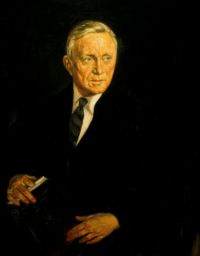
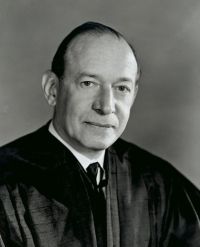
The proliferation of digital platforms has created a new frontier for an age-old conflict: the state's ambition to regulate harmful speech versus the foundational principle of free expression. Recent legislative attempts to mandate that social media networks police “hateful conduct” bring this tension into sharp relief. These laws, while often aimed at laudable goals like curbing violence, frequently founder on the bedrock of constitutional protections that shield even offensive and repellent speech from government censorship [1, 2]. The central challenge lies in the state's attempt to impose a specific definition of hateful content, a task that almost inevitably compels platforms to speak on a fraught topic and chills the protected speech of their users [3].
This is not merely a question of policy but a profound legal and philosophical dilemma. Social media websites function as complex ecosystems for expression, acting as both publishers and curators of speech generated by billions of individuals [4]. When the state intervenes by mandating specific policies and complaint mechanisms for user content, it implicates the speech rights of both the platform and its participants . The core difficulty is that terms like “hateful conduct” are often indefinite and subjective, creating a chilling effect where users and platforms alike may self-censor to avoid perceived transgressions [5]. The resulting legal landscape forces a confrontation between the government's asserted interest in public safety and the judiciary's deep-seated skepticism toward content-based speech regulations [6].
The critical inquiry, therefore, is whether such regulations can withstand strict judicial scrutiny. The First Amendment erects a high barrier against laws that regulate speech based on its message, demanding that they be narrowly tailored to serve a compelling state interest . By creating broad definitions of proscribed speech—for instance, by including incitement to violence without the crucial constitutional qualifier of imminence—these laws often fail this test [7]. They represent a direct challenge to a legal tradition that views censorship with suspicion and prefers to trust in the marketplace of ideas, even when those ideas are disturbing [8, 9].
The First Amendment's High Bar for Speech Regulation
The American constitutional framework establishes free speech not as an exception but as the governing rule [10]. This principle extends protection even to ideas that society may find abhorrent, including speech that is broadly characterized as hateful . The rights to freedom of speech and expression are not relinquished at the entrance to a public space, such as a school, and by logical extension, they are not surrendered upon logging into a digital one [11]. Any attempt by the state to regulate speech based on its content is therefore met with the highest level of judicial skepticism and must overcome a series of stringent tests developed over a century of jurisprudence.
To justify the suppression of speech, the government cannot simply cite fear of potential injury or passionate public opposition to the message . Instead, it must demonstrate that the speech poses a “clear and present danger” of a serious, substantive evil that the state has a right to prevent [12, 13]. This requires objective proof that the danger is both severe and imminent, a standard that advocacy alone typically fails to meet [14, 15]. Even reprehensible advocacy for law-breaking is constitutionally protected unless it rises to the level of direct incitement to imminent lawless action . This high threshold reflects a fundamental confidence in the public’s ability to discern and reject dangerous ideas without the government’s intervention .
Furthermore, the judiciary has forcefully rejected the notion that protected speech can be restricted as a collateral means to target unprotected speech [16]. Such an approach is seen as turning the First Amendment's logic “upside down,” as it would allow the government to prohibit lawful expression simply because it shares characteristics with unlawful expression . This principle poses a significant obstacle for broadly written “hateful conduct” laws, which, in their attempt to capture potentially harmful content, inevitably sweep in a vast amount of constitutionally protected, if offensive, speech . The government’s interest, however compelling, cannot be pursued through means that create such a wide-ranging chilling effect.
The Definitional Quagmire and Its Chilling Effect
A primary constitutional flaw in laws targeting “hateful conduct” is their reliance on inherently vague and subjective definitions. Any legal test that hinges on what is offensive to community standards is considered too capricious and destructive to freedom of expression, effectively empowering a majority to censor ideas it dislikes [17]. This vagueness is not a minor drafting issue; it is a fundamental problem that can render a law unconstitutional, as it fails to give individuals clear notice of what is forbidden and invites arbitrary enforcement .
The practical consequence of such legislative ambiguity is a pervasive “chilling effect” on constitutionally protected speech . When the boundaries of permissible expression are unclear, both platforms and their users are likely to steer far clear of the line, silencing themselves on controversial topics to avoid potential complaints or legal scrutiny . This self-censorship is exacerbated when a law’s definition of proscribable speech, such as incitement, is untethered from the strict constitutional requirement of imminence, creating a dragnet that can catch mere advocacy or passionate debate . The state, in its desire to address a perceived harm, thus risks stifling the very interchange of ideas that democratic society depends on [18].
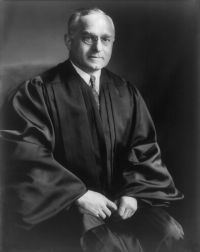
This tension reflects a long-standing jurisprudential struggle. Thinkers like Justice Frankfurter recognized the paradox that preserving a free civilization sometimes requires placing limitations on expression, cautioning against adherence to “uncritical libertarian generalities” [19]. However, he also warned against legal phrases like “clear and present danger” becoming ossified dogma, ceasing to provoke the critical analysis necessary for their proper application [20]. The challenge is to balance competing interests without sacrificing core principles, a task that vague and overbroad definitions of “hateful conduct” fail to achieve. The persecution of opinion, while logical to those certain of their power and premises, is antithetical to a system built on intellectual freedom [21].
Digital Platforms: The Unwilling Arbiters of State Mandates
The modern battle over speech regulation is waged on the terrain of digital platforms, which act as crucial intermediaries and curators of public discourse . Laws targeting hateful conduct often operate by compelling these private entities to adopt and enforce state-devised policies, thereby implicating the speech rights of their user communities [22]. This approach places platforms in the role of unwilling arbiters, forced to navigate between their own community standards and government mandates.
A key constitutional issue with this regulatory model is compelled speech. Laws like New York's Hateful Conduct Law require platforms to publish a policy and a complaint mechanism specifically addressing the state's definition of hateful conduct, even if this contradicts the platform's own values or pro-free-speech ethos [24]. This forces platforms to disseminate a state-sponsored message with which they may disagree, a violation of the principle that the freedom of speech includes the right not to speak . Moreover, the practical efficacy of such laws is questionable, as they often do not require platforms to actually act on complaints, raising doubts about whether they are narrowly tailored to achieve their stated goal of preventing violence [25].
While the functional aspects of technology, including computer code, can be subject to government regulation, this principle does not grant a free pass to regulate the expressive content that technology conveys [26, 27]. A regulation targeting the functionality of code may be content-neutral, but a law defining “hateful conduct” is fundamentally a content-based regulation of speech . As such, it is subject to the most exacting judicial scrutiny . The fact that speech is transmitted via computer code does not diminish its First Amendment protection or lower the high bar the government must clear to justify its regulation .
Conclusion: The Enduring Primacy of Free Expression
Attempts to legislate against “hateful conduct” in digital spaces, though often driven by a sincere desire to foster a safer society, repeatedly collide with insurmountable constitutional barriers . The inherent difficulty of crafting a definition of “hate speech” that is not fatally vague or overbroad almost guarantees a chilling effect on a wide swath of protected expression . Regulations that compel private platforms to adopt state-defined speech codes or that create enforcement mechanisms for constitutionally protected speech fail the crucial test of narrow tailoring and infringe upon the rights of both platforms and users .
Ultimately, the body of jurisprudence suggests that the most durable answer to harmful speech is not censorship but counterspeech and societal resilience [23]. The courts have consistently held that fear, disgust, or disagreement are insufficient grounds for suppressing expression; there must be an imminent threat of serious, tangible harm . The First Amendment's philosophy is rooted in a profound confidence in the public's ability to deliberate and reject malevolent ideas without the heavy hand of state censorship . As Justice Frankfurter noted, the ultimate defense of a free society lies not just in legal vindication but in the wisdom to reject illiberal and repressive policies, recognizing that what is constitutional is not always what is wise [28].
The effort to regulate “hateful conduct” online, while well-intentioned, confronts a formidable constitutional framework designed to protect expression even when it is unpopular or offensive . The legal challenges inherent in defining hate speech without resorting to vagueness, and the subsequent chilling effect on protected discourse, render such laws constitutionally suspect . State mandates that compel platforms to adopt and publicize policies on hate speech represent a form of coerced expression, further entangling them in legal jeopardy . These laws often fail to demonstrate that they are the least restrictive means to achieve a compelling government interest, a core requirement of strict scrutiny .
Jurisprudence consistently points toward a different remedy for pernicious ideas: not suppression, but open debate and public reason . The legal tradition maintains that fear of an idea's impact is not a justification for its censorship; rather, speech itself is the tool to liberate society from irrational fears . This approach places its faith in the maturity and judgment of the citizenry to navigate a complex world of ideas . Ultimately, the defense of a truly free society may rest less on what can be legally prohibited and more on the collective wisdom to resist repressive impulses, understanding that much which is illiberal may still fall within the bounds of the constitution .