AI-generated from sources
The illusion of the open platform: how 'fake markets' leverage technology to centralize control
In Brief
- Platform economies often function as 'Fake Markets' defined by a single, opaque algorithm that dictates pricing and profit margins, effectively stripping sellers of their autonomy.
- The rhetoric of 'openness' and 'entrepreneurship' is a strategic tool used by commercial platforms to gain public acceptance while concealing underlying proprietary control structures ('openwashing').
- Algorithmic control over modern gig workers echoes historical patterns of labor exploitation and economic domination, where vulnerable workers are subjected to hidden, unilateral forces.
- The long-term goal of platform leaders is not a sustainable open marketplace but the consolidation of market power through automation, leading to monopolistic private utilities.
Main authors

The digital age has championed the concept of the open platform as a revolutionary force for commerce, promising to create new, dynamic free markets that empower individuals as independent entrepreneurs [1]. This narrative suggests that technology can level the playing field, allowing anyone to participate in and profit from a more accessible economy [2, 3]. The language of openness and freedom has become a powerful tool for these platforms, helping them gain welcome reception from communities and policymakers who see them as harbingers of innovation and consumer benefit [4, 5]. This ideal, however, is increasingly scrutinized, with growing concerns that these systems are not open markets but something else entirely [6].
The central tension lies between the rhetoric of market freedom and the reality of centralized control. The implementation of a single, opaque algorithm to govern transactions transforms the platform from a neutral marketplace into a highly managed system . In this environment, participants described as 'entrepreneurs' often lack fundamental market agency, such as the ability to set their own prices or control their profit margins . This dynamic is not a novel creation of the digital era but echoes historical patterns of labor control where workers are subjected to hidden economic forces beyond their influence [7, 8]. The result is what analyst Anil Dash has termed a 'Fake Market': a system that uses the language of open competition to conceal a structure of opaque financial control, ultimately replacing genuine market dynamics with a rigged system [9].
The Anatomy of a Fake Market
The defining characteristic of the systems described as 'fake markets' is the replacement of open competition with a single, opaque algorithm that dictates the matching of buyers and sellers . This centralized control mechanism fundamentally alters the nature of the market, removing the autonomy of the sellers, who have no say over their own pricing or profit margins . This stands in stark contrast to traditional conceptions of a free market, where open competition among producers is seen as the primary means of securing the best terms for consumers and fostering prosperity [10]. In the platform model, the rules of engagement are not emergent properties of participant interactions but are instead dictated by the platform owner through hidden, proprietary code [11].
This opacity is a feature, not a bug, and it extends to all market participants. Consumers, for instance, are unable to make fully informed choices because the information they are provided can be deliberately misrepresented . Platforms have been shown to display 'ghost' cars or assets, creating a false perception of supply and demand that can influence purchasing decisions . This lack of transparency undermines a core principle of a functional market: that participants can trust the available information. For workers within the system, this opacity means they are subject to the 'workings of hidden forces,' unable to anticipate or understand the logic that determines their earnings and opportunities .
The linguistic framing of these platforms is a critical component of their success and acceptance . By consistently describing workers as 'entrepreneurs' and the system as a 'marketplace,' these companies leverage powerful cultural ideals associated with independence and free enterprise [12]. This carefully crafted rhetoric serves to mask the underlying control structure, making it difficult for regulators and the public to recognize the system as a departure from, rather than an extension of, a true free market . The short-term consumer benefits, such as convenience and lower prices, often obscure the potential for long-term harm created by these controlled, non-market systems .
Historical Echoes of Algorithmic Control
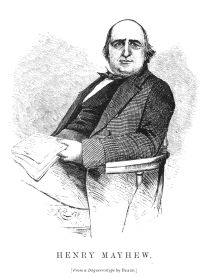
While the technology is new, the economic pressures exerted by platform algorithms on workers have historical parallels. The 19th-century system described by Henry Mayhew as 'grinding and driving' involved employers simultaneously reducing wages and compelling longer hours to maximize output and profit . This combination of pressures is analogous to the way modern platforms can manipulate pay structures and incentives to manage their labor supply, effectively depriving workers of income that might be available in a more transparent and competitive labor market [13]. These practices highlight a continuous dynamic where those who control the system can structure it to their financial advantage at the expense of the workforce .
The fundamental power imbalance between the controlling entity and the individual worker is another theme that resonates through history. Carl Schurz observed that the poor worker, reliant on daily earnings, is a 'slave of his necessities' and is therefore unable to contest the terms set by a more powerful employer who commands the situation . The platform worker today faces a similar predicament; they operate within a system whose rules are opaque and unilaterally determined, bearing the risks of market fluctuations while the platform covers its own . The individual is overtaken by the vicissitudes of a large, complex system without having the means to understand or influence it .
Even specific tactics like dynamic pricing are not without precedent. Long before the advent of machine learning, riverboat clerks would adjust passage fares based on the perceived wealth of a passenger's home region, charging more to those from affluent areas [14]. This pre-digital form of price discrimination demonstrates the same principle that algorithms now apply with far greater precision and scale: leveraging information asymmetry to maximize revenue from each transaction. These historical examples reveal that opaque, centrally controlled systems for extracting value from labor and commerce are not a recent invention, but rather the modern technological expression of long-standing economic strategies .
The Ideology of 'Openness' and Its Commercial Co-option
The term 'open' carries significant positive connotations, often associated with academic freedom, free speech, and the collaborative ethos of the open-source software movement [15]. This ideal of openness champions principles like free access to content, the ability for individuals to reuse and adapt materials, and the development of new, innovative ways of working in a networked world [16, 17]. It suggests a democratic, decentralized system where creativity can flourish, and its proponents have argued that such systems can rival or even exceed the capabilities of proprietary models [18, 19].
However, a fundamental conflict exists between this idealistic vision of openness and its commercial application . For many businesses, 'openness' is not an end in itself but a strategic means to an end. It can be used as a tactic to rapidly acquire a large user base for what is ultimately a proprietary platform [20]. The goal for a commercial provider is often not to foster a diverse ecosystem but to become the dominant player, effectively a monopoly, as this is seen as the surest path to high revenue [21]. In this context, the values of openness are subordinated to the drive for market control, a phenomenon sometimes termed 'openwashing' [22].
This co-option creates a crucial distinction between something being 'free' in price and being truly 'open' [23]. Many platform services are free to access, which aligns with consumer expectations in the Web 2.0 era, but they do not grant users the freedoms associated with openness, such as the right to reuse, modify, or build upon the service . A platform can leverage a 'freemium' model or offer open access to content as an initial lure, while the core technology and the rules governing the ecosystem remain firmly closed and controlled . This strategic ambiguity allows companies to benefit from the positive branding of 'open' while pursuing business models that may lead to the opposite of a free and open market .
The Long-Term Trajectory: From Exploitation to Automation
The current model of the platform economy, which relies on a vast, flexible workforce of individuals lauded as independent entrepreneurs, may only be a transitional phase . According to analysts like Anil Dash, the publicly stated roadmap for major platforms like Uber involves the systematic replacement of this human workforce with fully automated, company-owned assets, such as self-driving cars . This long-term vision reframes the present-day workforce not as partners in a new economic frontier, but as a temporary, data-generating component to be engineered out of existence as soon as technologically and economically feasible .
This trajectory highlights the ultimate precarity of the worker's position within the fake market structure . The system is not designed to create a sustainable ecosystem for independent providers but to consolidate market power and eventually capture all value generated by the service. The regulatory challenges posed by these platforms further complicate this transition [24]. By operating outside of traditional employment and service frameworks, platforms can be harder to regulate, making it more difficult to address the societal consequences of displacing a large workforce .
The end goal appears to be the establishment of a fully controlled, monopolistic system sanctioned by law, where the platform is no longer a facilitator of market activity but is the market itself [25]. This represents the final step in the evolution from a competitive market to a rigged one, and finally to a fake market that culminates in a private utility . In such a system, the principles of free competition and consumer choice are rendered obsolete, replaced by the absolute authority of the platform owner, who controls supply, demand, and pricing through its proprietary algorithm . This process marks a profound shift in economic organization, where control is centralized and hidden behind a technological and legal façade [26].
The celebrated narrative of the open platform creating a new era of free-market entrepreneurialism increasingly appears to be an illusion . Instead, what has emerged is a sophisticated model of centralized, algorithmic control that leverages the language of openness to obscure a structure with clear historical precedents in labor exploitation and economic domination . The powerful and positive ideology of 'openness,' born from collaborative movements in software and academia, has been strategically repurposed as a marketing tool to achieve commercial ends that are often antithetical to the ideal itself, such as establishing market-dominating monopolies .
This transformation from potentially open digital markets to algorithmically rigged systems constitutes a significant challenge to traditional notions of economic freedom . The opacity of these platforms, protected by both proprietary technology and legal frameworks, conceals the true forces shaping the economic lives of millions of participants . Recognizing the distinction between a genuine open market and the façade of a 'fake' one is the critical first step. It is essential for confronting a new and powerful form of economic control that does not simply compete within the market, but replaces the market entirely with its own set of hidden rules and unilateral decrees [27].