Martin Weller, The Battle for Open (2014)
“ So, if we reject a single definition of openness, what is the best way to approach it? It is probably a mistake to talk about openness as if it is one unified approach; rather, it is an umbrella term. ”
Openness is a philosophical and practical concept centered on transparency, accessibility, and collaboration, opposing secrecy and centralized control. It appears in various forms, from open government initiatives that promote accountability to the democratization of learning resources through open education. Authors like Martin Weller describe it as an umbrella term that encompasses a range of approaches, while George Wharton James advocates for openness as a moral duty rather than deception.
Margaret Fuller associates it with intellectual independence, and Hamilton Wright Mabie links it to the spiritual depth of creative work. Helen Schucman, on the other hand, connects openness to deep understanding and unity. These viewpoints together highlight openness as a multifaceted principle that encourages inclusivity, innovation, and ethical engagement across different areas.
Martin Weller, The Battle for Open (2014)
“ So, if we reject a single definition of openness, what is the best way to approach it? It is probably a mistake to talk about openness as if it is one unified approach; rather, it is an umbrella term. ”
 George Wharton James,
Living the Radiant Life: A Personal Narrative
George Wharton James,
Living the Radiant Life: A Personal Narrative
“ Stand by your truthfulness, stand by your frankness, stand by your openness until you teach these burrowing, crafty, stealthy, sly, evasive, sneaking creatures that openness is better than secrecy, light better than darkness, truth better than falsity, candor better than craft, and an open enemy better than a secret, fawning, sycophantic foe. ”
Charles Herbert Sylvester, Journeys Through Bookland, Vol…
“ But that same Nature has the deep cunning which hides itself under the appearance of openness, so that simple people think they can see through her quite well, and all the while she is secretly preparing a refutation of their confident prophecies. ”
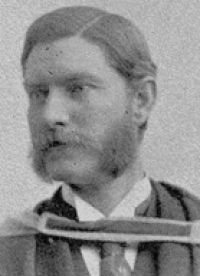 Wesley Mills,
Voice production in singing and speaking…
Wesley Mills,
Voice production in singing and speaking…
“ As few can hope to unite all these qualities in themselves in even a moderate degree, openness of mind, temperance in the expression of opinion, and common sense with experience, must be largely relied on to furnish working conclusions. ”
 Hamilton Wright Mabie,
Essays on Work and Culture
Hamilton Wright Mabie,
Essays on Work and Culture
“ A few lines read in the solitude of the woods, or before the open fire, often kindle the emotion and imagination which slumber within us; in companionship with the greatest minds our shyness vanishes; we not only take but give with unconscious freedom. When we reach this stage we have reached the man who lives not only by but in the work, and whose innermost nature speaks to us and confides in us through the form of speech which he has chosen.The higher the quality of the work, the clearer the disclosure of the spirit which fashioned it and gave it the power to search and liberate. ”
 Margaret Fuller,
Memoirs of Margaret Fuller Ossoli…
Margaret Fuller,
Memoirs of Margaret Fuller Ossoli…
“ Hence, among the strong, withdrawal to private study and contemplation, that they might be "alone with the Alone;" solemn yet glad devotedness to the Divine leadings in the inmost will; calm concentration of thought to wait for and receive wisdom; dignified independence, stern yet sweet, of fashion and public opinion; honest originality of speech and conduct, exempt alike from apology or dictation, from servility or scorn. ”
 Joanna Baillie,
A Series of Plays in which it is intended to delineate The Stronger Passions of the Mind
(1798)
Joanna Baillie,
A Series of Plays in which it is intended to delineate The Stronger Passions of the Mind
(1798)
“ For who hath followed the great man into his secret closet, or stood by the side of his nightly couch, and heard those exclamations of the soul which heaven alone may hear, that the historian should be able to inform us? and what form of story, what mode of rehearsed speech will communicate to us those feelings, whose irregular bursts, abrupt transitions, sudden pauses, and half-uttered suggestions, scorn all harmony of measured verse, all method and order of relation? ”
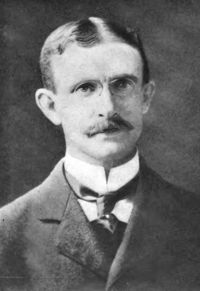 Edwin Asa Dix,
A Midsummer Drive Through the Pyrenees
Edwin Asa Dix,
A Midsummer Drive Through the Pyrenees
“ How sweet it is to renounce action, company, speech, to hide one's self, forget outside things, and to listen in security and solitude to the divine voices that, like collected springs, murmur peacefully in the depths of the heart! ”
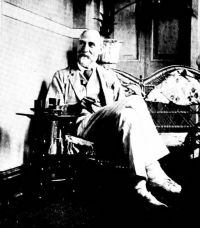 Edward Hamilton Aitken,
Concerning Animals and Other Matters
Edward Hamilton Aitken,
Concerning Animals and Other Matters
“ And if you abstract yourself from individuals and look at that thing, the ear, in the wide field of life, what a great, living reality it is!—a spiritual unity under infinite diversity of material form and fashion. ”
 Helen Schucman,
A Course in Miracles: Text — The Acceptance of the Atonement
Helen Schucman,
A Course in Miracles: Text — The Acceptance of the Atonement
“ In your open mind are your creations, in perfect communication born of perfect understanding. Could you but accept one of them you would not want anything the world has to offer. Everything else would be totally meaningless. ”
 Evelyn Underhill,
Practical Mysticism: A Little Book for Normal People
Evelyn Underhill,
Practical Mysticism: A Little Book for Normal People
“ What is it that smears the windows of the senses? Thought, convention, self-interest. We throw a mist of thought between ourselves and the external world: and through this we discern, as in a glass darkly, that which we have arranged to see. We see it in the way in which our neighbours see it ”
Oliver Wendell Holmes, The Poet at the Breakfast-Table
“ But when it comes to talking one's common thoughts,—those that come and go as the breath does; those that tread the mental areas and corridors with steady, even foot-fall, an interminable procession of every hue and garb,—there are few, indeed, that can dare to lift the curtain which hangs before the window in the breast and throw open the window, and let us look and listen. ”
Margaret Fuller,
Memoirs of Margaret Fuller Ossoli…
“ Her prisoned emotions found the freedom they pined for in contemplation of nature's exquisite harmonies,—in poetic regards of the glory that enspheres human existence, when seen as a whole from beyond the clouds,—and above all in exultant consciousness of life ever influent from the All-Living. ”
 Ralph Waldo Trine,
In Tune with the Infinite; or, Fullness of Peace…
Ralph Waldo Trine,
In Tune with the Infinite; or, Fullness of Peace…
“ Moreover, the time will come when in the busy office or on the noisy street you can enter into the silence by simply drawing the mantle of your own thoughts about you and realizing that there and everywhere the Spirit of Infinite Life, Love, Wisdom, Peace, Power, and Plenty is guiding, keeping, protecting, leading you. ”
 Fredrika Bremer,
The Homes of the New World
(1853)
Fredrika Bremer,
The Homes of the New World
(1853)
“ But the thoughts which these few hermits strove to proclaim by silence, as well as by speech, not only by what they did, but by what they forbore to do, shall abide in beauty and strength, to re-organize themselves in nature, to invest themselves anew in other, perhaps higher-endowed and happier-mixed clay than ours, in fuller union with the surrounding system. ”
 Lydia Sigourney,
Moral Pieces in Prose and Verse
(1815)
Lydia Sigourney,
Moral Pieces in Prose and Verse
(1815)
“ It is in the writings of these illustrious characters that we find originality of thought, justice of sentiment, and force of reasoning, occasionally elevating our conceptions, convincing our judgments, and softening our feelings. Many more examples might be adduced of those who prefer the exercise of composition to that of conversation, and who, in silently meditating upon some rational subject, and in recording the spontaneous flow of ideas and reflections, have felt a silent satisfaction, and an enlargement of mind, never found among the restraints, or the gaieties of society. ”
William Caldwell, Pragmatism and idealism (1913)
“ But what I see and hear of the outer world is purely and simply a selection made by my senses to serve as a light to my conduct; what I know of myself is what comes to the surface, what participates in my actions. ”
 Herbert Spencer,
Essays on Education and Kindred Subjects
Herbert Spencer,
Essays on Education and Kindred Subjects
“ Our social intercourse, as commonly managed, is a mere semblance of the reality sought. What is it that we want? Some sympathetic converse with our fellow-creatures: some converse that shall not be mere dead words, but the vehicle of living thoughts and feelings—converse in which the eyes and the face shall speak, and the tones of the voice be full of meaning—converse which shall make us feel no longer alone, but shall draw us closer to another, and double our own emotions by adding another's to them. ”
 Romain Rolland,
Jean-Christophe in Paris: The Market-Place…
Romain Rolland,
Jean-Christophe in Paris: The Market-Place…
“ I only ask that we should both be open and sincere, and frankly and without shame, and without being afraid of committing ourselves finally to anything or of any sort of contradiction, be true to what we feel. ”
“ From the high tower of Thought we can look out at the world. Calm, and self-centred, and complete, the æsthetic critic contemplates life, and no arrow drawn at a venture can pierce between the joints of his harness. ”
Percy Holmes Boynton, A History of American Literature
“ What hinders that now, everywhere, in pulpits, in lecture-rooms, in houses, in fields, wherever the invitation of men or your own occasions lead you, you speak the very truth, as your life and conscience teach it, and cheer the waiting, fainting hearts of men with new hope and revelation? ”
Francis Bernard Cassilly, What Shall I Be? A Chat With Young People
“ Guard the avenues of your soul, your sight and hearing and the other senses, through which contamination from without is always seeking to enter and defile the beauty of God's handiwork. About us is an atmosphere of worldliness, which we imperceptibly breathe in from the words of companions, from the printed page, and the example of the careless. ”
Mrs. C. M. Livingston, Divers Women
“ She frequently visited towns where a popular preacher or lecturer was announced, and made one of the vast throng that passed about him; then, taking a favourable position, rapidly scanned the upturned faces, wondering, meanwhile, what that strange, subtle something is, by which we recognise each other; that unerring consciousness, so that among ten thousand faces, could we view them one by one, we know at a glance that the one we seek is not there; we do not stop, and doubt, and compare—we know. ”
Laura C. Holloway, The Ladies of the White House; Or…
“ New fields of thought were explored by them, and the expanse of their souls, under a sense of freedom and change, gained for their ultimate happiness more than mere worldly honors could give or take away. ”
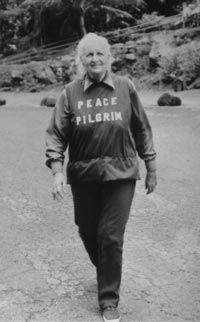 Peace Pilgrim,
Steps Toward Inner Peace
(1964)
Peace Pilgrim,
Steps Toward Inner Peace
(1964)
“ These laws are the same for all of us, and these are the things that we can study and talk about together. But there is also a third preparation that has to do with something which is unique for every human life because every one of us has a special place in the Life Pattern. If you do not yet know clearly where you fit, I suggest that you try seeking it in receptive silence. I used to walk amid the beauties of nature, just receptive and silent, and wonderful insights would come to me. ”
 Henry David Thoreau,
The Writings of Henry David Thoreau
(1906)
Henry David Thoreau,
The Writings of Henry David Thoreau
(1906)
“ As the truest society approaches always nearer to solitude, so the most excellent speech finally falls into silence. We go about to find Solitude and Silence, as though they dwelt only in distant glens and the depths of the forest, venturing out from these fastnesses at midnight. ”
Henry James, The Soft Side (1900)
“ The quiet footsteps were quiet figures; the quiet figures that, to the eye, kept the picture human and brought its perfection within reach. This perfection, he felt on the bench by his friend, was now more in reach than ever. ”
 Anna Bartlett Warner,
Say and Seal, Volume I
Anna Bartlett Warner,
Say and Seal, Volume I
“ You are of a different world from that in which I live; and the flowers that are sweet to you, belong, I am afraid, to a Flora that I have no knowledge of. What, for instance, would you call pleasant things to talk about—if you were choosing a subject of conversation? ”
 William Lyon Mackenzie King,
The Secret of Heroism
(1906)
William Lyon Mackenzie King,
The Secret of Heroism
(1906)
“ I am continually impressed with the wisdom of keeping a mind open to suggestion and im- pressions from the men one meets in the ordinary course of life, in fine, the importance of keeping an open mind. ”
 John Ruskin,
Sesame and Lilies — Lecture I
(1895)
John Ruskin,
Sesame and Lilies — Lecture I
(1895)
“ And yet these momentary chances we covet; and spend our years, and passions, and powers, in pursuit of little more than these; while, meantime, there is a society continually open to us, of people who will talk to us as long as we like, whatever our rank or occupation;—talk to us in the best words they can choose, and of the things nearest their hearts. ”
 Orison Swett Marden,
Pushing to the Front
Orison Swett Marden,
Pushing to the Front
“ You must bring your listener close to you, must open your heart wide, and exhibit a broad free nature, and an open mind. You must be responsive, so that he will throw wide open every avenue of his nature and give you free access to his heart of hearts. ”
Claude Fayette Bragdon, Architecture and Democracy
“ The most modern note yet sounded in business, in diplomacy, in social life, is expressed by the phrase, "Live openly!" From every quarter, in regard to every manner of human activity, has come the cry, "Let in the light!" By a physical correspondence not the result of coincidence, but of the operation of an occult law, we have, in a very real sense, let in the light. ”
 Ethel Puffer Howes,
The Psychology of Beauty
Ethel Puffer Howes,
The Psychology of Beauty
“ In this sense, when we say, "What a wonderful idea!" we really mean, what a wonderful fitness of form to idea,— which is the same as saying, what a wonderful form, or more technically, what a wonderful unity. ”
 Heinrich Heine,
The Prose Writings of Heinrich Heine
Heinrich Heine,
The Prose Writings of Heinrich Heine
“ Who can say where the mouth leaves off and where the smile begins? In order to give a just opinion, both the observer and the object of observation must be in a state of rest. But who can be quiet near a Parisian, and what Parisian woman is ever quiet? ”
Various, The Atlantic Monthly, Volume 13…
“ What stillness and depth of manner are communicated to all who sound the deeps of life! what a refuge is their society from wit, zeal, and gossip, from petty estimates and demands! To these, now first encountered, we have been always known ”
Margaret Fuller,
Memoirs of Margaret Fuller Ossoli
(1852)
“ Through all the dark shadows shone a pure white ray, one high, spiritual character, a man, too, and of advanced age. I begin to respect men more, — I mean actual men. What men may be, I know; but the men of to-day have seemed to me of such coarse fibre, or else such poor wan shadows! ”
 Georg Wilhelm Friedrich Hegel,
The Introduction to Hegel's Philosophy of Fine Arts
Georg Wilhelm Friedrich Hegel,
The Introduction to Hegel's Philosophy of Fine Arts
“ It must address itself to the inward mind, which coalesces [Pg 155] with its object simply and as though this were itself, [159] to the subjective inwardness, to the heart, the feeling, which, being spiritual, aspires to freedom within itself, and seeks and finds its reconciliation only in the spirit within. ”
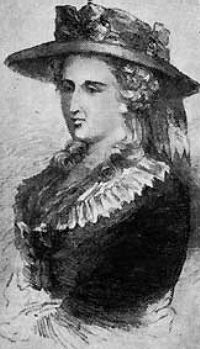 Ann Ward Radcliffe,
A Sicilian Romance
Ann Ward Radcliffe,
A Sicilian Romance
“ To render this sort of conversation irresistibly attractive, a knowledge of the world is requisite, and that enchanting case, that elegance of manner, which is to be acquired only by frequenting the higher circles of polished life. ”
Theophila Carlile Campbell, The Battle of The Press
“ It is pure in spirit, and is pure. It conceals neither motive nor purpose. It is open, fair, and honorable, not intruding itself upon the world's attention, but not shrinking from the world's scrutiny. ”
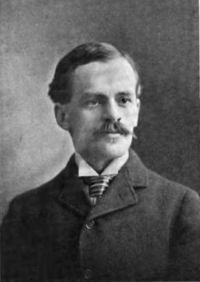 Alfred H. Lloyd,
The will to doubt
Alfred H. Lloyd,
The will to doubt
“ So men have said in effect throughout the ages, and where they have conceded reality or substantial character to manifoldness, the concession has simply concealed a reassertion, but with fuller and deeper meaning, of the intimacy of unity with reality. What makes for real unity or wholeness, then, must impart realistic character, giving actual contact and intimacy with just that of which, so to speak, the world is made. ”
 Mary Baker Eddy,
Science and Health with Key to the Scriptures
(1906)
Mary Baker Eddy,
Science and Health with Key to the Scriptures
(1906)
“ Tones of the human mind may be different, but they should be Chord and discord concordant in order to blend properly. Unselfish ambition, noble life-motives, and purity, — these constituents of thought, mingling, constitute individually and collectively true happiness, strength, and permanence. ”
 Annie Payson Call,
Power Through Repose
Annie Payson Call,
Power Through Repose
“ Each one of us will understand his own relation to the rest,—whether remote or close,—for in that quiet light it will be seen to rest on intelligible law, which only the fog and confusion of selfishness concealed. ”
Alexander Campbell Fraser, Thomas Reid — Chapter I (1898)
“ Its chief interest lies in the spectacle of penetrating sagacity, independent and sincere, steadily devoted to the invisible world of thought and belief, in quest of the ultimate foundations and guarantees of human knowledge. ”
 Geraldine Bonner,
Rich men's children
(1906)
Geraldine Bonner,
Rich men's children
(1906)
“ Now in this mystic, beautifying luminosity, the acquired point of view, the regard for the accepted conventions of every-day seemed to have receded to a great distance, to be thin, forgotten things that had nothing to do with real life. ”
 Plato,
The Dialogues of Plato
(1892)
Plato,
The Dialogues of Plato
(1892)
“ And perhaps we may arrive at some conclusion such as the following — that the dialogue is not strictly confined to a single subject, but passes from one to another with the natural freedom of conversation. ”
John Wilson, Recreations of Christopher North…
“ All the pages are instinct with one spirit—our thoughts and our feelings have all followed one another, according to the most approved principles of association—and a fine proportion has been unconsciously preserved. ”
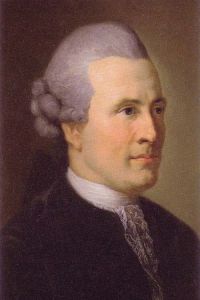 Johann Georg Zimmermann,
Solitude
Johann Georg Zimmermann,
Solitude
“ The privation of all ideas of dependance, accompanied by domestic comfort, useful employments, and innocent recreations, produce a strength of thought, and fertility of imagination, which present to the mind the most agreeable images, and touch the heart with the most delightful sensations. ”
John Bate, Talkers: With Illustrations
“ We want the reality, and where can he be found?” That is perfectly true. The reality is wanted in every family, society, church, and nation in the wide world. My reader, do you see and approve the ideal? Then aim at the reality, and to be the first model human talker that has ever lived in this Babel-talking world. Mark well the failings of others in the use of their [Pg 334] tongues, and strive to avoid them in your own. A heart and head united in being right will do almost everything in making the tongue right. ”
De Witt H. Parker, The Principles of Aesthetics
“ In order to yield satisfaction, the different parts of life must exemplify identity of motive, continuity and orderliness in the fulfillment of purpose, lucidity of relation, yet diversity for stimulation and totality. ”

