AI-generated from sources
The paradox of small-scale democracy: Intellectual conformity in the self-governing community
In Brief
- Small-scale governance, while idealized as the engine of liberty, inherently risks internal factionalism, 'local selfishness,' and 'intellectual provincialism' due to intense social pressures and the will of the majority.
- The public library is positioned as a contested institution, where librarians often grapple with the paternalistic mission of shaping the public's deeper intellectual 'needs' versus catering to popular 'wants,' which can lead to gatekeeping.
- Intellectual suppression often arises from subtle, internal pressures—such as political intolerance for independent thought and the drive for institutional harmony—rather than solely external authoritarianism.
- Securing intellectual freedom is a struggle against compulsion in all spheres, requiring constant vigilance to ensure institutions nurture the 'propensity and vocation to free thinking' against majoritarian demands.
Main authors
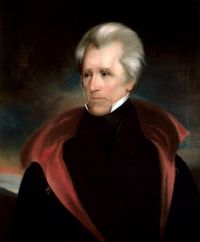
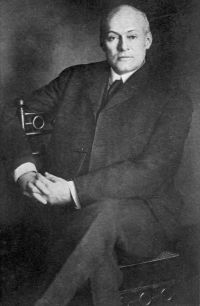

The small, self-governing community holds a foundational place in the democratic imagination, often credited as the primary engine of political success and civic power [1]. This model, where subdivisions of the state operate as distinct corporations of land and power, is seen as the basis for the rapid and successful establishment of American society . The ideal of the small town meeting, exercising effective control over local life, stands in stark contrast to the distant and often overriding authority of a large central power, suggesting that scale is integral to meaningful self-governance [2]. The historic task of the thirteen colonies, in effect a small world unto themselves, was to solve the problem of making democracy safe, a challenge that presupposed the virtue of small-scale political units [3].
However, this very intimacy and scale harbor a fundamental tension. The same localism that empowers citizens risks amplifying internal divisions and fostering a stifling conformity. The threat to liberty often comes not from an external oppressor but from within the community itself, through factions born of ambition and a thirst for power [4]. This can manifest as a form of "local selfishness" that undermines broader national interests and creates governmental impotence [5]. The closeness of a small community, therefore, presents a paradox: the structure intended to secure freedom can become a crucible for intellectual provincialism and social pressure, where the rights of the individual are trampled upon by the will of the majority under the guise of shared political power [6, 7].
The Idealized Community and Its Fissures
The theoretical virtue of local governance lies in its capacity for adaptation and experimentation. Permitting local institutions to conform to local conditions is seen as a matter of common sense, fostering inventiveness and a sense of civic responsibility that uniform, centralized legislation would otherwise check [8]. This principle of local autonomy is deeply prized, even when its practical application proves inefficient [9]. The historical success of this model is rooted in the idea that small, independent groups, even when they require union for common defense, can sustain a compound political structure that preserves their local character, as was the case in primitive Rome [10]. This framework allows for direct democratic participation and a government responsive to the specific needs of its people .
This idealized portrait is complicated by the inherent potential for internal conflict. Localism can easily curdle into a narrow selfishness that obstructs national progress and brings governmental activities to a deadlock . History demonstrates that severe antagonism can develop between local divisions, sometimes centered on a single misplaced institution or idea, leading to widespread conflict [11]. The most profound danger to liberty, as Andrew Jackson warned, arises from these internal factions, which disguise personal ambition as collective will . The promise of political rights for all does not guarantee the security of those rights; on the contrary, mechanisms like universal suffrage can be co-opted to impose heavy burdens, enforce social dictates, and trample on personal freedom .
The social fabric of small communities can itself be a source of intellectual constraint. While offering the chance for participation, rural or isolated communities can also foster a kind of "desolate freedom" that becomes irksome, where any diversion is welcomed, and conformity offers a respite from isolation [12]. Such an environment is fertile ground for "intellectual provincialism," a condition fatal to expansive and critical thought, as it limits sympathies and implants prejudices that prevent ideas from being seen in their wider relations . This social pressure can create a torpor, stereotyping customs and institutions to a degree that cramps individual activity and impairs social energy [13].
The Public Library: Agent of Enlightenment or Instrument of Conformity?
Within the small community, the public library is conceived as a pivotal institution, an engine for civilization and a cornerstone of popular education [14, 15]. It is envisioned as the town's mental and moral center, tasked not only with preserving the records of the past but with supporting contemporary good and providing a "ladder" for future betterment . Its role extends beyond simple entertainment to include the creation of a literate and thoughtful populace, making the "best results of civilization" accessible to all, regardless of economic standing, to ensure the endurance of democracy [16].
This mission places the librarian in a complex and powerful position. On one hand, the librarian in a small town has the unique privilege of intimately knowing the public, allowing for a tailored selection of materials that meets specific, existing needs [17]. This responsive model dictates that collection development should reflect the practical demands of the community, whether it be publications on agriculture for a rural section or political documents for a high school debate club [18]. According to this view, the sole considerations should be the community's needs, the books' ability to satisfy them, and the library's budget [19].
However, a significant tension exists between satisfying the community's expressed "wants" and serving its deeper "needs" [20, 21]. A competing philosophy casts the librarian not as a passive servant but as an active educator, tasked with the formidable challenge of shaping public desire . This perspective assumes that a community is often "serenely unconscious" of what it most desperately needs, requiring the librarian to diagnose this intellectual deficiency and then arouse a consciousness of it [22]. This creates a stark choice between a library filled with popular but intellectually slight works and one containing serious volumes that are ignored by the public .
This paternalistic approach, while well-intentioned, can easily become a mechanism for intellectual gatekeeping. The directive to avoid books that are "intellectually far above your readers" serves to reinforce a perceived intellectual status quo, preventing rather than encouraging mental growth . The librarian's subjective judgment of what is "good" for the community risks excluding challenging, controversial, or simply unfamiliar ideas . By attempting to harmonize wants and needs, the library can inadvertently smooth away intellectual friction, limiting the community's exposure to new thoughts. The institution intended to be a ladder for advancement can thus function as a ceiling, circumscribing the intellectual universe of the very people it aims to serve .
The Systemic Suppression of Intellectual Difference
The pressures observed within the library reflect a broader societal tendency, particularly within political spheres, to suppress intellectual independence. Politicians, by their nature, often cannot tolerate independent thought and action, viewing dissent as a threat to their power and the established order [23]. This intolerance is not limited to overt authoritarianism; it can manifest as a more subtle but pervasive "passive intellectual oppression," particularly within institutions like universities, where expressing doubt is discouraged and intellectual honesty is not always appreciated [24]. A drive for institutional harmony can itself become a menace to healthy mental activity, demonstrating that intellectual liberty, like political liberty, requires eternal vigilance [25].
This suppression is often rationalized as a necessary measure for public safety or social cohesion. Governments may restrict access to knowledge and curtail free inquiry under the pretext of national security, thereby removing the right most essential for a free mind [26]. Historically, intellectual authorities have worked to repress the natural human desire for knowledge and intellectual freedom [27]. Even the core tenets of democracy can be weaponized against intellectualism. The principle of majority rule can be used to validate popular ignorance and defeat proposals favored by the most fit to rule, leading to a system where pandering to the masses is a prerequisite for political success [28].
This reveals a potential structural antagonism between mass democracy and intellectual freedom. The laudable goal of creating a democratic community can, if unchecked, lead to "plebeian conditions" where an intellectual aristocracy is actively diminished [29]. The intellectual is often an outsider figure, whose work requires a degree of solitude and whose temperament may be ill-suited to constant social contact [30]. This disposition, a passionate devotion to intellectual pursuits, can be associated with a feebleness of emotional impulse in ordinary social relationships, further isolating the thinker from the community [31]. In such an environment, intellectual culture itself can become seen as parasitic if it is not immediately applicable or useful to the majority's life [32].
The Precarity of Free Thought in a Governed World
The struggle for intellectual freedom is fundamentally a contest against compulsion [33]. The impulse to control extends beyond the political to the economic and technological spheres. A prevailing view argues that as technology makes copying easier, intellectual property rights must be strengthened to protect creators, even if this reduces rights previously enjoyed by citizens, such as fair use and noncommercial sharing [34]. This perspective frames the public domain not as a valuable resource but as a void, ignoring its importance for creativity and innovation [35]. It reflects a broader bias that equates intellectual property with physical property and assumes that more rights automatically lead to more innovation, often blinding policymakers to the value of an intellectual commons [36].
This dynamic of control versus freedom is not new. Throughout history, those seeking freedom have often found themselves appealing to the very masters and laws that created their bondage [37]. The path to true liberty requires an internal, spiritual revolt against conformity, not just a rearrangement of external political structures [38]. It is a process that requires the exercise of freedom to develop the moral and intellectual power necessary to sustain it [39]. Any system that treats individuals as mere components in a social machine, summing them up by their relations to other things, holds individualism in contempt and makes compulsory service the only path to a perverse kind of freedom [40].
Ultimately, genuine intellectual freedom requires an environment that actively cultivates it. It necessitates institutions that protect the vocation of free thinking and allow human faculties room to unfold [41, 42]. Freedom of the mind is a precious necessity, and its loss, whether through government classification of knowledge or the subtle pressures of community life, is a fundamental deprivation . The challenge, therefore, is to build systems that recognize individual liberty and responsibility as paramount, reserving force and compulsion only for when it is vital for the survival of society [43]. Without this, even institutions designed to enlighten, like the press, can have their usefulness sapped by abuses, threatening the very freedom and science they are meant to support [44].
The small political unit, so often celebrated as the cradle of democratic liberty, embodies a profound and troubling paradox . Its intimate scale, designed to foster responsive self-governance, simultaneously creates the ideal conditions for factionalism, intellectual provincialism, and the quiet suppression of dissenting thought . The very forces that bind a community can be turned inward, transforming shared values into a rigid demand for conformity. Key civic institutions, such as the public library, become contested terrain, caught between the democratic impulse to serve popular demand and a paternalistic mission to shape the public intellect—a mission that perilously borders on intellectual constraint .
The enduring threat to intellectual freedom, therefore, is not solely an external imposition of tyranny but can be an emergent property of community life itself. It is a danger that grows from within, from the social pressures that discourage doubt and the political intolerance of independent thought . Securing liberty requires more than a well-designed political structure; it demands constant vigilance against the subtle forces of intellectual oppression that can flourish in even the most tight-knit and self-governing societies . The ultimate measure of any democracy, whether local or national, lies in its ability to transcend the treatment of its citizens as mere cogs in a machine, and instead to nurture and protect what Immanuel Kant called the "propensity and vocation to free thinking" as the indispensable foundation of human dignity .