Summary

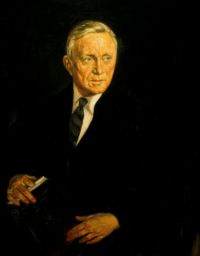
Portrait of William O. Douglas William O. Douglas Roth v. United States — Dissenting Opinion (1957)

Thus, if the First Amendment guarantee of freedom of speech and press is to mean anything in this field, it must allow protests even against the moral code that the standard of the day sets for the community. In other words, literature should not be suppressed merely because it offends the moral code of the censor.
The legality of a publication in this country should never be allowed to turn either on the purity of thought which it instills in the mind of the reader or on the degree to which it offends the community conscience.
Source: Wikisource

Portrait of William O. Douglas William O. Douglas Roth v. United States — Dissenting Opinion (1957)

Certainly that standard would not be an acceptable one if religion, economics, politics or philosophy were involved. How does it become a constitutional standard when literature treating with sex is concerned?
Any test that turns on what is offensive to the community's standards is too loose, too capricious, too destructive of freedom of expression to be squared with the First Amendment.
Source: Wikisource

Portrait of William O. Douglas William O. Douglas Roth v. United States — Dissenting Opinion (1957)

As a people, we cannot afford to relax that standard. For the test that suppresses a cheap tract today can suppress a literary gem tomorrow. All it need do is to incite a lascivious thought or arouse a lustful desire. The list of books that judges or juries can place in that category is endless.
I would give the broad sweep of the First Amendment full support. I have the same confidence in the ability of our people to reject noxious literature as I have in their capacity to sort out the true from the false in theology, economics, politics, or any other field.
Source: Wikisource

Get perspective with Kwize: daily news enlightened by great literature