Summary

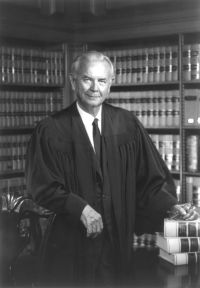
Portrait of William J. Brennan William J. Brennan Jacobellis v. Ohio — Opinion of the Court (1964)

If there be no abstract definition, such as I have suggested, should not the word "obscene" be allowed to indicate the present critical point in the compromise between candor and shame at which the community may have arrived here and now? To put thought in leash to the average conscience of the time is perhaps tolerable, but to fetter it by the [p193] necessities of the lowest and least capable seems a fatal policy.
Source: Wikisource

Portrait of William J. Brennan William J. Brennan Jacobellis v. Ohio — Opinion of the Court (1964)

We thus reaffirm the position taken in Roth to the effect that the constitutional status of an allegedly obscene work must be determined on the basis of a national standard. [10] It is, after all, a national Constitution we are expounding.
We recognize the legitimate and indeed exigent interest of States and localities throughout the Nation in preventing the dissemination of material deemed harmful to children. But that interest does not justify a total suppression of such material, the effect of which would be to "reduce the adult population . . . to reading only what is fit for children."
Source: Wikisource

Portrait of William J. Brennan William J. Brennan Jacobellis v. Ohio — Opinion of the Court (1964)

If freedom is to be preserved, neither government censorship experts nor juries can be left to make the final effective decisions restraining free expression. Their decisions must be subject to effective, independent review, and we know of no group better qualified for that review than the appellate judges of this country under the guidance of the Supreme Court.
Source: Wikisource

Get perspective with Kwize: daily news enlightened by great literature