Summary

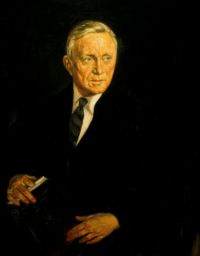
Portrait of William O. Douglas William O. Douglas Poulos v. New Hampshire — Dissent

If the citizen can flout the legislature when it undertakes to tamper with his First Amendment rights, I fail to see why he may not flout the official or agency who administers a licensing law designed to regulate the exercise of the right of free speech. defiance of a statute is hardly less harmful to an orderly society than defiance of an administrative order. The vice of a statute, which exacts a license for the right to make a speech, is that it adds a burden to the right.
Source: Wikisource

Portrait of William O. Douglas William O. Douglas Poulos v. New Hampshire — Dissent

The gloss which the New Hampshire court has placed on the statute grants a power reasonably to regulate free speech. That unfortunately is a doctrine that has been slowly creeping into our constitutional law. [2] It has no place there. It is a doctrine dangerous to liberty and destructive of the great rights guaranteed by the First Amendment.
So, one answer to the Court's holding that appellant should have gone into court to compel the issuance of a license is that the licensing power was discretionary not ministerial and that a discretionary power to license free speech is unconstitutional.
Source: Wikisource

Get perspective with Kwize: daily news enlightened by great literature