Summary

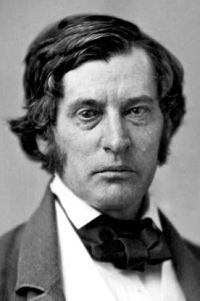
Portrait of Charles Sumner Charles Sumner Charles Sumner: his complete works…

Pray, Sir, where in the Constitution is any limitation of the War Powers? Let Senators who would limit them mention a single section, line, or phrase, which even hints at any limitation. If it be constitutional to make war, to set armies in the field, to launch navies, to occupy fields and houses, to bombard cities, to kill in battle,—all without trial by jury, or any process of law, or judicial proceeding of any kind,—it is equally constitutional, as a war measure, to confiscate the property of the enemy and to liberate his slaves.
Source: Gutenberg

Portrait of Charles Sumner Charles Sumner Charles Sumner: his complete works…

Thus inspired, the sword of Washington—that sword which, according to his last will and testament, was to be drawn only in self-defence, or in defence of country and its rights—will once more marshal our armies to victory, while the national flag, wherever it floats, will give freedom to all beneath its folds, and the proud inscription be at last triumphantly verified: “Liberty and Union, now and forever, one and inseparable.”
But, fellow-citizens, the war we wage is not merely for ourselves, it is for all mankind.
Source: Gutenberg

Portrait of Charles Sumner Charles Sumner Charles Sumner: his complete works…

A proclamation of Prospective Emancipation would have been an absurdity,—like a proclamation of a prospective battle, where not a blow was to be struck or a cannon pointed before 1876, unless, meanwhile, the enemy desired it. What is done in war must be done promptly, except, perhaps, under the policy of defence. Gradualism is delay, and delay is the betrayal of victory. If you would be triumphant, strike quickly, let your blows be felt at once, without notice or premonition, and especially without time for resistance or debate. Time deserts all who do not appreciate its value.
Source: Gutenberg

Get perspective with Kwize: daily news enlightened by great literature