Summary

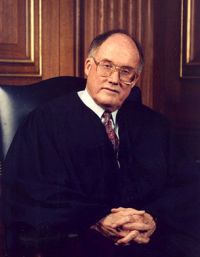
Portrait of William Rehnquist William Rehnquist Hustler Magazine v. Falwell — Opinion of the Court

We must decide whether a public figure may recover damages for emotional harm caused by the publication of an ad parody offensive to him, and doubtless gross and repugnant in the eyes of most. Respondent would have us find that a State's interest in protecting public figures from emotional distress is sufficient to deny First Amendment protection to speech that is patently offensive and is intended to inflict emotional injury, even when that speech could not reasonably have been interpreted as stating actual facts about the public figure involved.
Source: Wikisource

Portrait of William Rehnquist William Rehnquist Hustler Magazine v. Falwell — Opinion of the Court

Generally speaking, the law does not regard the intent to inflict emotional distress as one which should receive much solicitude, and it is quite understandable that most, if not all, jurisdictions have chosen to make it civilly culpable where the conduct in question is sufficiently "outrageous." But in the world of debate about public affairs, many things done with motives that are less than admirable are protected by the First Amendment.
Source: Wikisource

Portrait of William Rehnquist William Rehnquist Hustler Magazine v. Falwell — Opinion of the Court

The appeal of the political cartoon or caricature is often based on exploitation of unfortunate physical traits or politically embarrassing events — an exploitation often calculated to injure the feelings of the subject of the portrayal. The art of the cartoonist is often not reasoned or evenhanded, but slashing and one-sided. One cartoonist expressed the nature of the art in these words:
The political cartoon is a weapon of attack, of scorn and ridicule and satire; it is least effective when it tries to pat some politician on the back.
Source: Wikisource

Get perspective with Kwize: daily news enlightened by great literature