
“ You engage in an intellectual contest or duel with the respondent, each of you seeking only victory over the other, though subject on both sides to observance of the rules of debate. 3. You neither seek to teach, nor to conquer; you and the respondent have both the same purpose — to test the argumentative consequences of different admissions, and to acquire a larger command of the chains of reasoning pro and con, bearing on some given topic.367 ”
Respondent
Definition and stakes
The concept of "respondent" refers to a central figure in debates, legal proceedings, or intellectual exchanges, responsible for addressing challenges to their stance. In philosophical and logical contexts, as George Grote observes, the respondent participates in a structured contest of ideas, evaluating arguments through reasoned concessions.
Within legal systems, scholars such as Nathan Clifford highlight the respondent's obligation to either acknowledge or challenge claims, emphasizing a sense of responsibility. From Cicero to contemporary legal theorists, this theme illustrates a dynamic interaction between defense, logical reasoning, and the search for clarity, portraying the respondent as both an opponent and a partner in the pursuit of truth.
Quotes about “respondent”
Henry B. Wheatley, How to Catalogue a Library
“ That when the respondent's name occurs with a præses only, the respondent is the author except words are attached to the president's name affirming him to be the proponent, defendant, or author, or there is evidence in the preface or dedication that he claims the authorship. [121] That the respondent when he is the author is frequently described as auctor respondens.That the opponent is never the author of a thesis. ”
United States. Congress, Abridgment of the Debates of Congress…
“ It is important to the respondent to the full amount of his good name and reputation, and of that little portion of that happiness the small residue of his life may afford. It is important to you, Senators and judges, inasmuch as you value the judgment which posterity shall pass upon the proceedings of this day. It is important to our country, as she estimates her character for sound, dignified, and impartial justice, in the eyes of a judging world. ”
“ The respondent, signifying plainly that he understands the full consequences of his own concessions, will not appear to be worsted through any short-comings of his 364own, but only through what is inherent in his thesis; while you the questioner, having asked for such premisses as are really more probable than the conclusion to be established, and having had them granted, will have made out your point. ”
William Minto, Logic, Inductive and Deductive
“ The one instructs the disputant how to qualify himself methodically for discussion before an ordinary audience, when the admissions extracted from the respondent are matters of common belief, the questioner's skill being directed to make it appear that the respondent's position is inconsistent with these. ”
John Woldemar Cowan, The Complete Lojban Language — Chapter 2 - The concept of the bridi (1997)
“ It is perfectly permissible for the respondent to fill in other unspecified places in responding to a “mo” question. Thus, the respondent in Example 15.7 could have also specified an audience, a topic, and/or a language in the response. ”
Nathan Clifford, Brown v. Pierce — Opinion of the Court
“ Material allegations in the bill of complaint ought to be answered and admitted, or denied, if the facts are within the knowledge of the respondent; and if not, be ought to state what his belief is upon the subject, if he has any, and if he has none, and cannot form any, he ought to say so, and call on the complainant for proof of the alleged facts, or waive that branch of the controversy ”
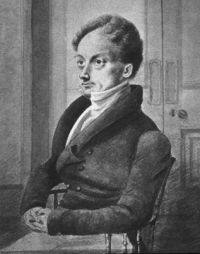 James Mill,
Analysis of the Phenomena of the Human Mind
James Mill,
Analysis of the Phenomena of the Human Mind
“ The Platonic questions and answers are framed to shew how little the respondents understand beneath those current generalities on which every one talks with confidence and fluency—and how little they can avoid contradiction or inconsistency, when their class-terms are confronted with particulars. ”
Nathan Clifford, The Stephen Morgan — Opinion of the Court
“ Matters of fact are the chief reliance of the respondents; and, inasmuch as the allegations of the answer show, in the judgment of the court, that the schooner was in fault, they will be given in considerable fulness. ”
 Timothy East,
The Sheepfold and the Common; Or…
Timothy East,
The Sheepfold and the Common; Or…
“ You have the same right to think, and judge, and decide for yourselves, as I have; and I feel too much affection for you to throw on the path of your inquiry the slightest shadow of opposition. I know you are virtuous; and if I see you happy, I shall be satisfied. You will proceed in your inquiries after truth with caution—weigh with the greatest nicety the evidence which may be submitted to you; as many opinions, when they first strike our attention, appear very specious and plausible, which will not endure the ordeal of a critical investigation. ”
Victor Alvin Ketcham, The theory and practice of argumentation and debate
“ In collecting evidence on questions which deal with the problems of commerce, taxation, economics, politics, and education, the student will usually find some men whose 41opinions are entitled to careful consideration and with whom interviews may be arranged. Whether these men are quoted as authority will, of course, depend upon their known reputation in the branch of knowledge upon which their opinion is asked. Even if the debater does not think it best to quote the person interviewed, he may gain from him much valuable help. ”
Viscount James Bryce Bryce, Studies in Contemporary Biography
“ Thirdly, a sound and calm judgment, which will subject all inferences and generalisations, both one’s own and other people’s, to a searching review, and weigh in delicate scales their validity. These two last-mentioned qualifications taken together make up what we call the critical faculty, i.e. the power of dealing with evidence as tending to establish or discredit statements of fact, and those general conclusions which are built on the grouping of facts. Neither acuteness alone nor the judicial balance alone is enough to make the critic. ”
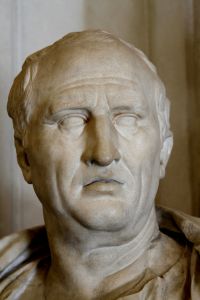 Marcus Tullius Cicero,
On Invention — Book 2
Marcus Tullius Cicero,
On Invention — Book 2
“ For praise, or blame, or the statement of an opinion, or accusation, or denial, ought all to effect different ends. In judicial investigations the object of inquiry is, what is just; in demonstrative discussion the question is, what is honourable; in deliberations, in our opinion, what we inquire is, what is honourable and at the same time expedient. For the other writers on this subject have thought it right to limit the consideration of expediency to speeches directed to persuasion or dissuasion. ”
Arthur O. Norton, Readings in the History of Education…
“ The question which we have before us is old, but not inveterate,—a question often argued, but whose decision is still pending: Should a Judge decide according to the evidence, or according to his conviction? ”
Victor Alvin Ketcham, The theory and practice of argumentation and debate
“ The above suggestions and illustrations are offered purely by way of inducing the student to keep a sharp lookout for points in his favor. There are many ways in which the attendant circumstances may be used to give greater weight to the evidence offered. 4. The selection of evidence must be fair and reasonable. An advocate of any cause, public or private, must have as a basis for his argument a genuine regard for right and justice. Therefore he is bound to exercise due care in making sure that the selection of evidence is fair and reasonable. ”
 Benjamin Lumley,
Another World: Fragments from the Star City of Montalluyah
Benjamin Lumley,
Another World: Fragments from the Star City of Montalluyah
“ The advocates of society, like the people's advocates, are disciplined in the practice of truth and justice, and if they think that there is anything in the case in favour of the appellant they are honourably bound to state it to the tribunal. ”
 Paul Leicester Ford,
The Honorable Peter Stirling and What People Thought of Him
Paul Leicester Ford,
The Honorable Peter Stirling and What People Thought of Him
“ I’ve studied the judges closely, so that I know what lines to take, and I always notice what seems to interest the jury most, in each case. But, more important than this study, is the fact that I can comprehend about how the average man will look at a certain thing. You see I am the son of plain people. Then I am meeting all grades of mankind, and hearing what they say, and getting their points of view. I have never sat in a closet out of touch with the world and decided what is right for others, and then spent time trying to prove it to them. ”
A Biography of Henry Clay, the Senator from Kentucky
“ When it does, an impartial survey of the whole ground should be taken, the state of public opinion properly considered, and one’s personal condition, physical and intellectual, duly examined and weighed. ”
 William Bennett Munro,
Social Civics
(1922)
William Bennett Munro,
Social Civics
(1922)
“ At the same time when public opinion is strong and clear, we expect the representatives of the people to hearken to it. When it is vague or in doubt, the representative must depend upon his own judgment. ”
 Frederick Douglass,
The North Star
(1848)
Frederick Douglass,
The North Star
(1848)
“ I do not doubt, that when I have concluded, you will share my convictions respecting the vital importance of the question I am about to discuss, and that you will not only cheerfully consent to my devoting myself to its advocacy, but be ready also to lend me your best co-operation. (Cheers.) I therefore ask your candid and serious attention. I ask that you will weigh deliberately, the facts, the statistics, and the arguments I shall adduce, and that you will vote for nothing, the propriety and truth of which I do not fully and most satisfactorily establish. ”
William H. Taft, Ethics in Service
“ The enthusiastic advocacy of counsel when they are properly restrained as above suggested, and the rules of evidence adapted to winnowing out the false from the true, are admirably adapted to bringing about right results. ”
 Salmon P. Chase,
Veazie Bank v. Fenno — Opinion of the Court
Salmon P. Chase,
Veazie Bank v. Fenno — Opinion of the Court
“ We are obliged, therefore, to resort to historical evidence, and to seek the meaning of the words in the use and in the opinion of those whose relations to the government, and means of knowledge, warranted them in speaking with authority. ”
 Aesop,
Æsop's Fables, Embellished with One Hundred and Eleven Emblematical Devices
Aesop,
Æsop's Fables, Embellished with One Hundred and Eleven Emblematical Devices
“ For, if the case should happen to be so intricate, that a man of common sense could not distinguish who had the best title, how easy would it be to have the opinion of the best counsel in the land, and agree to determine it by that? ”
 John Stuart Mill,
Considerations on Representative Government
(1861)
John Stuart Mill,
Considerations on Representative Government
(1861)
“ The tests which I have spoken of are only applicable to tried men, among whom must be reckoned those who, though untried practically, have been tried speculatively; who, in public speech or in print, have discussed public affairs in a manner which proves that they have given serious study to them. Such persons may, in the mere character of political thinkers, have exhibited a considerable amount of the same titles to confidence as those who have been proved in the position of practical statesmen. ”
the Younger Pliny, Letters of Pliny
“ Let me add what experience, that unerring guide, has taught me: it has frequently been my province to act both as an advocate and a judge; and I have often also attended as an assessor. [21] Upon those occasions, I have ever found the judgments of mankind are to be influenced by different modes of application, and that the slightest circumstances frequently produce the most important consequences. The dispositions and understandings of men vary to such an extent that they seldom agree in their opinions concerning any one point in debate before them ”
John Stuart Mill,
Considerations on Representative Government
(1861)
“ When the question, in the mind of an examiner, lies between blighting the prospects of an individual and performing a duty to the public which, in the particular instance, seldom appears of first rate importance, and when he is sure to be bitterly reproached for doing the first, while in general no one will either know or care whether he has done the latter, the balance, unless he is a man of very unusual stamp, inclines to the side of good-nature. ”
 Edward L. Bernays,
Crystallizing Public Opinion
Edward L. Bernays,
Crystallizing Public Opinion
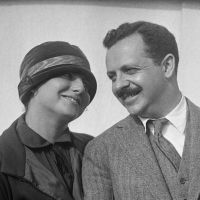
“ The public relations counsel works with that vague, little-understood, indefinite material called public opinion.Public opinion is a term describing an ill-defined, mercurial and changeable group of individual judgments. Public opinion is the aggregate result of individual opinions—now uniform, now conflicting—of the men and women who make up society or any group of society. In order to understand public opinion, one must go back to the individual who makes up the group. ”
William Horton Foster, Debating for boys (1913)
“ Because this task is so onerous and, indeed, so valuable in its training, it is an excellent plan to have members of your group—society, class or patrol or whatever it may be—act as judges. The [29] practice in so weighing arguments and evidence will be invaluable to them when their time to debate comes around. ”
 Jeremiah Whipple Jenks,
The American Journal of Sociology…
(1895)
Jeremiah Whipple Jenks,
The American Journal of Sociology…
(1895)
“ What has been said regarding the nature of public opinion and the way in which it is formed, suggests in itself the best methods of guiding it. Few people who have not made the effort have any clear conception as to the amount of influence, especially in local matters, that one individual may exert by a little judicious talk with a few men of influence in different classes in society. ”
 Lewis Carroll,
Euclid and His Modern Rivals
(1885)
Lewis Carroll,
Euclid and His Modern Rivals
(1885)
“ Many assertions have been made in discussion which rest entirely on the authority of the individual advocate, and thus it is necessary to be somewhat critical in our estimate of the value of the testimony. ”
 Herbert Spencer,
Popular Science Monthly
(1874)
Herbert Spencer,
Popular Science Monthly
(1874)
“ Who, in drawing his conclusions about public policies, will be made to hesitate by remembering the many obstacles that stand in the way of right judgments? Who will think it needful to fit himself by inquiries so various and so extensive? ”
William Horton Foster, Debating for boys (1913)
“ In formal contests, however, you will call upon teachers, lawyers, ministers; men who are trained to think clearly and definitely and whose decision will mean something as fairly standing for the judgment of your community. For it is to this community judgment your real debate in life must appeal, and you must learn as soon as possible to aim at no less a tribunal. ”
Edward L. Bernays,
Crystallizing Public Opinion
“ The character and origins of public opinion, the factors that make up the individual mind and the group mind must be understood if the profession of public relations counsel is to be intelligently practiced and its functions and possibilities accurately estimated. Society must understand the fundamental character of the work he is doing, if for no other reason than its own welfare. ”
Alexander Dick, Splores of a Halloween, Twenty Years Ago
“ They were not successful; and some may be ready to ask, “Why then publish them?” It may be sufficient to reply, “I choose to do so;” “I choose to appeal from the award of the Judges to the decision of the public.” A single sentence will explain why I make such an appeal. The gentlemen appointed to act as judges based their decision, according to their published statement, as much upon “suitability for recitation at a public festival,” as upon “literary merit.” ”
Isambard Brunel, The life of Isambard Kingdom Brunel…
“ And the difficulties are complicated by the consideration that public opinion, and those established and universally received opinions which, being the result of experience, cannot be called prejudices, have to be considered, and must be yielded to to a great extent, even when somewhat opposed to sound reasoning, or to conclusions deliberately formed upon a due consideration of the novel circumstances under which we have to act ”
 Otto H. Kahn,
Government Ownership of Railroads…
Otto H. Kahn,
Government Ownership of Railroads…
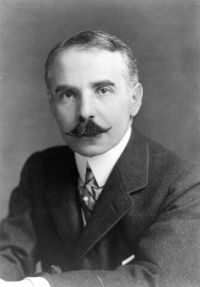
“ And, it seems to me, one of the duties of business men is to inform themselves accurately and carefully on this subject, so as to be ready to take their due and legitimate part in shaping public opinion, and indeed to start on that task now, before public opinion, one-sidedly informed and fed of set purpose with adroitly colored statements of half truths, crystallizes into definite judgment. ”
 Plato,
The Dialogues of Plato
(1892)
Plato,
The Dialogues of Plato
(1892)
“ They guess at the wishes of the person who asks them, and answer according to his, and not according to their own, opinion. But as we know that you are good judges, and will say exactly what you think, we have taken you into our counsels. ”
Edward L. Bernays,
Crystallizing Public Opinion
“ The training of the public relations counsel permits him to step out of his own group to look at a particular problem with the eyes of an impartial observer and to utilize his knowledge of the individual and the group mind to project his clients’ point of view. ”
 George E. Ellis,
The Red Man and the White Man in North America
(1882)
George E. Ellis,
The Red Man and the White Man in North America
(1882)
“ Of course, it is of all things the most requisite that one should start on this inquiry in a spirit of perfect impartiality. Yet no one can pursue it far without yielding much or little to a bias that has prejudiced the inquiry for most who have engaged in it, and will be sure to present itself to all. ”
Frank E Hodgkin, Pen Pictures of Representative Men of Oregon (1882)
“ As an advocate he adheres to a clear and concise discussion of the law principles and facts strictly within the record of the case, and rarely, if ever, embellishes or adorns his argument by figures of speech or illustrations foreign to the subject. ”
Thurgood Marshall, Furman v. Georgia — Concurring Opinion
“ All relevant material must be marshaled and sorted and forthrightly examined. We must not only be precise as to the standards of judgment that we are utilizing, but exacting in examining the relevant material in light of those standards. ”
 Alexander Maclaren,
Expositions of Holy Scripture: Romans Corinthians…
Alexander Maclaren,
Expositions of Holy Scripture: Romans Corinthians…
“ But not only in these higher forms of seeking after reputation, but in lower forms, this trembling before, and seeking to conciliate, the tribunal of what we call ‘general opinion,’ which means the voices of the half-dozen people that are beside us and know about us, besets us all, and weakens us all in a thousand ways. ”
