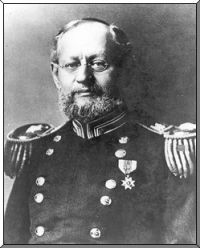
William Horton Foster

Biographical details

William Horton Foster,  Debating for boys (1913)

“ Knowledge of parliamentary law is, at some time or other, useful to almost every member of an American community, yet few ever get more than a confused and mistaken idea of its principles.
Absolute equality of rights and privileges among the members of an assembly, the right to a full and free debate of every proposition offered, the rule of the majority, and the limitation of consideration to one thing at a time, are the cardinal principles upon which the rules of order rest. To enforce them, a chairman or moderator must be chosen. He always speaks of himself as “the chair.”
”
Source: Gutenberg

William Horton Foster,  Debating for boys (1913)

“ If you see no side of the case but your own, your beautifully constructed argument may fall to pieces when your opponent, perhaps using some unpretentious fact which you, in your innocence, had entirely overlooked, knocks out the keystone of your arch of logic and your structure falls to ruin. On the other hand, you may demolish one after the other of your opponent’s positions and yet present no counter claims for your own side of the case. If you prove your opponent to be all wrong, you do not thereby prove yourself all right. ”
Source: Gutenberg

William Horton Foster,  Debating for boys (1913)

“ Here again the analogy between debate and the later debate of life runs close and sure. The man who in the activity of his group—whether his lodge, his club, his society, his church, his city, or his State—has nothing but criticism to offer is of but little value. It is easy to say “you can’t, you can’t.” Such a statement is as valueless as it is easy.
One most important tactical reason for a constructive argument of your own is that you can never tell whether you have destroyed all of the enemy’s bridges.
”
Source: Gutenberg

Get perspective with Kwize: daily news enlightened by great literature