Bertrand Russell,
The Problems of Philosophy
(1912)
Bertrand Russell,
The Problems of Philosophy
(1912)
“ For all refutation must begin with some piece of knowledge which the disputants share; from blank doubt, no argument can begin. ”
Refutation, the process of undermining or breaking down opposing viewpoints, is a fundamental element of critical discussion. Thinkers such as Bertrand Russell underscored its dependence on common understanding, whereas William Horton Foster viewed it as a means of bringing together differing perspectives in debate. Clarence Stratton identified its organized stages—examination, categorization, and rebuttal—emphasizing the importance of supporting claims with evidence rather than simple rejection.
Victor Ketcham pointed out its challenging character, necessitating flexibility and sharp analytical skills. Whether found in philosophical works or rhetorical manuals, refutation functions both as a tool for opposition and a means of construction, requiring thoroughness to turn disagreement into understanding. Its success depends on the equilibrium between exposing fallacies and presenting logical alternatives.
Bertrand Russell,
The Problems of Philosophy
(1912)
“ For all refutation must begin with some piece of knowledge which the disputants share; from blank doubt, no argument can begin. ”
William Horton Foster, Debating for boys (1913)
“ Rebuttal.—In rebuttal—which is simply refutation in action—you can readily give to your whole debate, or at least your side of it, a unity which might otherwise be lacking. You relate your work to the work of your comrades and to that of your opponents. You select his strong points; you minimize his weak ones. ”
Clarence Stratton, Public Speaking
“ No unsupported fact or statement has any value in argumentation. Such expressions as "I don't believe, I don't think so, I don't agree" introduce not arguments, but personal opinions. You must, to make your refutation valuable, prove your position. Never allow your attempts at refutation to descend to mere denial or quibbling. Be prepared to support, to prove everything you say.Three Phases of Refutation. In general, refutation consists of three phases: 1. The analysis of the opposite side. 2. The classification of the arguments according to importance. ”
Victor Alvin Ketcham, The theory and practice of argumentation and debate
“ Refutation is entirely destructive as distinguished from constructive argument. While the work of rebuttal includes both a defense of one’s own argument and an attack upon that of an opponent, refutation consists of weakening or destroying the arguments of the opposition. From the destructive nature of refutation it is plain that it must be adapted to the argument against which it is directed. This involves keen powers of analysis and adaptation, an exact knowledge of the theory and practice of argumentation, and a thorough insight into both sides of the proposition under discussion. ”
 Origen,
The writings of Origen, Vol. 1…
(1869)
Origen,
The writings of Origen, Vol. 1…
(1869)
“ All of which assertions we not only do not receive, but, as being contrary to our belief, we refute and reject. After the refutation and rejection of such perverse opinions, we shall show, at the proper time and place, how those passages which they quote from the sacred Scriptures ought to be understood. ”
William Horton Foster, Debating for boys (1913)
“ Don’t think for a minute that either heat or violence or sarcasm is a good answer. Neither can the testimony of one witness be rebutted by that of another unless the latter’s knowledge of the matter is shown to be the greater. And the strength of refutation lies in the skill with which you make your audience believe your witnesses are more worthy of belief than those of your opponent, provided always that is the fact. ”
 Mary Baker G. Eddy,
Science and Health with Key to the Scriptures
(1889)
Mary Baker G. Eddy,
Science and Health with Key to the Scriptures
(1889)
“ The refutation of the testimony of material sense is no difficult task, in view of its falsity. The refutation becomes arduous only on recount of the tenacity of belief, the force of education, and the overwhelming weight of opinions on the other side, — all teaching that the body suffers, as if matter could have sensation. ”
 George MacDonald,
A Dish of Orts : Chiefly Papers on the Imagination…
(1893)
George MacDonald,
A Dish of Orts : Chiefly Papers on the Imagination…
(1893)
“ Whatever may be our private opinion of the system, justice requires that we should say at least that books such as these are quite as open to refutation as to ridicule; for it is only a good argument that is worth refuting by a better. ”
Victor Alvin Ketcham, The theory and practice of argumentation and debate
“ VI. Adopting an opponent’s evidence. This method of refutation consists in taking evidence which an opponent has introduced in favor of his own argument 269and showing that in reality it supports the opposite contention. This method of refutation is so effective that it should never be neglected when an opportunity to use it is presented. The opportunity may arise from the failure of an opponent to grasp the full bearing of the evidence which he offers, or it may arise from an unexpected turn in the discussion. ”
 Stratton D. Brooks,
Composition-Rhetoric
Stratton D. Brooks,
Composition-Rhetoric
“ Many questions are of such a nature that in trying to convince our hearers of some truth, we often find it necessary to show them, not only the truth of a proposition or the expediency of a course of action, but also the falsity of some opposing proposition or the inexpediency of the opposite course of action. This tearing to pieces another's argument, is called refutation, or destructive argument. A successful debater shows nearly if not equal skill in tearing down his opponent's arguments as in building up his own. ”
 Friedrich Nietzsche,
HUMAN, ALL TOO HUMAN, 'A Book For Free Spirits' Part I
(1909)
Friedrich Nietzsche,
HUMAN, ALL TOO HUMAN, 'A Book For Free Spirits' Part I
(1909)
“ WHEN IT is ADVISABLE TO SUFFER WRONG.—It is well to put up with accusations without refutation, even when they injure us, when the accuser would see a still greater fault on our part if we contradicted and perhaps even refuted him. ”
Stratton D. Brooks,
Composition-Rhetoric
“ That part of our theme which states our own arguments is called direct argument, and that part in which we reply to our opponents is called indirect argument or refutation. It is often very important to show that the opposing argument is false or, if true, has been given an exaggerated importance that it does not really possess. If, however, the argument is true and of weight, the fact should be frankly acknowledged. Our desire for victory should not cause us to disregard the truth. ”
Stratton D. Brooks,
Composition-Rhetoric
“ If the argument of our opponent has been so strong that it seems to have taken possession of the audience, we must reply to it in the beginning. If it is of less weight, each separate point may be discussed as we take up related points in our own argument. Often it will be found best to give the refutation a place just preceding our own last and strongest argument. ”
Saint of Alexandria Clement, The writings of Clement of Alexandria… (1867)
“ For the refutation, which is based on experience, is entirely trustworthy. For the knowledge of what is condemned is found the most complete demonstration. Many things, then, though not contributing to the final result, equip the artist. ”
“ There is the greatest difference between presuming an opinion to be true, because, with every opportunity for contesting it, it has not been refuted, and assuming its truth for the purpose of not permitting its refutation. ”
Clarence Stratton, Public Speaking
“ Perhaps, also, this great amount advanced by you in testing your own position will prevent your opponents from ever finding in your delivered arguments much against which they can pit their own powers of refutation. ”
William Hazlitt, The collected works of William Hazlitt… (1902)
“ Will he come to the consideration of the question impartially, indifferently, and without any wrong bias, or give the painful and revolting truth the same cordial welcome as the long-cherished and favourite prejudice? To say that the truth or falsehood of a proposition is the only circumstance that gains it admittance into the mind, independently of the pleasure or pain it affords us, is itself an assertion made in pure caprice or desperation. ”
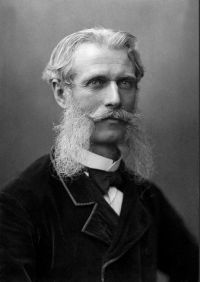 Karl Hilty,
The steps of life: further essays on happiness
(1907)
Karl Hilty,
The steps of life: further essays on happiness
(1907)
“ But if one ought to contradict for the truth’s sake, then a single contradiction is enough; when opinions are once acknowledged and firmly fixed, continued disputation about them is entirely fruitless. ”
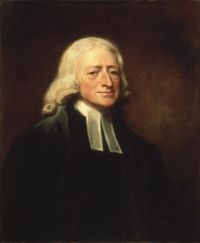 John Wesley,
The works of the Rev. John Wesley…
John Wesley,
The works of the Rev. John Wesley…
“ This is by no means a sufficient ground, for giving any name of reproach to any man: least of all is it a sufficient ground, for so black a term of reproach as this. The more evil it contains, the more cautious you should be, how you apply it to any one: to bring so heavy an accusation without full proof, being neither consistent with justice nor mercy. ”
 Jean-Baptiste Massillon,
Sermons
(1879)
Jean-Baptiste Massillon,
Sermons
(1879)
“ Now, to these three pretexts, let us oppose three incontrovertible truths. To the pretext of the lightness of the faults; that the more the faults which you censure are light, the more is the slander unjust: — first truth. To the pretext of the public notoriety; that the more the faults of our brethren are known, the more cruel is the slander which censures them: — second truth. To the pretext of zeal; that the same charity, which, in piety, makes us hate sinners, makes us likewise cover the multitude of their faults: — last truth. ”
 Frederick Marryat,
Japhet, in Search of a Father
Frederick Marryat,
Japhet, in Search of a Father
“ Whether unmasked by others, or by myself, is it not equally true that I have been playing false, and am now punished for it? What do the world care for your having returned to truth? You have offended by deceiving them, and that is an offence which your repentance will not extenuate. ”
 Samuel Johnson,
The Works of Samuel Johnson, LL.D. Volume 10
Samuel Johnson,
The Works of Samuel Johnson, LL.D. Volume 10
“ I pretend not, my lords, to be always in the right, I claim no other merit than that of meaning well; and when I am convinced, after proper examination, that I am engaged on the side of truth, I will trample on that insolence that shall command me to suppress my sentiments. ”
 John Stuart Mill,
On Liberty
(1869)
John Stuart Mill,
On Liberty
(1869)
“ Let us now pass to the second division of the argument, and dismissing the supposition that any of the received opinions may be false, let us assume them to be true, and examine into the worth of the manner in which they are likely to be held, when their truth is not freely and openly canvassed. ”
contessa di Teresa Guiccioli, My Recollections of Lord Byron
“ In this refusal to do justice there is contradiction; and as error exists where contradiction lies, it is precisely in that contradiction that we must seek the means of refuting error and assert the power of truth. ”
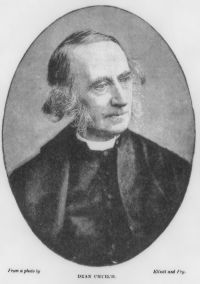 R. W. Church,
Occasional Papers
R. W. Church,
Occasional Papers
“ What we carry away from following such a history is something far higher and more solemn than any controversial inferences; and it seems almost like a desecration to make, as we say, capital out of it, to strengthen mere argument, to confirm a theory, or to damage an opponent. ”
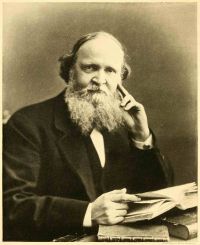 William Dwight Whitney,
Popular Science Monthly
(1875)
William Dwight Whitney,
Popular Science Monthly
(1875)
“ Each controversy is to be judged, rather, on its own intrinsic merits. If I have failed to make out a tolerable case against those whom I have criticised, then, be they great men or small, I have been guilty of presumption, and deserve reproof; if, on the contrary, I have fairly sustained my views against theirs, I am justified; and on that basis I am perfectly willing to submit to judgment. ”
Henry Hunt, Memoirs of Henry Hunt, Esq. — Volume 2
“ Finding that they could neither answer nor controvert my principles, nor put me down, they have been base enough to resort to slander, and to the most wanton and barefaced falsehoods, which they have trumped up to blacken me. ”
Matthew Henry, Commentary on the Whole Bible… (1700s)
“ And rebuke; convince and reprove such as contradict or gainsay, or neglect and do not receive the truth as they should, or retain it in unrighteousness—those who hear it not with such a believing and obedient mind and heart as they ought, but, instead of this (it may be) live in contrary practices, showing themselves stubborn and disobedient, and to every good work reprobate. Rebuke with all authority, as coming in the name of God, and armed with his threatenings and discipline, whoever make light of which will do it at their peril. Ministers are reprovers in the gate. ”
 Lysander Spooner,
A Letter to Grover Cleveland
Lysander Spooner,
A Letter to Grover Cleveland
“ Do you use this phrase to deceive those whom you look upon as being so ignorant, so destitute of reason, as to be deceived by idle, unmeaning words? If you do not, you are plainly bound to let us all know what you do mean, by doing "equal and exact justice to all men." ”
Muhsin Fani, The Dabistán, or School of manners…
“ As for the separation of truth from falsehood, and the resemblance which truth has with falsehood, and for the distinction between what is consistent and what is absurd, on both sides, a balance ought to be formed in which every thing may be weighed. ”
“ Reproach is infinite, and knows no end, Arm’d or with truth or falsehood, right or wrong; ”
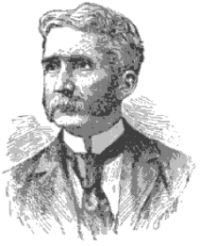 James Baldwin,
Six Centuries of English Poetry…
James Baldwin,
Six Centuries of English Poetry…
“ But blame the false, and value still the true. Some ne'er advance a judgment of their own, But catch the spreading notion of the Town; [145] They reason and conclude by precedent, And own stale nonsense which they ne'er invent. ”
 Arthur Schopenhauer,
Counsels and Maxims
Arthur Schopenhauer,
Counsels and Maxims
“ When any wrong statement is made, whether in public or in society, or in books, and well received—or, at any rate, not refuted—that that is no reason why you should despair or think there the matter will rest. ”
“ At a time when clear thinking and balanced judgments were needed more desperately than ever before, they squirted into the air thick clouds of lies, and half-truths, and misleading phrases, and judgments distorted by hatred and warped by malice. ”
“ We transfer the contempt based upon mere size, to the motives, which are the same in big men and little. The argument, if argument there be, is a fallacy; but it is equally efficacious for the feelings. ”
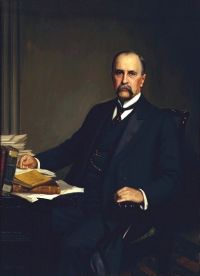 William Osler,
Studies in the History and Method of Science…
William Osler,
Studies in the History and Method of Science…
“ If a ‘contradiction’ is real, it means either a difference of opinion between those who make the incompatible assertions, or, in the case of a real ‘self-contradiction’, the uttering of ‘nonsense’ and a failure to propound a meaning at all. ”
William Gray Elmslie, Professor W. G. Elmslie, D.D.: Memoir and Sermons
“ But you are not bidden to argue, prove, demonstrate anything; only you are to confess, to protest against evil, and loyally side with the truth. And if you are not to do that except when you know you will be applauded and triumphant, what of your Master's conduct? ”
 Josiah Royce,
The World and the Individual, First Series
(1899)
Josiah Royce,
The World and the Individual, First Series
(1899)
“ Our goal is reached, so far as the demonstrable truth is concerned, whenever we have found a series of propositions relating to the constitution of the realm of experience, and such that, as soon as you try to deny these propositions, you implicitly reaffirm them by your very attempt at denial. ”
 John Locke,
An Essay Concerning Human Understanding…
John Locke,
An Essay Concerning Human Understanding…
“ For he hath a strong bias put into his understanding, which will unavoidably misguide his assent, who hath imbibed wrong principles, and has blindly given himself up to the authority of any opinion in itself not evidently true. ”
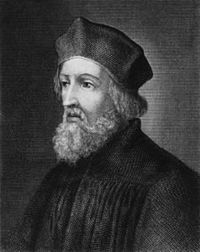 Jan Hus,
Letters of John Huss Written During His Exile and Imprisonment
(1845)
Jan Hus,
Letters of John Huss Written During His Exile and Imprisonment
(1845)
“ My last and firm determination is, that I refuse to confess as erroneous the articles which have been truly extracted from my works, and that I refuse to abjure those which have been attributed to me by false witnesses; for to abjure implies that one has held erroneous opinions—it is, in fact, to reject them, and adopt others of a contrary tendency. ”
 Agnes Repplier,
In the dozy hours, and other papers
(1894)
Agnes Repplier,
In the dozy hours, and other papers
(1894)
“ The gradual debasement of a word into a term of reproach is sometimes a species of scandal. It is wilfully perverted in the course of years, and made to tell a different tale,—a false tale, probably,—which generations receive as true. ”
The World's Best Orations, Vol…
“ Thus, suppose a man speaketh a thing upon supposition, or with exception, or in way of objection, or merely for disputation's sake, in order to the discussion or clearing of truth; he that should report him asserting it absolutely, unlimitedly, positively, and peremptorily, as his own settled judgment, would notoriously calumniate. ”
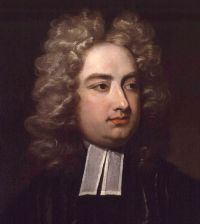 Jonathan Swift,
Gulliver's Travels
Jonathan Swift,
Gulliver's Travels
“ First, my advocate, being practiced almost from the cradle in defending falsehood, is quite out of his element when he would argue for right, which, being unnatural to him, he attempts with great awkwardness, if not with ill will. ”
 Thomas Holcroft,
The Adventures of Hugh Trevor
Thomas Holcroft,
The Adventures of Hugh Trevor
“ How many creatures had the powerful and the proud obedient to their beck; ever ready to affirm, deny, say and unsay; and, by falsehood and defamation, involve in ruin men whose souls were the most pure, and principles the most exalted! ”
 Percy Bysshe Shelley,
The Prose Works of Percy Bysshe Shelley…
(1897)
Percy Bysshe Shelley,
The Prose Works of Percy Bysshe Shelley…
(1897)
“ But it is enough that such assertions should be either contradictory to the known laws of nature, or exceed the limits of our experience, that their fallacy or irrelevancy to our consideration should be demonstrated. They persuade, indeed, only those who desire to be persuaded. ”
Caroline H. Woods, Woman in Prison
“ How easy it is to preach sound doctrine. How hard to make an impression, with it, upon minds and hearts established in their own opinions of right and wrong, and persistent in the determination to follow the wrong! ”
“ Thirdly, even if the received opinion be not only true, but the whole truth; unless it is suffered to be, and actually is, vigorously and earnestly contested, it will, by most of those who receive it, be held in the manner of a prejudice, with little comprehension or feeling of its rational grounds. ”
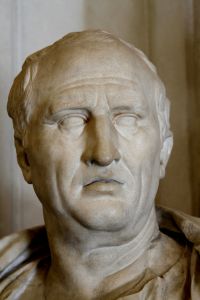 Marcus Tullius Cicero,
The Orations of Marcus Tullius Cicero…
Marcus Tullius Cicero,
The Orations of Marcus Tullius Cicero…
“ But the things which are in the habit of being said, for the sake of amplification, or in the way of digression, or when men are summing up, are introduced either to excite hatred, or pity, or to work on the feelings of the judges by means of those arguments which have been already given; provided that the importance of the facts, or the envy of men, or the dignity of the parties, will allow of it. ”