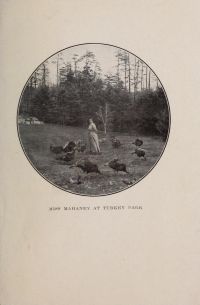
“ A good range will supply a large quantity of feed at a very reasonable cost, but not even the best range will furnish enough of the right kinds of feed to produce large numbers of prime turkeys without supplementary feeding.In many instances, however, turkey growers believe that it is more profitable to force the birds to forage for most of their livelihood until a few weeks before marketing time. A good plan for fattening these range-grown birds is to begin early in the fall to feed the birds mash and scratch, allowing them all they will eat of both. ”
Alfred R. Lee
Biographical details
Alfred R. Lee published works such as Turkey Raising. These writings evoke poults, turkeys and feed.
Quotes by Alfred R. Lee
“ Brooding by turkey hens provides a never-failing source of heat, allows the poults to be raised in small flocks, and permits taking advantage of free-range conditions. Its disadvantages are that the young turkeys may contract disease or become infected with parasites from the hens and they may wander too far and be killed by storms or predatory animals. Artificial brooding makes it easier to maintain proper sanitation, keeps down costs, puts the poults more directly under the control of the operator, and is more adaptable to large-scale production. ”
“ Figure 6.—Black turkey, male. Turkeys are raised for meat rather than for egg production. The breeders, therefore, should have compact, meaty bodies. The breastbone should be straight, the back broad, especially at the shoulders, and the breadth carried well back toward the tail. The body should be deep, with the breast so broad, full, and well rounded that the breastbone does not protrude prominently. Other important points are full, bright eyes, a broad head, and stout legs set well apart and rather short. Above all else, the birds should be vigorous. ”
“ Nests with damp sod bottoms and only a little straw to keep the eggs from rolling into the corners are generally satisfactory. Nesting batteries in which each hen is provided with a small individual run so that she can get off and on the nest at will are very good. With this method the only care necessary is to see that feed and water are always before the hens and that each one remains broody. If individual runs are not provided, the hens should be taken off daily, allowed to exercise and eat, and then returned to their own nests. ”
“ Sanitation in the breeding yards must not be neglected. Either the fences and shelters should be made portable and moved each year to clean ground, or double yards should be constructed for use only in the breeding season, during which time one yard is occupied for 2 successive weeks and then the other, which in the meantime has been kept free of all poultry. ”
“ If the birds are kept without feed for more than 18 or 24 hours they may eat soil, litter, droppings, or feathers, and thus defeat the main purpose of withholding feed. This applies especially to old hens. If the birds are not to be killed until late afternoon or evening, give them a light feed of mash early in the morning. Scratch grain should be fed only until about 18 hours before slaughter. Feeding should always be planned so that feed is not withheld more than 24 hours. All birds being held for slaughter should have free access to water up to killing time. ”
“ The marketing season for the bulk of the turkey crop is usually comparatively short, extending from the middle of November to the latter part of December. There is an increasing demand in the fall and winter and even in late summer for young turkeys. Many turkey raisers sell their birds alive to poultry dealers, who either dress them or ship them alive to city dealers. In sections where turkeys are grown in large numbers, as in Texas, dressing plants have been built by cooperative associations and poultry dealers who collect the live birds and dress them for the various city markets. ”
“ This method is practical where large areas of suitable range are available, so that the birds can be reared each season on land that has not been used, or on which no droppings have been spread, for the preceding 2 years. In wet climates it is probably safer to allow a rest of 3 or 4 years. Enough range should be provided so that plenty of growing green feed is available in each yard at all times during the season. When the same ground is used for a whole season, and rainfall or irrigation is adequate, an acre of grass pasture should provide range and green feed for about 100 growing turkeys. ”
“ Figure 8.—Breeding flock of Bronze turkeys on free range. The soundest breeding program is one of using yearlings and 2-year-old hens which have been selected as breeders alter they have passed through one full breeding season successfully. However, if pedigreeing can be done, it is practicable to use well-matured pullets selected from parents that lived through their first breeding season and showed good production, fertility, hatchability, and poult livability. The breeding males may be young or old but, in general, well-matured young toms give better results. ”
“ Feeding the growing mash wet is a common practice in some localities. Like the dry-mash and scratch-grain system, it produces fine-quality turkeys although the labor in feeding may be greater. With this method the turkeys are fed all they will eat of a moist, crumbly mash placed in troughs with sufficient trough space provided to accommodate all the flock at one time. Only as much mash as the birds will clean up in 30 to 60 minutes is fed twice daily. Tail picking seldom occurs during moist-mash feeding if the ration is complete. ”
“ Tail-feather picking seems to begin by the birds' using each others' tail feathers to clean their beaks of mash. Although it does not ordinarily damage the birds for market, the habit ruins their appearance and decreases their salability as breeding stock. It is not always possible to prevent tail-feather picking entirely, especially in flocks raised in confinement or in small range lots, but it may be prevented partially by providing tightly stretched wire in or over the mash feeders. Baling wire stretched tightly or strips of ordinary light-weight poultry wire may be used. ”
“ If breeders are to be held over for the next season or until fall and if a good summer and fall range is available well away from the growing stock, the breeders are best carried through the summer on a daily feeding of whole grain such as a mixture of equal parts of corn, oats, and wheat. ”
“ For the first 24 to 72 hours after hatching, poults can live without feed, the yolk of the egg which they absorb before hatching being sufficient to maintain them for that length of time. As soon as they are put into the brooder house or with the hen they should be fed. If they are not fed for the first day or two they should be kept in a darkened coop or incubator. However, leaving the poults in a darkened incubator for only 12 to 24 hours and feeding them as soon as they are removed to the brooder seems to be better and is now becoming a general practice. ”
“ Old corn is a much better feed than new corn, but the new crop is safe after it is well matured and dry.As a general rule, turkeys that have been raised on free range cannot be successfully fattened in close confinement. They may be successfully fattened, however, if they are confined to moderate-sized yards containing growing alfalfa or other green crops or stacks of alfalfa or clover hay. There is no advantage in confining turkeys which have been raised in semiconfinement to smaller quarters for fattening. ”
“ Of course, constitutional vigor must be maintained in the breeding stock; the flock must be kept relatively free from disease; and the soil, especially where the poults are fed, must be kept sanitary. Moreover, turkeys, even when veil fed, will make good use of at least a limited range and in doing so will destroy many injurious insects, eat great quantities of succulent green feed, and pick up much waste grain, weed seeds, and other sources of nutriment. This fact reduces the cost of production and increases the profits. VARIETIESFigure 1.—Bronze turkey, male. ”
“ When large numbers of turkeys are raised it is advisable to adopt some system of marking the poults that enables the grower to keep a record of the age and breeding of the different broods, as this is of assistance in selecting early hatched birds for breeding and slaughter purposes. Such a system also makes it possible to separate the poults out of special matings from the rest of the flock or from neighboring flocks. ”
“ Selecting birds early in the season makes possible a choice from a larger number and, what is more important, saves the best-developed and most vigorous birds for breeding instead of marketing them. New blood may be introduced into the flock or a beginning with turkeys may be made by obtaining hatching eggs, day-old poults, or breeding stock, but the purchase of eggs or poults is recommended. New breeding stock should be treated for worms and lice and should be quarantined for 2 or 3 weeks to detect any disease. ”
“ Scratch grain and a simple mash, such as that suggested for growing poults, make a good feed for carrying the breeders through the winter, since they meet the demands of the birds for continued growth or for maintenance. If the climate is such that green feed and sunshine are not available, as in the Northern States, add 5 percent of alfalfa-leaf meal and 1 percent of cod-liver oil to the mash. The birds should have all the mash and scratch they will eat during the fall and winter. ”
“ Cod-liver oil is necessary in starting rations, but as a rule it is not necessary in a growing ration unless the birds are confined. In that case, about 1 percent should be added to the mash. A good grade of plain cod-liver oil is advised for use in turkey feeds. Fish meal, though an excellent feed, may impart an undesirable flavor to turkey meat. Fish meal and cod-liver oil should be omitted from the fattening ration during the last 8 weeks before the birds are marketed. Birds should not be moved, or feeding arrangements radically changed in the last 6 weeks before marketing. ”
“ Sufficient protein and minerals in the feed during the fall months are essential to proper growth and economical gains as well as to proper feather development. A prime turkey, especially a young one, is not expected to be excessively fat, but it must have an even covering of fat so that the skin appears white or yellowish white rather than dark or bluish. The breast must be meaty and the whole body free from small pinfeathers, bruises, and abrasions. ”
“ When incubators or chicken hens are used to hatch the eggs, the turkey hens may be broken of their broodiness so that they will continue laying. Breaking the hens of broodiness by confining them to a wire-floored coop is very desirable because it permits the hatching of a relatively large number of early turkeys and a larger number from each hen. ”
“ When the poults are from 4 to 10 weeks old, water pails, metal troughs, or shallow tin or graniteware pans provided with wire or wooden guards are more satisfactory than fountains. A good method is to place the water or milk outside the wall of the brooder room so that the poults can drink it through a wire screen. From the age of 9 weeks until market age, a supply of running water is preferable, although ordinary water pails set inside the range house on the wire floor or nails or tubs set outside the fence, with openings in the wire for the birds' heads, are satisfactory. ”
“ Fences should be tightly stretched and should be dog-proof, because dogs and coyotes are very destructive in turkey flocks. Solid-top fences, gates, and buildings less than 9 feet high should be topped with strips of poultry fence 3 feet wide to prevent turkeys from perching on them. If turkey hens persist in flying over the fence the flight feathers of one wing may be cut, but the wing of a breeding male should never be clipped, as the clipping may interfere with mating. ”
“ When, pedigrees and performance records of the birds' ancestors are available, selection should be based on fertility, hatchability, livability, early maturity, and other desirable factors, as well as on the physical points mentioned above.It is wise to select or build up a flock of purebred turkeys. It costs no more to raise purebred stock than mongrels and the purebreds « 8 » are usually heavier and command higher market prices. Also, if good standard qualities of shape and color are maintained, some of the birds can be sold for breeding purposes at increased prices. ”
“ Birds with feed in their crops are usually graded as no. 2 and sold at a lower price because feed in the crop spoils readily, and also detracts from the appearance of the carcass. Mash feed passes out of the crop quickly so that crops will be empty if the mash is removed at dusk on the day before slaughter and no scratch grain fed on that day. ”
“ Best results in mating are obtained when from 10 to 15 females are mated to 1 male, although as many as 18 hens can be mated to 1 young tom under favorable conditions. As a rule good fertility will result when several toms are kept with a flock of hens. However, if the toms are quarrelsome and mating is seriously interfered with the males must be alternated, 1 tom being allowed to run with the hens 1 day and another tom the next day. Surplus toms should be penned out of sight of the breeding birds. ”
“ Practically all turkeys that are full fed are ready for market at from 26 to 28 weeks of age, and in many cases at 24 weeks, depending on sex, breeding, feeding, and weather. However, with range birds on limited feed, the grower can probably afford to hold his turkeys longer than 26 or 28 weeks, if necessary, because the feed costs were low during the growing period. It is, of course, very important to market only turkeys that are fat and free from small pinfeathers. ”
“ These starting mashes are fed without scratch grain; but water, green feed, and hard grit such as fine gravel, coarse sand, or commercial granite grit should be supplied. The green feed should be chopped fine and scattered on top of the mash in the feeders once or twice daily, allowing all the poults will consume in about half an hour. Tender alfalfa tops, onion tops, lettuce, and tender, short lawn clippings, preferably those containing clover, are all good feeds. Tough green feed should be avoided as it may cause impaction. Green feed as picked by the birds from the yards is most desirable. ”
“ However, one point of great importance in brooding poults artificially is to make sure that they do not crowd together while in the brooder house. This can be avoided by frequent attention, by providing an even temperature, and by having good ventilation in the brooder house. A colony house or permanent brooder house that is suitable for brooding chicks is equally suitable for turkeys, but fewer birds should be put in the house, as turkey poults are larger than chicks. Between 75 and 125 poults should be placed under one 52-inch hover in the average colony brooder House. ”
“ Feeding young breeding turkeys is a matter of supplying a growing ration in the fall and early in the winter, a laying ration late in the winter and in the spring, and a maintenance ration during the summer. Unless breeders are to be kept over for another year, they should be marketed, if possible, about June 1 in order to reduce feed costs and to aid in preventing the spread of blackhead and other diseases that may affect adult turkeys during the summer. ”
“ The use of a well-balanced, all-mash ration is the simplest and most practical method of feeding poults during the first few weeks of their lives. Many commercial starting mashes are available or good home-mixed mashes may be used with excellent success. The protein, mineral, and vitamin contents are the main points to be considered. Milk in some form is very desirable, dried milk being preferable. Liquid milk is a fair feed, but the dried form is preferable at least for starting rations. ”