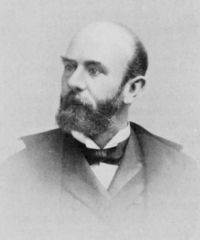
Arthur Hollick

Biographical details

Portrait of Arthur Hollick Arthur Hollick Mycologia, vol. 2, no. 2 — A New Fossil Polypore (1910)

Murrill, so far as its nearest living relationship is concerned; but its antiquity should preclude a reference to the living genus Polyporus, and it is clearly different from any of the fossil forms described under that genus or under the fossil genus Polyporites, all of which are from the Tertiary or more recent geological horizons, except Polyporites Bowmanni Lindley and Hutton, [1] from the Carboniferous of England, which is generally considered by paleontologists to be a fish scale and not a fungus.
Source: Wikisource

Portrait of Arthur Hollick Arthur Hollick Mycologia, vol. 2, no. 2 — A New Fossil Polypore (1910)

Neither the name of the collector nor the date of collection is recorded, the labels merely reading: "Fossil plants below Seam 3, Elk Ridge Colliery, Pocohontas Field, W. Va." This colliery is situated near Ennis, McDowell County, in the southern part of West Virginia.
Figs. 1, 2. Pseudopolyporus carbonicus.
The fossilizing medium is a highly ferruginous, fine-grained arenaceous shale, which has completely replaced the vegetable tissue. In fact, the question may be raised whether the specimen is actually of organic origin.
Source: Wikisource

Get perspective with Kwize: daily news enlightened by great literature