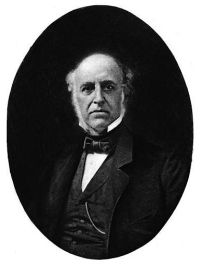
Charles Augustus Maude Fennell

Biographical details

Charles Augustus Maude Fennell 1911 Encyclopædia Britannica (1911)

Strenuous devotion to the deliverance of mankind from dangers and pests is the “virtue” which, in Prodicus’ famous apologue on the Choice of Hercules, the hero preferred to an easy and happy life. Ethically, Hercules symbolizes the attainment of glory and immortality by toil and suffering.
The Old-Dorian Hercules is represented in three cycles of myth, the Argive, the Boeotian and the Thessalian
Source: Wikisource

Charles Augustus Maude Fennell 1911 Encyclopædia Britannica (1911)

Hercules was a favourite figure in French medieval literature. In the romance of Alexander the tent of the hero is decorated with incidents from his adventures. In the prose romance Les Prouesses et vaillances du preux Hercule (Paris, 1500) , the hero’s labours are represented as having been performed in honour of a Boeotian princess; Pluto is a king dwelling in a dismal castle; the Fates are duennas watching Proserpine; the entrance to Pluto’s castle is watched by the giant Cerberus. Hercules conquers Spain and takes Merida from Geryon.
Source: Wikisource

Charles Augustus Maude Fennell 1911 Encyclopædia Britannica (1911)

In early poetry, as often in art, he is an archer, afterwards a club-wielder and fully-armed warrior. In early art the adult Hercules is bearded, but not long-haired. Later he is sometimes youthful and beardless, always with short curly hair and thick neck, the lower part of the brow prominent. A lion’s skin is generally worn or carried. Lysippus worked out the finest type of sculptured Hercules, of which the Farnese by Glycon is a grand specimen.
Source: Wikisource

Get perspective with Kwize: daily news enlightened by great literature