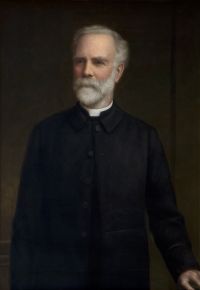
Claude Reignier Conder and Robert Alexander Stewart Macalister

Biographical details

Claude Reignier Conder and Robert Alexander Stewart Macalister 1911 Encyclopædia Britannica, Volume 11… (1911)

Josephus gives a good description of the Galilee of his time in Wars, iii. 3. 2: “The Galileans are inured to war from their infancy, and have been always very numerous; nor hath the country been ever destitute of men of courage or wanted a numerous set of them; for their soil is universally rich and fruitful, and full of plantations of trees of all sorts, insomuch that it invites the most slothful to take pains in its cultivation.
Source: Wikisource

Claude Reignier Conder and Robert Alexander Stewart Macalister 1911 Encyclopædia Britannica, Volume 11… (1911)

The plains of Esdraelon, and the Buttauf, and the plateau of el-Aḥmā are all remarkable for the rich basaltic soil which covers them, in which corn, cotton, maize, sesame, tobacco, millet and various kinds of vegetable are grown, while indigo and sugar-cane were cultivated in former times. The Nazareth hills and Gilboa are bare and white, but west of Nazareth is a fine oak wood, and another thick wood spreads over the northern slopes of Tabor. The hills west of the great plain are partly of bare white chalk, partly covered with dense thickets.
Source: Wikisource

Claude Reignier Conder and Robert Alexander Stewart Macalister 1911 Encyclopædia Britannica, Volume 11… (1911)

The Kishon is fed by springs from near Tabor and from a copious stream from the west side of the plain of Esdraelon. North-west of Nazareth is Wādi el Melek, an open valley full of springs. The river Belus, just south of Acre, rising in the sea-coast marshes, drains the whole valley above identified with Jiphthah-el. On the east the broad valley of Jezreel is full of magnificent springs, many of which are thermal.
Source: Wikisource

Get perspective with Kwize: daily news enlightened by great literature