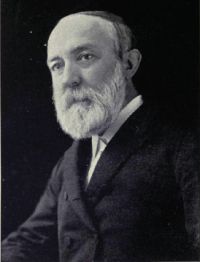
Henri Leclercq

Biographical details

Portrait of Henri Leclercq Henri Leclercq,  Catholic Encyclopedia (1913)

“ One fact in connection with a subject at present so much studied and discussed seems to be established beyond question, namely, that the agape was never a universal institution. If found in one place, there is not so much as a trace of it in another, nor any reason to suppose that it ever existed there. A feeling of veneration for the dead inspired the funeral banquet, a feeling closely akin to a Christian inspiration. Death was not looked upon as the end of the whole man, but as the beginning of a new and mysterious span of life. ”
Source: Wikisource

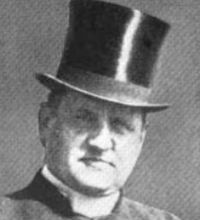
Portrait of Henri Leclercq Henri Leclercq,  Catholic Encyclopedia (1913)

“ Fulgentius, Bishop of Ruspe, exercised a fortunate influence over the princes of the dynasty, who were no longer ignorant barbarians, but whose culture, wholly Roman and Byzantine, equalled that of their native subjects. Yet the Vandal monarchy, which had lasted for nearly a century, seemed less firmly established than at its beginning. Hilderich, who succeeded Thrasamond in 523, was too cultured and too mild a prince to impose his will on others. Gilimer made an attempt to deprive him of power, and, proclaimed King of the Vandals in 531, marched on Carthage and dethroned Hilderich. ”
Source: Wikisource

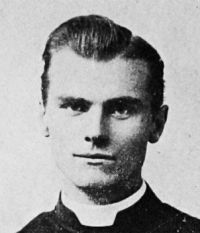
Portrait of Henri Leclercq Henri Leclercq,  Catholic Encyclopedia (1913)

“ Faith everywhere led me forward, and everywhere provided as my food a fish of exceeding great size, and perfect, which a holy virgin drew with her hands from a fountain and this it [faith] ever gives to its friends to eat, it having wine of great virtue, and giving it mingled with bread. These things I, Abercius, having been a witness [of them] told to be written here. ”
Source: Wikisource

Get perspective with Kwize: daily news enlightened by great literature