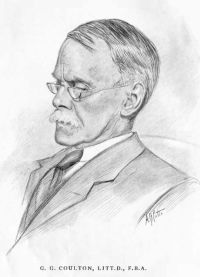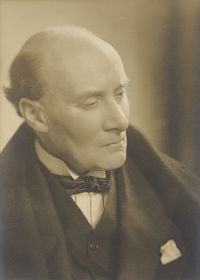
Raymond Beazley

Biographical details

Portrait of Raymond Beazley Raymond Beazley Dictionary of National Biography… (1895)

Pelagius's doctrines dealt with six chief points, as his opponents sometimes divided them: original sin, infant baptism, the effect of the fall of Adam, freewill in man, divine grace, and predestination; but the gist of them all is contained in the single point on which the ninth article of the English church condemns his followers as ‘talking vainly,’ viz. whether or not ‘the condition of man after the fall is such that he ... has no power to do good works without the grace of God.’ He annulled that grace, said Augustine, by representing it as the payment of what was strictly due.
Source: Wikisource

Portrait of Raymond Beazley Raymond Beazley Dictionary of National Biography… (1895)

In 1610, on Sir William Fleetwood's disgrace as receiver-general of the court of wards, the office was vested in commissioners, of whom Perceval was one. On the death of his patron and ‘master,’ Robert Cecil, earl of Salisbury, on 24 May 1612, Perceval lost all his employments in England; but on a new settlement of the court of wards being projected in Ireland, he was made registrar or clerk of the court in 1616.
Source: Wikisource

Portrait of Raymond Beazley Raymond Beazley Dictionary of National Biography… (1895)

About 409 Pelagius went with Celestius to Sicily, to escape Alaric's attack upon Rome, and soon after passed on to Africa, missing St. Augustine, bishop of Hippo, in his own city, but meeting him in Carthage, where the bishop was then busy with the Donatist controversy. Thence Pelagius sailed to Palestine, where he met Jerome at Bethlehem; while Celestius, staying behind in Africa, and going beyond his leader in the boldness and definiteness of his heresy, was accused, tried, and condemned, on seven counts of false doctrine, by a synod at Carthage (412) .
Source: Wikisource

Get perspective with Kwize: daily news enlightened by great literature